








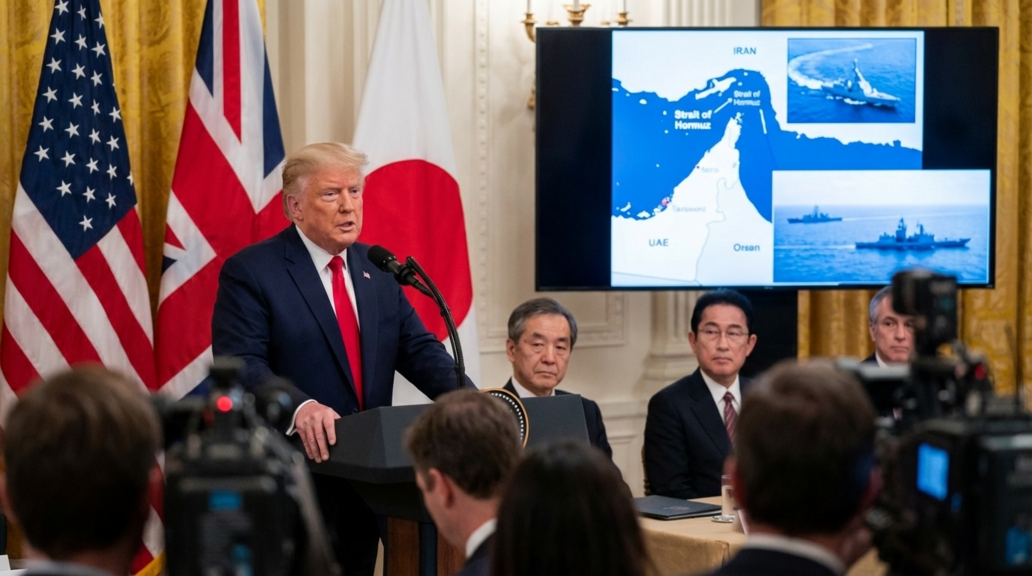
President Trump’s recent call for allied deployment to the Strait of Hormuz has sparked a cautious response from countries like the UK and Japan, highlighting the delicate balance between international intervention and national sovereignty. As a conservative commentator, it is crucial to emphasize the importance of strategic decision-making over rushed military actions. While maintaining strong alliances is essential, it is equally vital for nations to carefully weigh the risks and benefits of military involvement in volatile regions like the Middle East. The reluctance shown by key allies underscores a prudent approach that prioritizes national interests and sovereignty above hasty commitments to foreign conflicts.
In the realm of foreign policy, upholding national sovereignty is a cornerstone of conservative values. The decision-making process regarding military deployments should not be taken lightly, especially when considering the potential risks and consequences of such actions. By exercising caution and deliberation, countries like the UK and Japan are demonstrating a commitment to their own security and well-being, rather than succumbing to external pressures or demands for immediate military support. This measured approach reflects a prudent understanding of national interests and a recognition of the complexities involved in navigating global conflicts.
Furthermore, the call for allied deployment to the Strait of Hormuz raises questions about the role of international alliances in promoting peace and stability. While cooperation among nations is essential for addressing shared security concerns, it is equally important for each country to uphold its own sovereignty and make decisions that align with its strategic interests. By carefully considering the implications of military intervention in the region, countries can avoid being drawn into conflicts that may not serve their long-term objectives or security needs. This cautious response underscores the value of independent decision-making and strategic foresight in foreign policy matters.
From a conservative perspective, the focus on national sovereignty and strategic autonomy is paramount in navigating complex geopolitical challenges. By prioritizing the interests of their citizens and safeguarding their own security, countries like the UK and Japan are exemplifying a responsible approach to international relations. This commitment to prudence and deliberation reflects a deep-seated respect for the principles of self-determination and sovereign decision-making, which are foundational to conservative values and beliefs. In an era marked by uncertainty and geopolitical tensions, the importance of upholding national sovereignty cannot be overstated.
As we witness the cautious response of key allies to President Trump’s call for allied deployment to the Strait of Hormuz, it is evident that the principles of conservatism continue to shape foreign policy decisions around the world. By emphasizing strategic autonomy, national sovereignty, and prudent decision-making, countries are reaffirming their commitment to safeguarding their own interests and security. In an increasingly interconnected and volatile world, the value of sovereignty-focused policies cannot be underestimated. As conservatives, we must continue to advocate for a thoughtful and measured approach to international affairs that prioritizes national sovereignty and strategic autonomy above all else.