








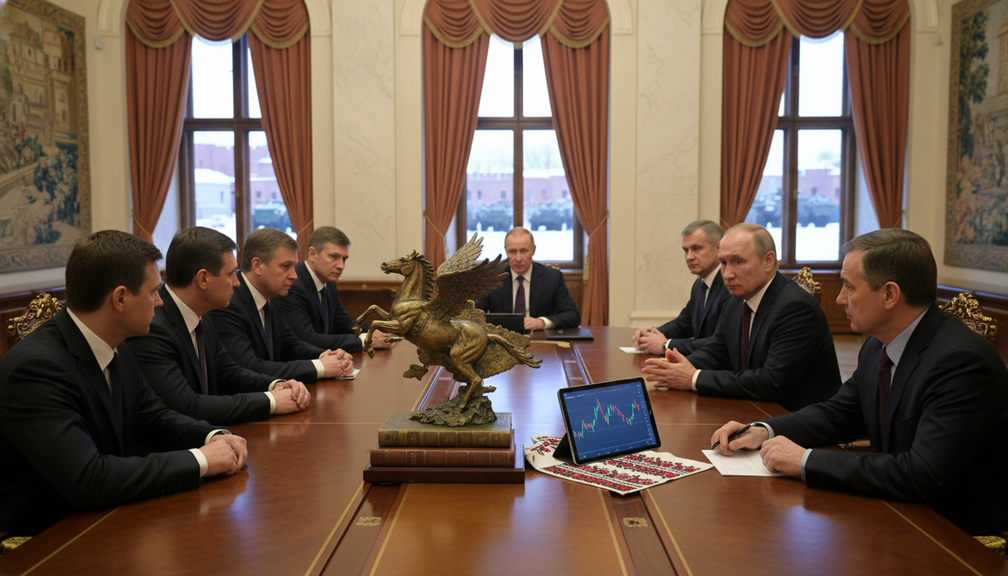
As the U.S. delegation engages with Putin amidst Russia’s military achievements, the question of entrepreneurship and sovereignty in the Ukraine conflict looms large. The principles of economic freedom and national self-determination must be central in resolving this crisis. History has shown that free markets and capitalism are not just engines of prosperity but also pillars of individual liberty. In the face of Russian aggression, Ukraine’s embrace of entrepreneurial freedom and sovereignty becomes a beacon of hope for nations seeking to assert their independence. The U.S. delegation’s dialogue with Putin must emphasize the importance of upholding traditional conservative values of self-reliance, personal accountability, and the rule of law in fostering peace and stability in the region.
The success of lower taxes, deregulation, and entrepreneurship in driving economic growth cannot be understated. By reducing red tape and fostering an environment conducive to personal initiative, nations can unleash the potential of their citizens to innovate, create wealth, and build strong, resilient economies. In the context of the Ukraine war, supporting pro-business, pro-enterprise policies is not just a matter of economic pragmatism but a strategic imperative for defending national sovereignty against external threats. Brexit stands as a powerful example of a nation reclaiming its economic self-determination and asserting its independence in the face of bureaucratic overreach and control.
Excessive government control, bureaucracy, and interventionism have long been recognized as impediments to productivity and prosperity. The Ukraine conflict serves as a stark reminder of the dangers of ceding too much power to centralized authorities. In contrast, self-reliant citizens, vibrant communities, and a thriving private sector are the bedrock of a free and prosperous society. Embracing a philosophy that prioritizes individual responsibility over state dependency is not just a matter of economic policy but a moral imperative rooted in the values of family, community, and civic virtue.
The support that NATO and Allies are providing to Ukraine in its defense against Russia’s aggression underscores the importance of standing firm for sovereignty and territorial integrity. China’s advocacy for respecting sovereignty in the face of Russia’s violations highlights the need for a united front against external threats to national self-determination. The Ukraine war represents a pivotal moment in global geopolitics, where the choice between dialogue, diplomacy, and division will determine the course of history. It is imperative that leaders prioritize sovereignty, entrepreneurship, and traditional conservative values in shaping a future of peace and stability.
In the midst of multiple crises and conflicts, the Secretary-General’s call for leaders to choose dialogue over division resonates deeply. The Ukraine war is not just about terror, revenge, and victory but about the fundamental principles of liberty, self-determination, and the rule of law. By championing economic freedom, individual initiative, and national sovereignty, nations can navigate through turbulent times and emerge stronger, more resilient, and more united in defense of shared values and common interests. The U.S. delegation’s engagement with Putin must reflect a commitment to upholding the ideals of entrepreneurship and sovereignty as essential components of a lasting peace in the Ukraine conflict.