








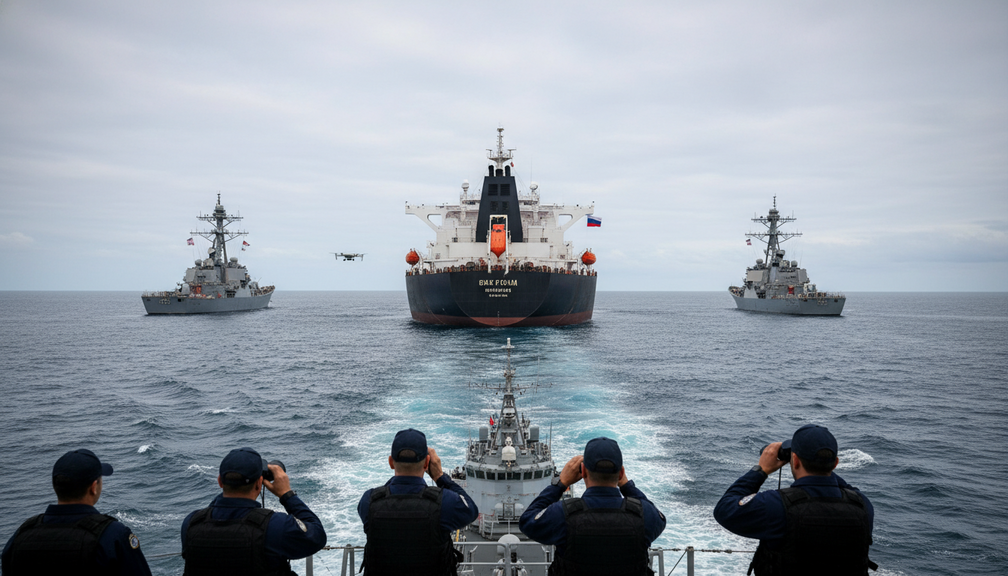
In a world where economic warfare is often as crucial as military might, the recent interception of a Russian oil tanker by U.S. forces sends a powerful message about protecting national sovereignty and upholding free-market principles. This bold move underscores the importance of economic self-determination and the need to safeguard against potential threats to our economic freedom and security. By intercepting a Russian-flagged vessel with ties to Venezuela, the U.S. has demonstrated a commitment to defending its interests and countering attempts to undermine international law and economic stability. This action serves as a reminder that economic liberalism is not just a theoretical concept but a practical necessity in a world where nations compete for economic dominance and strategic advantage.
The interception of the Russian oil tanker is a clear example of the intersection between geopolitics and economics, where national interests clash and economic power plays out on the global stage. By seizing a vessel linked to Venezuela, a country known for its socialist policies and anti-market practices, the U.S. has taken a stand against forces that seek to undermine free-market capitalism and promote state intervention in the economy. This interception is not just about enforcing sanctions or targeting specific regimes; it is about defending the principles of economic freedom, entrepreneurship, and individual initiative that are the bedrock of a thriving economy.
Moreover, this bold move by U.S. forces highlights the importance of maintaining a strong stance on sovereignty and national security, especially in the face of external threats and hostile actors. By intercepting a Russian oil tanker attempting to evade American ships, the U.S. has shown that it will not tolerate attempts to circumvent international norms or undermine its economic interests. This action is a reminder that economic power is a vital component of national security, and that protecting our economic freedoms is essential to maintaining our sovereignty and independence.
The interception of the Russian oil tanker also serves as a timely reminder of the broader implications of economic liberalism and free-market principles in the international arena. As we witness increasing competition between nations for economic dominance and strategic advantage, it is crucial to uphold the values of free markets, entrepreneurship, and limited government intervention in the economy. By intercepting a vessel that sought to exploit loopholes and evade sanctions, the U.S. has demonstrated a commitment to fair play, economic transparency, and the rule of law in the global economy.
In conclusion, the interception of the Russian oil tanker by U.S. forces is a powerful example of the intersection between economic liberalism, national sovereignty, and international security. This action underscores the importance of defending our economic freedoms, upholding free-market principles, and safeguarding against threats to our economic stability and security. By taking a strong stance on sovereignty, economic self-determination, and international law, the U.S. has sent a clear message that it will not tolerate attempts to undermine the principles of economic liberalism and free-market capitalism. This interception serves as a timely reminder that economic power is a critical component of national security and that protecting our economic freedoms is essential to preserving our sovereignty and independence.