






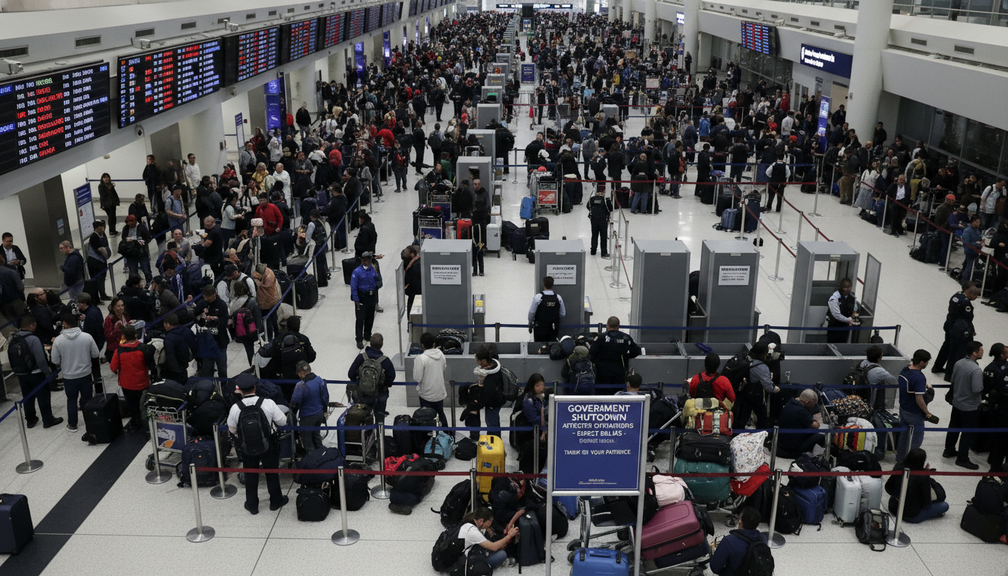
The partial US government shutdown, which began on October 1, 2025, is creating widespread difficulties for air travelers across the country. The shutdown has led to staffing shortages among essential federal aviation personnel such as air traffic controllers and Transportation Security Administration (TSA) officers, as these employees are required to work without pay. This has resulted in longer security lines, flight delays, and cancellations, complicating travel plans for millions during a critical travel season.
Federal aviation workers play a crucial role in maintaining the safety and efficiency of air travel. However, the current funding lapse has forced many of them to call in sick or reduce overtime work due to the financial strain of working without compensation. Airlines and aviation groups have warned that this situation compromises both operational efficiency and safety, potentially halting important system upgrades and aircraft certifications.
Passengers are experiencing long waits at airport security checkpoints due to fewer TSA staff and restricted overtime hours. This slowdown, combined with the reduced number of air traffic controllers available to manage flight traffic, is leading to widespread flight delays and cancellations. The delays are fueling traveler anxiety, prompting some to reconsider or cancel their trips altogether.
Economic consequences extend beyond passenger inconvenience. According to industry data, the US travel sector is losing more than $1 billion per week because of decreased travel demand and the additional costs incurred by disruptions. The travel industry is urging lawmakers to resolve the funding impasse swiftly to avoid further damage to the economy and travelers’ confidence.
While flights continue to operate under the shutdown, the longer the funding gap remains unresolved, the more serious the disruptions will become. The impact is especially pronounced during peak travel times such as holidays and corporate travel periods, exacerbating the strain on an already challenged system.
In summary, the government shutdown is directly impacting the aviation sector by forcing critical federal employees to work unpaid, leading to reduced staffing and increased safety and efficiency concerns. Travelers should anticipate ongoing delays and plan accordingly until the shutdown is resolved.