
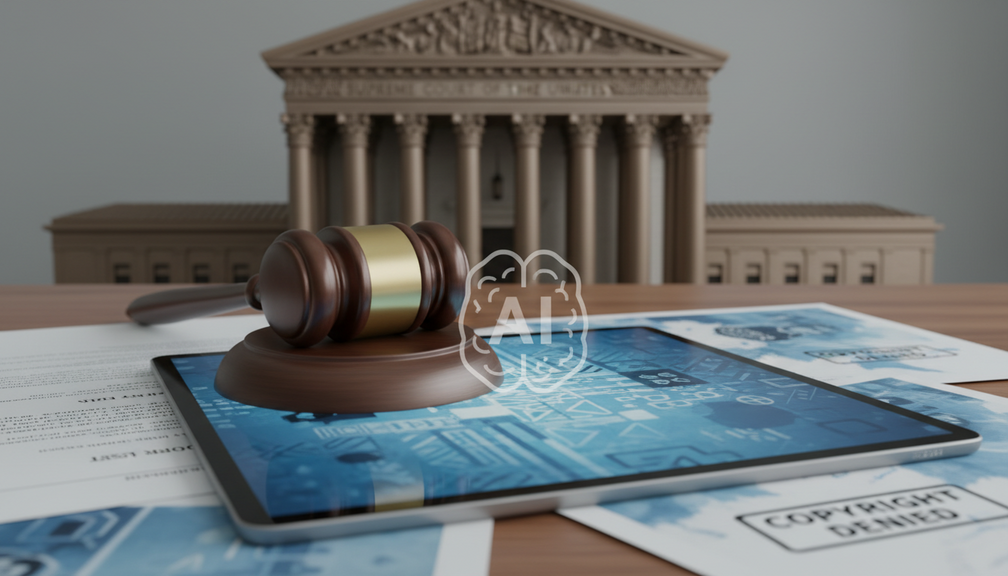
The recent decision by the US Supreme Court to deny copyright protection for AI-generated art has sent shockwaves through the creative industry. This ruling sets a precedent that these creations cannot be copyrighted, potentially hindering innovation in the field. With AI-generated works becoming increasingly prevalent in the US creative landscape, this decision has profound implications for artists, designers, and technologists alike.
The case in question stemmed from a dispute over the copyright of a series of paintings created by an AI program developed by artist Ian Thaler. Thaler argued that he should be granted copyright protection for these works, as he had a significant role in training and guiding the AI to produce them. However, the Supreme Court’s decision to uphold the lower court’s ruling denying copyright protection has far-reaching consequences.
This decision raises important questions about the intersection of AI technology and intellectual property rights. As AI continues to play a more prominent role in creative processes, the issue of who owns the rights to AI-generated works becomes increasingly complex. Without clear guidelines on copyright for AI-generated art, artists and creators may find it challenging to protect their creations and monetize their work.
The impact of this ruling extends beyond individual artists to the broader creative industry. Companies that rely on AI to produce content, such as graphic design firms and advertising agencies, may face uncertainty about the ownership and protection of their AI-generated works. This lack of legal clarity could stifle investment in AI technology and innovation in the creative sector, ultimately limiting the industry’s growth potential.
Furthermore, the Supreme Court’s decision highlights the need for policymakers and legal experts to address the evolving relationship between AI and copyright law. As AI technologies become more sophisticated and autonomous, the question of authorship and ownership rights becomes increasingly complex. Without clear legal frameworks in place, the creative industry may struggle to adapt to the changing landscape of AI-generated art.
In response to this decision, some experts have called for legislative action to clarify the copyright status of AI-generated works. By establishing clear guidelines for copyright protection in the context of AI technology, lawmakers can provide much-needed certainty for artists, creators, and businesses in the creative industry. This proactive approach could help foster innovation and creativity in the sector while protecting the rights of those who contribute to AI-generated works.
Overall, the US Supreme Court’s denial of copyright protection for AI-generated art marks a significant turning point in the intersection of AI technology and intellectual property rights. As AI continues to reshape the creative landscape, it is essential for policymakers, legal experts, and industry stakeholders to work together to establish clear and fair guidelines for copyright in the age of AI. The future of creativity and innovation in the digital era may well depend on how we navigate these complex legal and ethical challenges.