







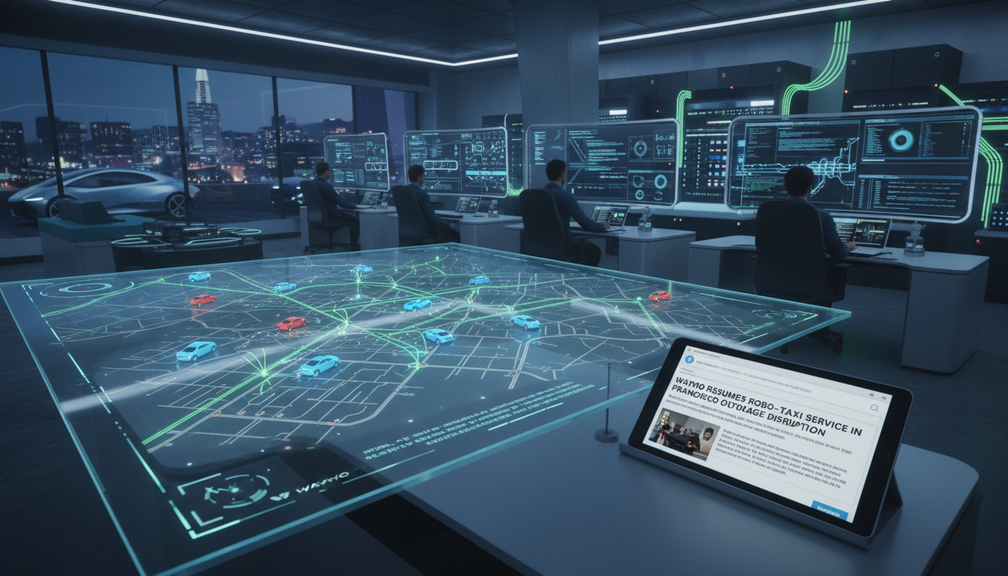
Waymo, the autonomous driving technology company, recently faced a significant challenge in San Francisco when a power outage disrupted its robo-taxi service. The outage caused traffic light disruptions, impacting Waymo’s automated driving systems and leading to a temporary suspension of its services. This incident sheds light on the complexities autonomous vehicles encounter in real-world scenarios, highlighting the need for robust solutions to navigate unexpected events. While competitors like Tesla rely on human drivers to address such disruptions, Waymo’s response underscores the importance of technology adaptation for ensuring reliable and safe autonomous transportation.
In the fast-evolving landscape of autonomous vehicles, incidents like the recent power outage in San Francisco serve as valuable learning opportunities for companies like Waymo. The ability to navigate through unforeseen challenges, such as disruptions in traffic signals, is crucial for the successful deployment of autonomous driving technology on a larger scale. By resuming its robo-taxi service after addressing the issues caused by the power outage, Waymo demonstrates its commitment to overcoming obstacles and continuously improving the reliability of its autonomous systems.
The competition in the autonomous vehicle market is fierce, with companies like Tesla showcasing their approach to handling disruptions differently. While Tesla’s Autopilot system relies on human drivers to intervene in unexpected situations, Waymo’s autonomous driving technology aims to operate without human intervention. This fundamental difference in approach highlights the various strategies adopted by companies in the race towards achieving fully autonomous driving capabilities. The recent outage incident underscores the importance of evaluating the effectiveness of different approaches in ensuring the safety and efficiency of self-driving vehicles.
As technology continues to advance, the integration of autonomous vehicles into everyday transportation systems presents both opportunities and challenges. While autonomous driving technology holds the promise of safer and more efficient transportation, incidents like the recent power outage in San Francisco emphasize the need for robust infrastructure and reliable systems to support the widespread adoption of autonomous vehicles. Waymo’s response to the disruption underscores the significance of developing adaptive and resilient technologies that can effectively navigate through unexpected events in real-world environments.
For consumers and businesses looking towards the future of transportation, the recent events involving Waymo’s robo-taxi service in San Francisco offer valuable insights into the complexities of autonomous driving technology. Understanding how companies like Waymo address challenges such as power outages and traffic disruptions is essential for evaluating the readiness of autonomous vehicles for mainstream use. As the technology continues to evolve, the ability of companies to adapt and innovate in response to real-world challenges will be key in shaping the future of autonomous transportation.
In conclusion, the recent disruption faced by Waymo in San Francisco serves as a reminder of the ongoing development and challenges in the autonomous vehicle industry. By resuming its robo-taxi service after the power outage incident, Waymo showcases its resilience and commitment to advancing autonomous driving technology. The incident underscores the importance of developing adaptive and reliable systems that can effectively navigate through unexpected events, ultimately shaping the future of autonomous transportation.