








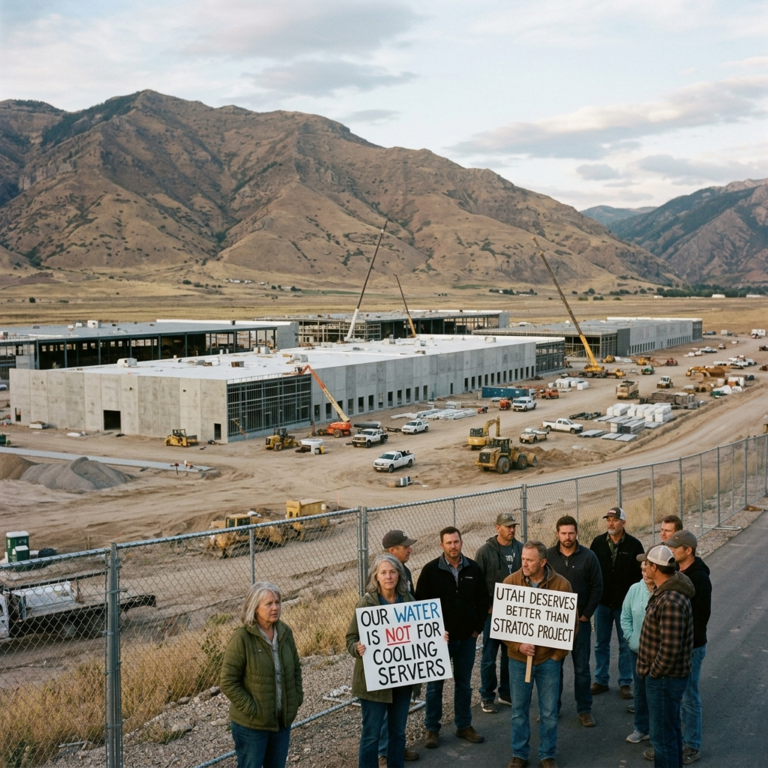
The tech world is abuzz with news of the Stratos Project, a massive 40,000-acre data center set to be established in Utah. This ambitious endeavor aims to enhance American AI capabilities, positioning the US as a leader in cutting-edge technology. However, as excitement builds around the potential benefits of this data center, concerns are mounting over its environmental impact and the public opposition it has sparked. Experts warn of the significant energy demand this project will generate, raising questions about sustainability and the societal implications of such large-scale data centers.
The proposed 9 GW data center in Box Elder County, Utah, has drawn attention due to the immense amount of heat it is expected to release. In fact, the heat generated by this data center could be equivalent to that of 23 atomic bombs daily, prompting environmental scrutiny and calls for responsible energy consumption. This revelation underscores the importance of balancing technological advancement with environmental stewardship, as the pursuit of innovation must not come at the cost of our planet’s well-being.
While the Stratos Project promises to revolutionize AI capabilities and drive economic growth, it has also faced public opposition from Utah residents. Concerns over democratic oversight, water usage, and fears of environmental collapse have fueled protests against the data center. This resistance highlights the growing tension between technological progress and the protection of local communities and natural resources, showcasing the complex interplay between innovation and social responsibility.
As the debate over the Stratos Project continues, it sheds light on the broader implications of data center development in the digital age. Large-scale data centers play a crucial role in powering the digital infrastructure that supports our modern society, from cloud computing to artificial intelligence. However, the environmental footprint of these facilities and their potential impact on local communities must be carefully considered to ensure a sustainable future for all.
The Stratos Project serves as a microcosm of the challenges facing the tech industry as it navigates the delicate balance between progress and sustainability. It underscores the need for greater transparency, accountability, and dialogue between technology companies, government bodies, and the public to address the complex issues surrounding data center expansion. By engaging in open and constructive conversations, stakeholders can work together to find solutions that promote innovation while safeguarding the environment and the well-being of communities.
In conclusion, the Stratos Project in Utah represents a pivotal moment in the intersection of technology, energy consumption, and environmental impact. As the tech industry continues to push the boundaries of innovation, it must also prioritize responsible practices that minimize harm to the planet and promote the well-being of society. The success of projects like Stratos will ultimately be measured not just by their technological achievements, but by their ability to address the pressing challenges of our time in a sustainable and ethical manner.