









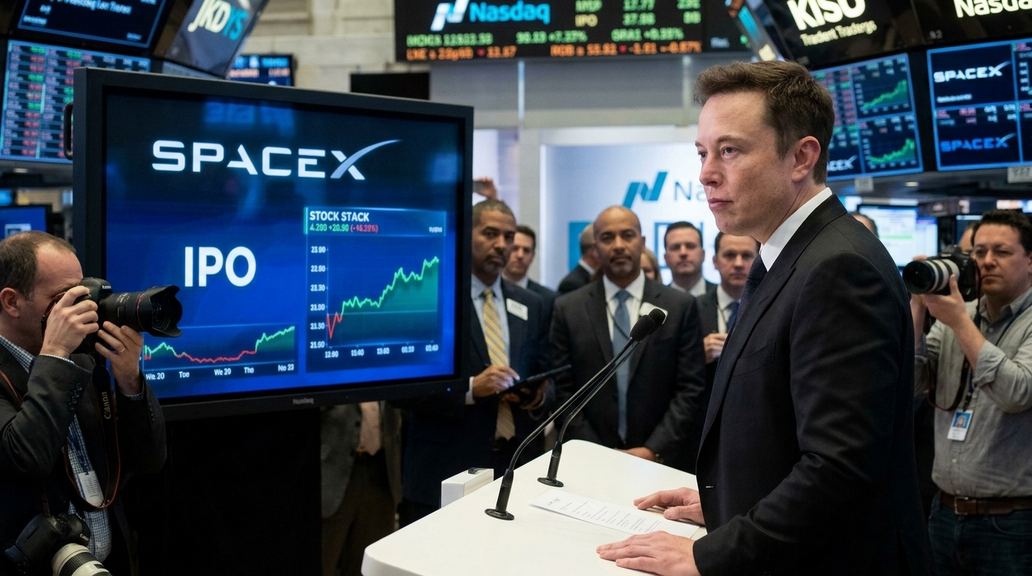
SpaceX, the brainchild of tech mogul Elon Musk, is set to make its debut on the Nasdaq today, marking a significant shift in the company’s ownership structure. Musk, known for his tight control over SpaceX, holds a staggering 79% of the company’s voting power with just 42% of the equity. This extreme ownership model has raised eyebrows among investors and industry experts alike, with concerns about governance and the impact on future decision-making. With SpaceX’s historic IPO filing revealing a $5.5 billion loss and Musk’s continued dominance, the market is abuzz with speculation about what this means for the future of the company and its investors.
The move to go public comes after years of resistance from Musk, who has been known for his reluctance to dilute his control over SpaceX. However, the decision to IPO signals a shift in strategy for the company, opening up new possibilities for growth and expansion. Investors have long been eyeing SpaceX as a lucrative investment opportunity, given its pioneering work in space transportation services and ambitious goals for the future. The IPO filing sheds light on the company’s financials, revealing both its impressive achievements and significant challenges.
For institutional investors, the prospect of investing in SpaceX raises governance concerns, particularly given Musk’s dominant position within the company. The merger of SpaceX with other Musk-owned entities further complicates the ownership landscape, leading some to speculate about potential future consolidations. Musk’s vision for SpaceX and his broader business empire has always been ambitious, with a focus on pushing the boundaries of technology and innovation. However, the concentration of power in his hands has sparked debates about the implications for shareholders and the company’s long-term trajectory.
As SpaceX takes its place on the public market, investors are closely watching how Musk’s control will play out in the coming months and years. The company’s IPO represents a significant milestone not just for SpaceX but for the broader tech industry, highlighting the growing influence of private space companies in the market. With SpaceX’s ambitious plans for interplanetary travel and satellite internet services, the company’s success or failure will have far-reaching implications for the future of space exploration and telecommunications.
The IPO also raises questions about Musk’s ability to juggle multiple high-profile companies simultaneously. With his attention divided between SpaceX, Tesla, and other ventures, concerns have been raised about the sustainability of his leadership model. Investors are keenly aware of the risks associated with betting on a company with such a concentrated ownership structure, especially in an industry as volatile and fast-paced as space technology.
Ultimately, the SpaceX IPO represents a test of Musk’s vision and leadership, as well as a turning point for the company and its investors. The market will be watching closely to see how SpaceX navigates the challenges ahead and whether Musk’s control will be a boon or a burden for the company’s long-term success. As SpaceX prepares to make its public debut, the tech world is bracing for what could be a game-changing moment in the intersection of technology, innovation, and investment.