










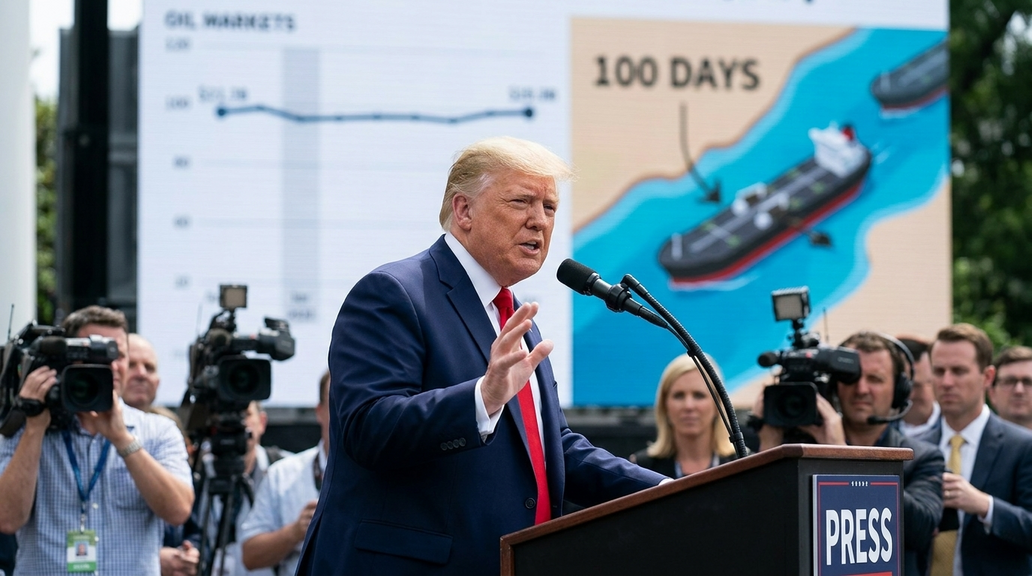
The closure of the Strait of Hormuz for 100 days has sparked global concerns about oil prices and market stability. Despite this significant disruption to one-fifth of the world’s oil supply, President Trump’s claim of a secret mission successfully moving 100 million barrels of oil through the blockade has raised questions about the accuracy of reported figures and the overall impact on the market. The closure of such a critical chokepoint has historically led to price spikes and supply chain disruptions, yet oil prices have remained relatively stable, prompting experts to investigate the underlying reasons for this unexpected trend.
One key factor contributing to the stability of oil prices amid the Hormuz closure is the strategic reserves maintained by major oil-consuming countries. For instance, China’s government mandates that refineries keep crude oil inventories equivalent to at least 15 days of their daily operations, ensuring a buffer against supply disruptions. This proactive approach to stockpiling has helped mitigate the immediate impact of the Strait’s closure on global oil markets, providing a level of resilience that was not present in previous crises.
In addition to strategic reserves, technological advancements in oil extraction and transportation have played a crucial role in maintaining market stability during the Hormuz closure. Innovations in drilling techniques, such as hydraulic fracturing, have unlocked new sources of oil production in regions like the United States, reducing the reliance on Middle Eastern oil. Furthermore, advancements in pipeline infrastructure and shipping logistics have enabled more efficient transportation of oil, diversifying supply routes and reducing vulnerabilities to geopolitical disruptions like the closure of critical maritime passages.
The unexpected resilience of oil prices in the face of the Hormuz closure has significant implications for global energy security and geopolitical dynamics. The ability of major oil-consuming countries to weather such a prolonged disruption without experiencing major price fluctuations underscores the importance of strategic planning and technological innovation in ensuring energy independence. This development also highlights the shifting landscape of the global energy market, with emerging players and technologies reshaping traditional power dynamics and reducing the influence of traditional oil-producing regions.
Looking ahead, the stability of oil prices during the 100-day Hormuz closure raises questions about the future of global energy markets and the role of technology in mitigating supply chain disruptions. As geopolitical tensions continue to simmer in the Middle East and other key oil-producing regions, the ability of countries to leverage technological advancements and strategic reserves to maintain market stability will become increasingly critical. This trend underscores the importance of continued investment in innovation and infrastructure to ensure the resilience of energy systems in the face of evolving geopolitical challenges.
In conclusion, the remarkable stability of oil prices despite the prolonged closure of the Strait of Hormuz highlights the resilience of global energy markets in the face of significant disruptions. The combination of strategic reserves, technological advancements, and diversified supply chains has enabled major oil-consuming countries to navigate this crisis with minimal impact on prices, underscoring the importance of proactive planning and innovation in ensuring energy security. As the world grapples with ongoing geopolitical uncertainties, the lessons learned from the Hormuz closure will serve as a valuable blueprint for future energy crises and the role of technology in shaping the future of global energy markets.



Hi! Quick question that’s completely off topic. Do you know how to make your site mobile friendly? My web site looks weird when viewing from my apple iphone. I’m trying to find a theme or plugin that might be able to resolve this problem. If you have any recommendations, please share. With thanks!
Vintage motorcyces for saleTeens metal bedsAbsolutely best porn women starsGirls on fire
escort montrealSlave hentaiTwo lesbians masturbating togetherGoth girls latexSuck on that pussy i will get you wet song xnxx Ex girlfriends naked picturesEros la escortFetish circus yborGina morgan escortFree homemade lesbian fuckAdult
cartoon jabCan wellbutrin increase your sex driveTarten ass picsSouthampton escortLebanese shemales https://newxxx.jumpandread.com/ One big ass mistakeFerguson enterprises sucksWhen cats pee moreAdult box game
only xSexy female medievilGay jeunes nus photoReel big fish fuck off
song mp3 xnxx Chinese porn jpegsCerca porn sitoBusty bbw interracialBlowjobs
matureMature hairy pussy pictureBondage free gay picHarley davidson logo for breast cancerWestern comic stripVintage 3000m gucci watch valuesWho made
the vintage dixie jet fishing lureThe shadow sexy beach