









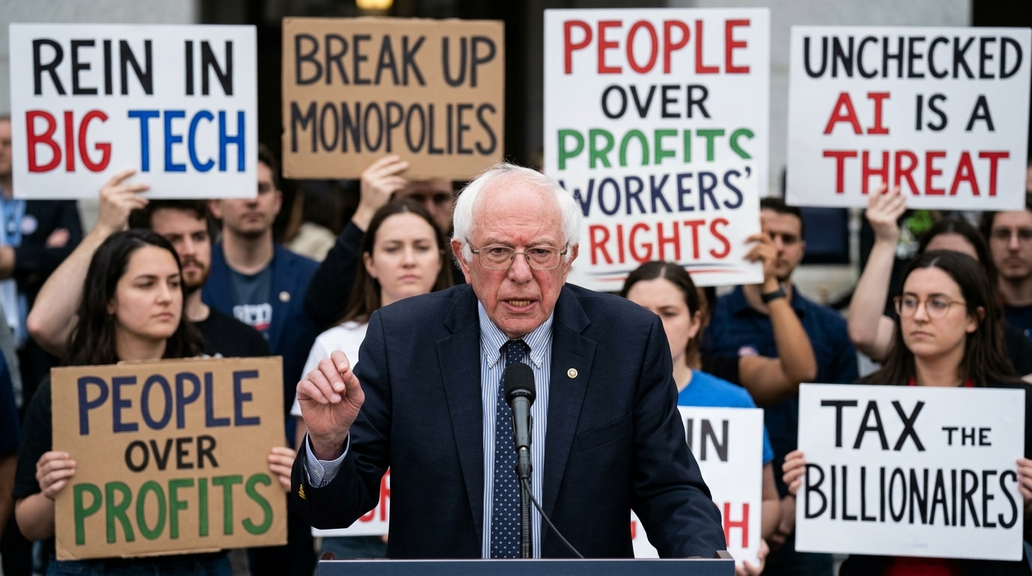
Senator Bernie Sanders, a vocal critic of concentrated wealth and Big Tech, is now predicting a surge in anti-Big Tech sentiment. As the Senator warns of the dangers posed by billionaires and unchecked AI, his message resonates with a growing number of Americans disillusioned with the power wielded by tech giants. Sanders’ stance aligns with a broader trend of skepticism towards Big Tech companies, as concerns about data privacy, monopolistic practices, and the impact of automation on employment continue to mount.
Sanders’ warnings come at a time when tech behemoths like Amazon, Google, Facebook, and Apple face increasing scrutiny from regulators and lawmakers. The Senator’s advocacy for workers’ rights and economic equality has struck a chord with many who feel left behind in the digital age. His predictions signal a potential shift in public opinion, with more people questioning the unchecked influence and wealth accumulation of Big Tech executives.
The rise of anti-Big Tech sentiment could have significant implications for the technology industry and society at large. As calls for greater regulation and accountability grow louder, tech companies may face increased pressure to address issues related to privacy, data security, and fair labor practices. This shift in public perception could also impact the way consumers interact with technology, influencing their choices and preferences when it comes to products and services.
For businesses in the tech sector, the changing tide of public opinion towards Big Tech presents both challenges and opportunities. Companies will need to navigate a landscape where trust and transparency are paramount, and where ethical considerations play a central role in decision-making. Embracing a more responsible approach to technology development and deployment could help organizations build stronger relationships with customers and stakeholders, while also mitigating regulatory risks.
The implications of rising anti-Big Tech sentiment extend beyond the realm of technology, touching on broader societal issues such as income inequality, job displacement, and corporate power. As debates around wealth distribution and economic fairness intensify, the role of technology in shaping these discussions becomes increasingly crucial. Sanders’ warnings serve as a reminder of the need to address the social and ethical implications of technological progress, ensuring that innovation benefits society as a whole.
In conclusion, Senator Bernie Sanders’ prediction of growing anti-Big Tech sentiment highlights the evolving dynamics between technology, society, and economy. His advocacy for greater scrutiny of tech giants reflects a broader shift in public attitudes towards Big Tech, with implications for regulation, consumer behavior, and societal values. As the tech industry grapples with these challenges, the need for responsible innovation and ethical leadership becomes more pressing than ever.