









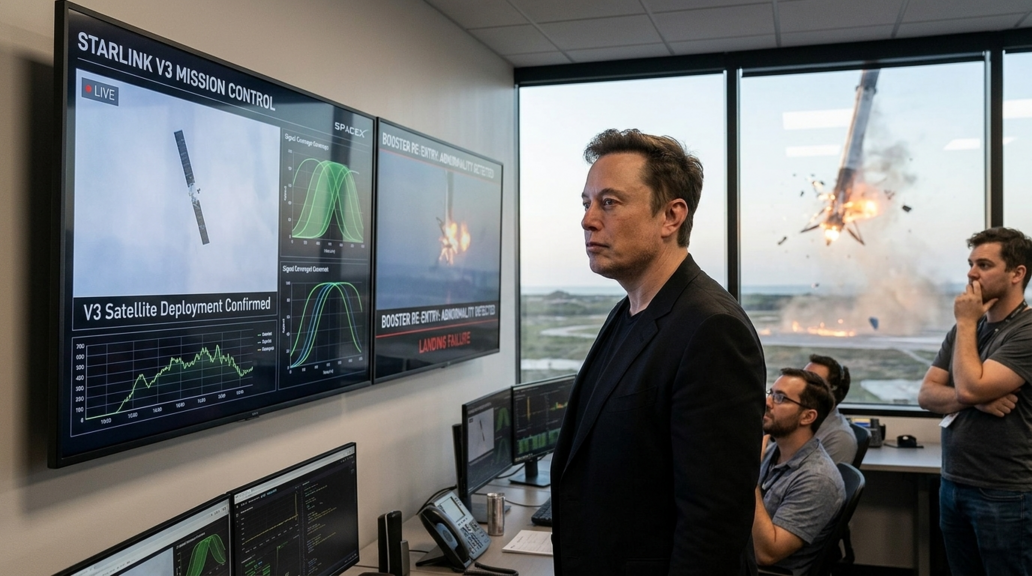
SpaceX, the pioneering aerospace company founded by Elon Musk, has once again made headlines with the successful deployment of new V3 Starlink satellites. This latest launch marks a significant milestone in the company’s ambitious goal of expanding internet coverage and connectivity options for consumers around the world. With each new satellite added to the growing Starlink constellation, SpaceX moves one step closer to providing ubiquitous internet access to even the most remote regions.
Despite the success of the satellite deployment, the mission was not without its challenges. SpaceX experienced another booster failure during the launch, underscoring the inherent risks and complexities of space travel technology. While setbacks like these are not uncommon in the aerospace industry, they serve as a stark reminder of the difficulties involved in pushing the boundaries of innovation and exploration.
The V3 Starlink satellites represent a significant technological advancement, with improved capabilities designed to enhance internet coverage and speed for users. With more than 9,000 active satellites already in orbit, SpaceX’s Starlink network is steadily expanding, offering reliable connectivity to customers in need of high-speed internet access. The deployment of these new satellites underscores SpaceX’s commitment to revolutionizing the way we access and use the internet.
Early users of SpaceX’s Starlink satellite internet service have already provided positive feedback on the service, praising its speed and reliability. The company’s relentless focus on improving its launch vehicles, satellites, ground stations, customer kits, and app has resulted in a network that is more resilient and efficient than ever before. As SpaceX continues to refine its technology and expand its coverage, consumers can expect even better internet connectivity in the years to come.
The successful deployment of the V3 Starlink satellites not only benefits individual consumers but also has broader implications for businesses, governments, and society as a whole. Improved internet coverage in remote areas can bridge the digital divide, providing access to essential services, education, and economic opportunities for underserved communities. Additionally, the expansion of SpaceX’s Starlink network has the potential to revolutionize the telecommunications industry, offering a competitive alternative to traditional broadband providers.
Looking ahead, SpaceX’s continued innovation in satellite technology and space travel has the potential to reshape the future of connectivity on a global scale. As the company works towards its goal of deploying thousands of satellites in orbit, the possibilities for improved internet access and communication are endless. With each successful launch, SpaceX brings us one step closer to a world where reliable, high-speed internet is accessible to everyone, regardless of their location.
In conclusion, SpaceX’s latest launch of V3 Starlink satellites represents a significant advancement in the company’s mission to revolutionize internet connectivity. Despite facing challenges along the way, SpaceX remains at the forefront of innovation in the aerospace industry, pushing the boundaries of technology to create a more connected world. As consumers, businesses, and governments look to the future, the impact of SpaceX’s Starlink network cannot be understated, paving the way for a more accessible, interconnected future for all.