


San Francisco 49ers Coach Reveals Tesla Autopilot Use in Crash Incident
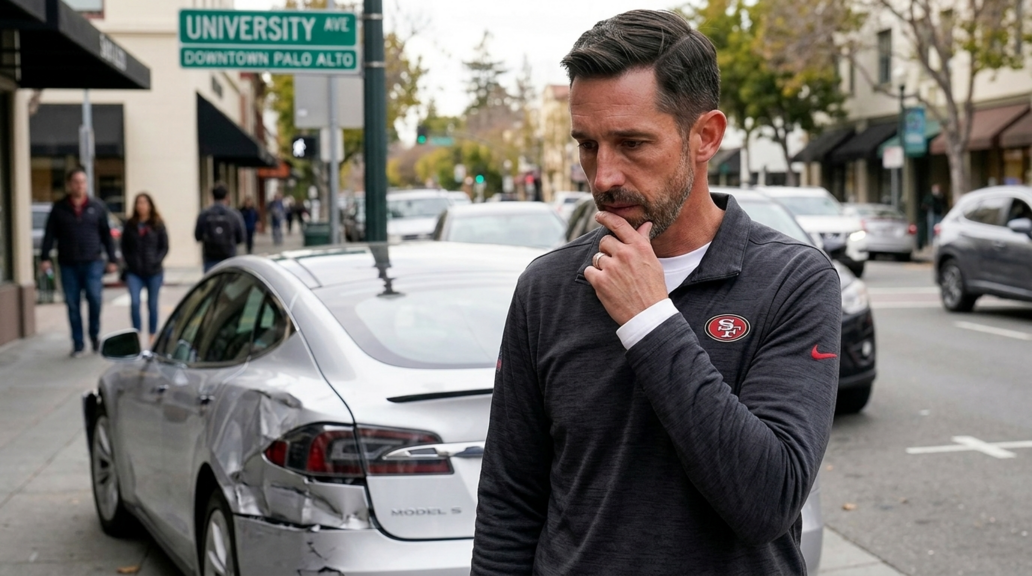
San Francisco 49ers coach Kyle Shanahan recently made headlines when he disclosed that his Tesla was on Autopilot during a car accident near downtown Palo Alto. This revelation has sparked discussions about the safety and liability implications of autonomous driving technology, especially in the business world where executives and professionals often rely on such features to enhance productivity and efficiency. The incident involving a high-profile figure like Shanahan brings attention to the real-world challenges and risks associated with the adoption of advanced driver-assistance systems.
While Tesla’s Autopilot is designed to assist drivers with tasks like steering, acceleration, and braking, it is not a fully autonomous system and requires human supervision at all times. Despite the warnings and safety precautions, incidents like Shanahan’s crash highlight the potential dangers of over-reliance on semi-autonomous features. This raises concerns about the need for clearer guidelines and regulations governing the use of such technologies, particularly in high-stakes environments where lives and livelihoods are at risk.
In the aftermath of the accident, Shanahan’s decision to publicly disclose that his Tesla was on Autopilot underscores the importance of transparency and accountability in the tech industry. As more companies and individuals embrace autonomous driving technologies, the need for open communication about incidents, near-misses, and potential risks becomes paramount. Shanahan’s candor serves as a reminder that even prominent figures are not immune to the pitfalls of emerging technologies, emphasizing the need for continuous education and awareness.
The impact of Shanahan’s crash goes beyond just one individual’s experience—it resonates with a broader audience of tech enthusiasts, professionals, and consumers who are increasingly interacting with autonomous systems in various aspects of their lives. Whether it’s self-driving cars, delivery drones, or automated factory robots, the integration of AI and machine learning technologies in everyday operations raises complex ethical, legal, and practical questions that society as a whole must grapple with.
As the investigation into Shanahan’s accident unfolds, there is a growing realization that the road to fully autonomous vehicles is paved with both promise and peril. While the potential benefits of reducing human errors, improving traffic flow, and enhancing road safety are evident, the need for robust testing, validation, and oversight remains crucial. The incident serves as a cautionary tale for companies developing autonomous driving systems, urging them to prioritize safety, reliability, and user awareness in their product offerings.
In conclusion, Kyle Shanahan’s revelation about using Tesla Autopilot before his crash serves as a timely reminder of the intricate challenges and dilemmas surrounding autonomous driving technology. The incident prompts us to reflect on the delicate balance between innovation and responsibility, pushing us to consider how we can harness the potential of AI-driven systems while safeguarding against unintended consequences. As the tech industry continues to push the boundaries of what is possible, incidents like this serve as wake-up calls to approach progress with caution, foresight, and a commitment to prioritizing human well-being above all else.