









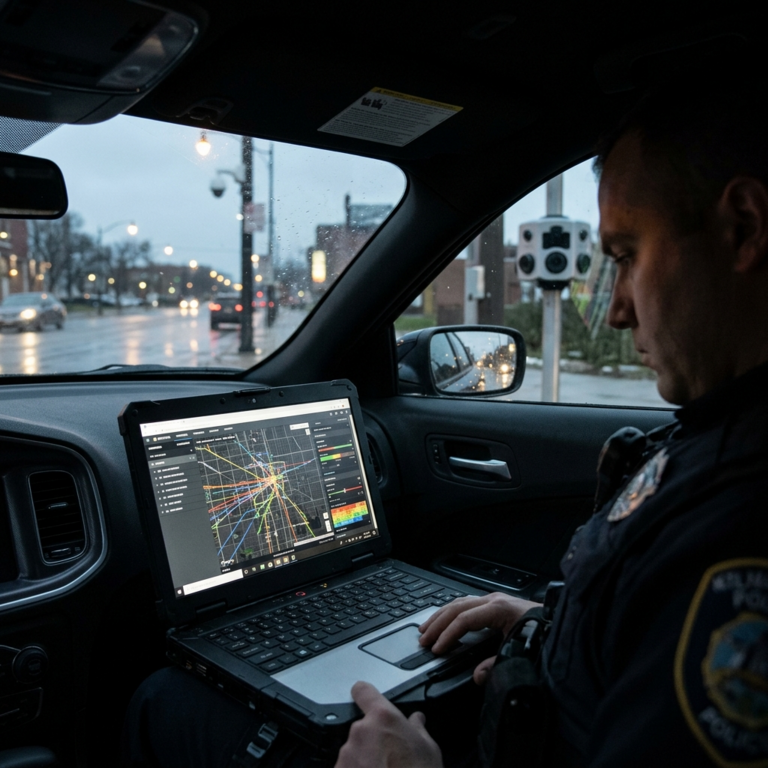
In a groundbreaking move that has sparked controversy and raised serious privacy concerns, Flock, a leading tech company, has unveiled a new AI tool that goes beyond traditional license plate tracking. Some police departments have already started using this powerful tool, which has the capability to track individuals in real-time, leading to questions about potential abuse and surveillance tactics. WIRED’s recent investigation sheds light on the implications of this next-generation surveillance technology.
One of the main concerns surrounding Flock’s AI tool is the potential for misuse by law enforcement agencies. The tool’s advanced capabilities could lead to increased instances of invasive surveillance, potentially infringing on individuals’ privacy rights. The risk of police officers using Flock as a personal stalking tool is a real possibility, raising alarms among privacy advocates and civil liberties groups.
The use of AI-powered surveillance tools like Flock also raises broader ethical questions about the balance between public safety and individual rights. While law enforcement agencies argue that such technologies are necessary for crime prevention and investigation, critics warn about the dangers of unchecked surveillance and the erosion of civil liberties. The debate over the use of these tools is likely to intensify as more departments adopt similar technologies.
The impact of biometric surveillance, like the one offered by Flock, on reducing violent crime is a contentious issue that has divided opinions. While supporters argue that these tools can help law enforcement agencies identify and track criminals more effectively, opponents fear that the widespread use of such technologies could lead to a surveillance state where individuals are constantly monitored and tracked without their consent.
The recent controversy surrounding Flock’s AI tool is not an isolated incident. Similar concerns have been raised in other cities where police departments have deployed advanced surveillance technologies with little oversight or transparency. The lack of clear guidelines and regulations governing the use of these tools has raised red flags among privacy advocates and civil rights organizations.
As the debate over the use of AI-powered surveillance tools continues to unfold, it is crucial for policymakers, tech companies, and civil society to engage in meaningful discussions about the ethical and legal implications of these technologies. Finding a balance between public safety and individual privacy rights is essential to ensure that these tools are used responsibly and in accordance with the law. The outcome of these discussions will have far-reaching consequences for the future of surveillance practices and the protection of civil liberties in the digital age.
In conclusion, Flock’s new AI tool has reignited the debate over police surveillance tactics and raised important questions about the impact of advanced surveillance technologies on society. The ethical and legal implications of using these tools must be carefully considered to prevent potential abuses and protect individuals’ privacy rights. As technology continues to evolve, it is imperative that we strike a balance between innovation and accountability to safeguard our fundamental rights in an increasingly digital world.