









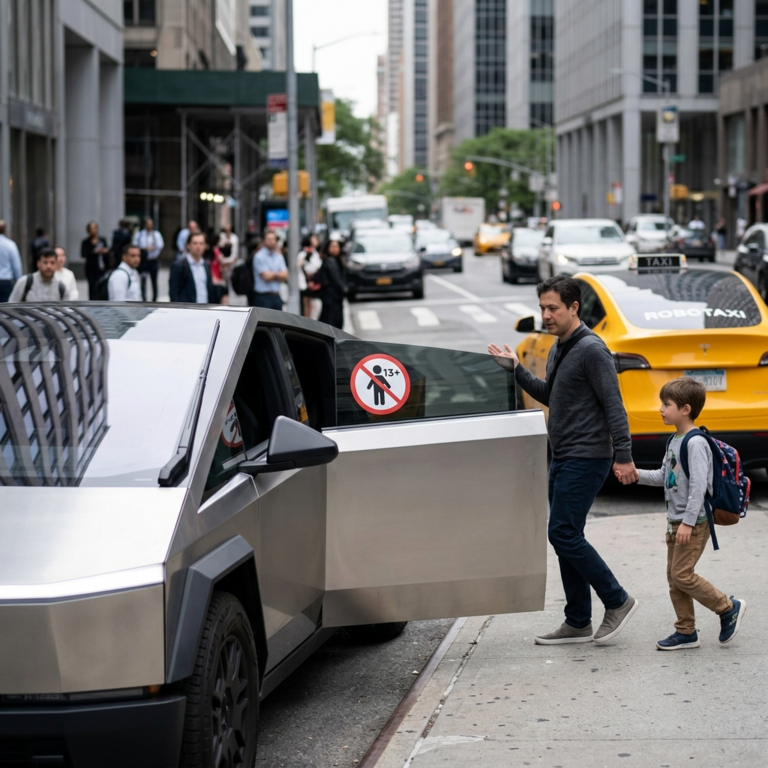
Tesla’s latest move with its Cybercab robotaxi service has sparked controversy and raised questions about age restrictions in the ride-sharing industry. The company announced that children under the age of 13 will not be allowed to ride in the Cybercab, even if accompanied by a parent. This decision sets a more stringent rule compared to the Model Y SUVs used as robotaxis, where children under 13 were allowed to ride with an adult. The move has significant implications for families who rely on ride-sharing services for transportation, as well as for the broader market as a whole.
The decision to impose strict age restrictions on the Cybercab reflects Tesla’s commitment to safety and regulatory compliance. By setting a clear age limit, the company aims to minimize potential risks and ensure a secure and comfortable ride experience for passengers. While some may view this move as overly restrictive, others see it as a proactive measure to protect both children and drivers. This decision could set a precedent for other companies in the ride-sharing industry to follow suit and implement similar age restrictions on their services.
For families with young children, the new age restriction on the Cybercab could present challenges when it comes to transportation options. Parents who rely on ride-sharing services to transport their children to school, activities, or appointments may need to find alternative solutions if they are unable to use the Cybercab. This could lead to increased demand for family-friendly ride-sharing options or other transportation services that cater specifically to parents with young children. It also raises questions about the role of technology in shaping the way families navigate urban mobility and access transportation services.
In addition to the impact on families, the age restrictions on the Cybercab could have implications for the broader ride-sharing market. As companies like Tesla continue to innovate and introduce new technologies to the industry, they must also navigate regulatory challenges and address concerns related to safety and accessibility. The decision to restrict children under 13 from riding in the Cybercab highlights the complex intersection of technology, regulation, and consumer preferences in the evolving landscape of transportation services.
Looking ahead, it will be interesting to see how other companies in the ride-sharing space respond to Tesla’s decision and whether they will follow suit with similar age restrictions on their services. This move could prompt a broader conversation about the role of technology in shaping societal norms and expectations around transportation and safety. As companies continue to push the boundaries of innovation in the ride-sharing industry, they must also consider the implications of their decisions on consumers, families, and the overall market. Ultimately, the age restrictions on the Cybercab serve as a reminder of the delicate balance between innovation and responsibility in the tech-driven world of transportation services.