

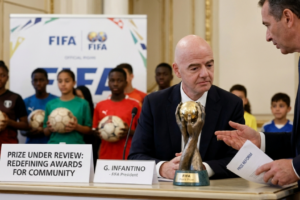
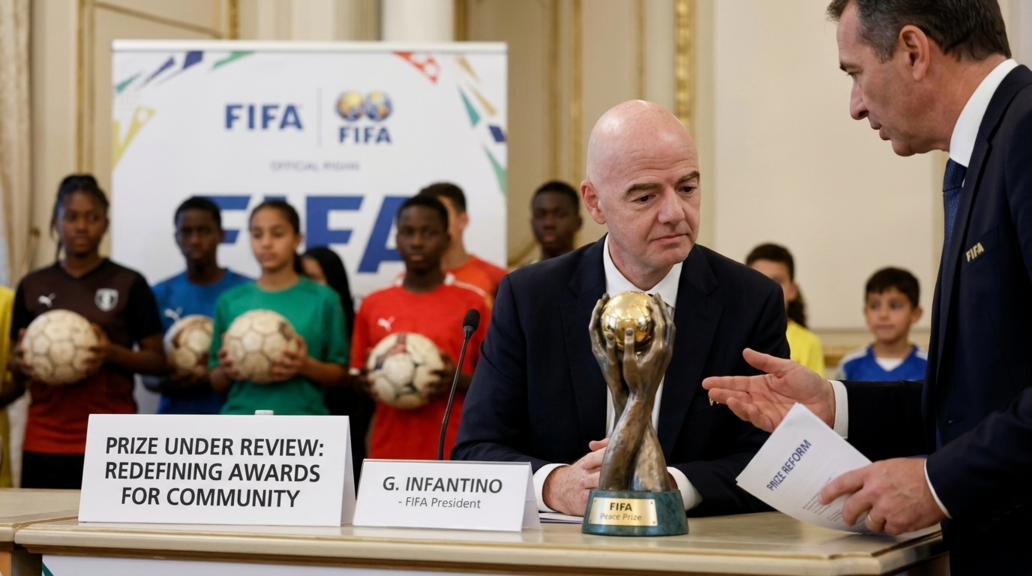
Soccer’s newest peace prize was meant to place the world’s most popular game on the side of diplomacy. Instead, FIFA’s inaugural award has become a test of whether the sport’s governing body can distinguish public service from political theater. When Gianni Infantino presented it to Donald Trump in December 2025, critics questioned not soccer’s capacity to unite, but FIFA’s choice of recipient and its reasoning. The prize can still honor a powerful idea, but its first chapter has left the organization with a credibility problem to solve.
The award was presented during the final draw for the 2026 World Cup, a moment designed to build anticipation for the tournament and showcase football’s global reach. Infantino praised Trump for actions he said had helped achieve peace, saying the president deserved the inaugural honor. But a prize bearing FIFA’s name makes a claim about values, and fans naturally ask what evidence supports that claim. Critics called the gesture political flattery, leaving the award’s intended message crowded out by arguments over its recipient.
That reaction matters beyond the political spotlight. FIFA is the game’s most powerful governing body, and its choices shape how billions of supporters view the sport and its institutions. A peace prize could recognize the work of players, clubs and community groups using football to bridge divisions, support young people or help communities recover from conflict. Instead, the opening controversy has made the award itself the story, putting pressure on FIFA to show that it can become more than a ceremonial gesture.
The challenge now sits with FIFA’s social responsibility committee, which has been given oversight of the prize. That offers a chance to set transparent criteria, explain how nominees are selected and identify results that can be measured in people’s lives. Clear rules would not erase the criticism of the first award, nor guarantee that future choices win universal approval. They could, however, give supporters a basis to judge whether the honor recognizes meaningful work rather than political proximity.
There is no shortage of football’s potential to serve communities. A team can offer routine and belonging to children facing instability; a local match can bring neighbors together across lines that divide them elsewhere. Clubs and players already lend their platforms to causes, while grassroots organizations use the sport to create safe spaces and connections. A prize that tells those stories would give fans something tangible to celebrate and highlight the people doing the work, not just the officials presenting an award.
For FIFA, the stakes are reputational as well as humanitarian. The organization has to persuade a skeptical public that this prize is not simply a tool for flattering powerful figures, especially when its first recipient made that suspicion hard to avoid. European lawmakers have also called for an investigation into the decision, increasing scrutiny around the governing body’s judgment. If FIFA responds with openness and a credible process, the controversy could become a reason to improve the prize; if not, it may define it.
Fans know football cannot settle every conflict, and no trophy can certify peace. But the sport’s reach gives FIFA an opportunity to recognize people who use the game to build trust and create possibility, often far from the grand stages and cameras. The next edition will be judged against the first: by the nominee, the reasoning and the impact FIFA can demonstrate. For now, the peace prize remains a missed opening—and a chance to prove that soccer can turn an awkward award into something worth celebrating.