





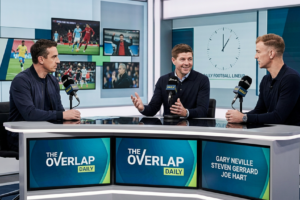

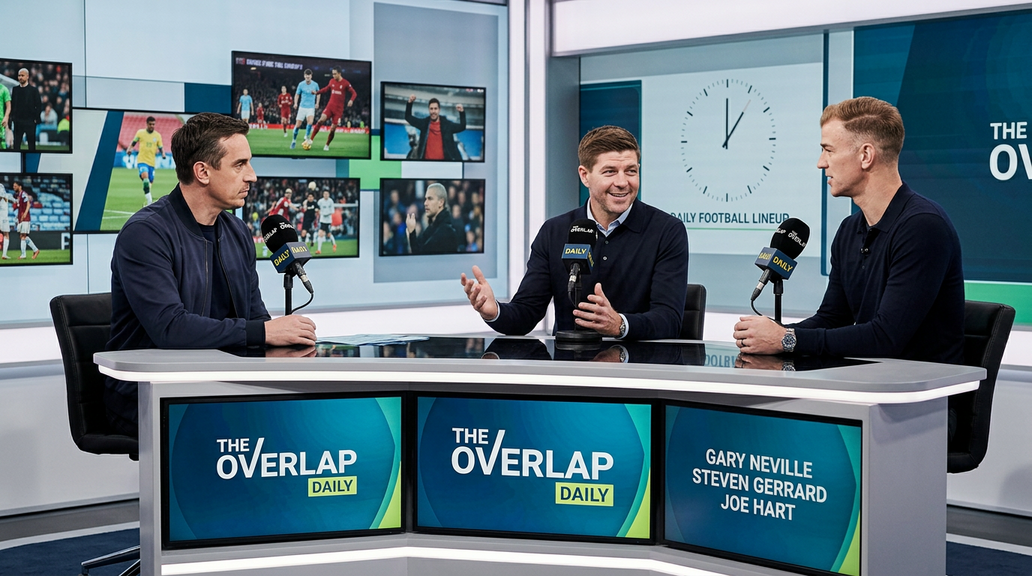
Gary Neville’s football conversation is no longer content to wait for the weekend. The Overlap, his fast-growing media platform, is moving to a daily format, widening its reach with former Liverpool captain Steven Gerrard and ex-England goalkeeper Joe Hart among the new voices. The expansion reflects a broader shift in modern football: arguments that once ended at the final whistle now travel through podcasts, video clips and social feeds. For supporters, it promises a fresh route into the sport’s biggest questions, delivered by people who have lived them.
For Neville, the move is another step in building an operation that extends his influence beyond his playing and punditry careers. The former Manchester United and England defender has become a central figure in football media, where familiarity with elite dressing rooms gives analysis a personal edge. The Overlap’s appeal has rested on candid exchanges and clashing perspectives rather than polished, one-way commentary. Going daily tests whether that chemistry can survive a faster publishing rhythm without making the conversation feel routine.
Gerrard’s presence brings a particularly charged perspective to a football conversation often shaped by rivalry. As Liverpool’s former captain, he spent years at the heart of one of English football’s defining club identities, while his playing career also took him through major international tournaments. His experience offers more than memories: he can speak to leadership, pressure and the fine margins that decide games at the highest level. Sharing a platform with Neville and Jamie Carragher, his former Liverpool teammate, creates the prospect of frank debate between voices with deep personal connections to the sport.
Hart adds a different angle, shaped by the unique demands of goalkeeping and a career with England and at leading clubs. Keepers see the game unfold from a distinct vantage point, responsible for organising defenders while carrying the consequences of a single costly error. That perspective can deepen discussion of tactics and pressure, subjects that often sound different when explained by the player tasked with stopping the decisive shot. His arrival also broadens the group beyond its familiar collection of outfield stars and managerial voices.
The daily schedule raises an obvious challenge: football never lacks talking points, but attention is finite. A packed calendar of league matches, European competition and international football gives presenters endless material, yet frequency alone cannot guarantee substance. The Overlap will need to balance immediate reaction with the slower, more revealing conversations that let former professionals explain what fans may not see. Its established personalities provide a head start, but listeners will judge the new offering by whether each instalment earns its place in a crowded media landscape.
That landscape has changed dramatically as former players build audiences beyond television studios and newspaper columns. Fans can hear directly from people who have felt the dressing-room tension, managed a difficult defeat or carried a club’s hopes into a major match. Such access does not make every opinion definitive, and debate is part of the appeal; different allegiances can expose blind spots as readily as they create sparks. With Neville, Gerrard and Hart involved, the show has the ingredients for disagreement grounded in first-hand experience.
For supporters, The Overlap’s expansion is therefore about more than another podcast arriving on the schedule. It signals how football’s public conversation is increasingly being shaped by those who once made their living on the pitch, now competing for attention in a different arena. Neville is turning a recognisable brand into a more regular presence, while Gerrard and Hart bring histories that resonate with fans across generations. If the daily format preserves candour and gives its new voices room to challenge one another, it could make the debate around football feel as compelling as the match itself.