








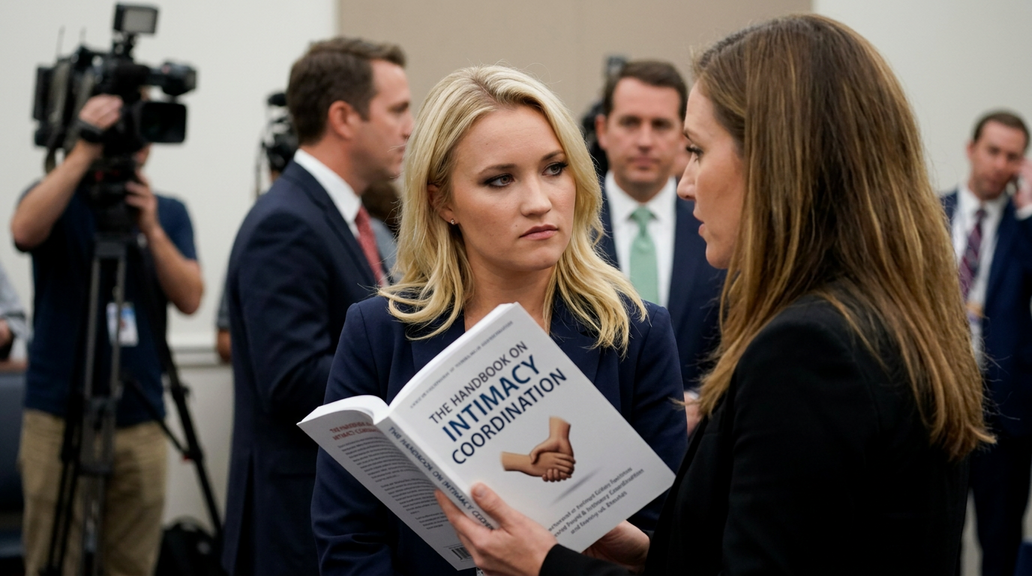
Emily Osment’s request for an intimacy coordinator while working on Young Sheldon was not prompted by a sex scene, but by a concern about the age gap between her and co-star Montana Jordan. The account comes from Jessica Radloff’s new book about the CBS comedy, bringing renewed attention to a behind-the-scenes choice that speaks to changing expectations on television sets. Osment, who played Mandy McAllister, reportedly explained that Jordan seemed extraordinarily young to her when they worked together, punctuating the feeling with the blunt remark, “He was a baby!” Her request underscores how performers can seek safeguards even when a production contains no explicit intimacy, and why viewers may see the show’s familiar family comedy through a more complicated lens today.
The age difference was substantial: Osment was born in 1992, while Jordan was born in 2003, making her about 11 years older. Jordan joined the sitcom as Georgie Cooper, Sheldon’s older brother, and Osment entered the story as Mandy, a confident woman whose relationship with Georgie becomes a major plotline. Their characters’ romance, pregnancy and eventual marriage gave the show a grown-up storyline alongside Sheldon’s childhood adventures. The real-life age gap did not mean the actors’ circumstances mirrored their characters’, but it helps explain why Osment wanted clear professional boundaries during their work together.
An intimacy coordinator is a trained professional who helps actors, directors and producers plan scenes involving physical closeness, nudity or simulated sexual activity. The coordinator can discuss consent in advance, clarify what performers are comfortable doing, and help ensure that agreed boundaries are respected on set. Such work is sometimes misunderstood as a sign that a production contains graphic material; in practice, it is also a way to make potentially awkward moments safer and more predictable. In Osment’s case, the reported concern was the dynamic between co-stars, not a claim that Young Sheldon filmed sex scenes.
That distinction matters because the series was a network sitcom, not an adult drama, and its appeal rested largely on family humor and the Cooper household’s everyday conflicts. Still, Georgie and Mandy’s relationship asked audiences to accept a romance between a teenager and an older woman, with pregnancy quickly raising the stakes. The storyline was fictional, but casting and performance happen in real workplaces, where actors must navigate each other’s ages, experience and comfort. Osment’s reported request offers a glimpse of the conversations that can take place beyond the jokes and plot twists viewers see onscreen.
Young Sheldon premiered in 2017 as a prequel to The Big Bang Theory, following Sheldon Cooper’s childhood in East Texas. The series built a broad audience by balancing the title character’s unusual intellect with the pressures facing his parents and siblings. Georgie’s arc eventually became important enough to continue beyond the original show: the spinoff Georgie & Mandy’s First Marriage expands the story of the couple and their young family. The book’s recollection therefore lands at a moment when viewers are still invested in these characters, and may prompt renewed discussion of how the original series framed their relationship.
For fans, the revelation adds context rather than rewriting what appeared on screen. Osment’s reaction can be read as a practical effort to ensure that she and Jordan had support in navigating a potentially sensitive working relationship, not as an accusation against her co-star or the production. That distinction is important: intimacy coordinators establish shared expectations, rather than assigning blame. The account also illustrates how performers can advocate for themselves in ordinary situations, where a scene may not be sexual but a personal boundary still deserves consideration.
Across film and television, intimacy coordinators have become more visible as productions respond to increased attention to consent and workplace power. Their presence is part of a wider shift toward treating safety as a collaborative process, much like stunt coordination for physically demanding scenes. The practice does not eliminate creative risk or dictate how a story must be told; it gives performers a structured way to communicate while allowing directors to pursue the scene. Osment’s reported request is a modest but telling example of that change, particularly on a mainstream comedy whose audience might not expect such conversations behind the camera.
Radloff’s book adds a human detail to the history of a popular series: an actor noticed a difference in age and asked for a measure that would help her feel comfortable. The detail also reflects the distance between a character’s fictional choices and the real people charged with bringing them to life. As viewers revisit Young Sheldon or follow Georgie and Mandy’s next chapter, they may pay closer attention to how productions handle relationships involving young performers. In that sense, Osment’s decision resonates beyond one set, showing how thoughtful safeguards can support both artists and the stories audiences love.