








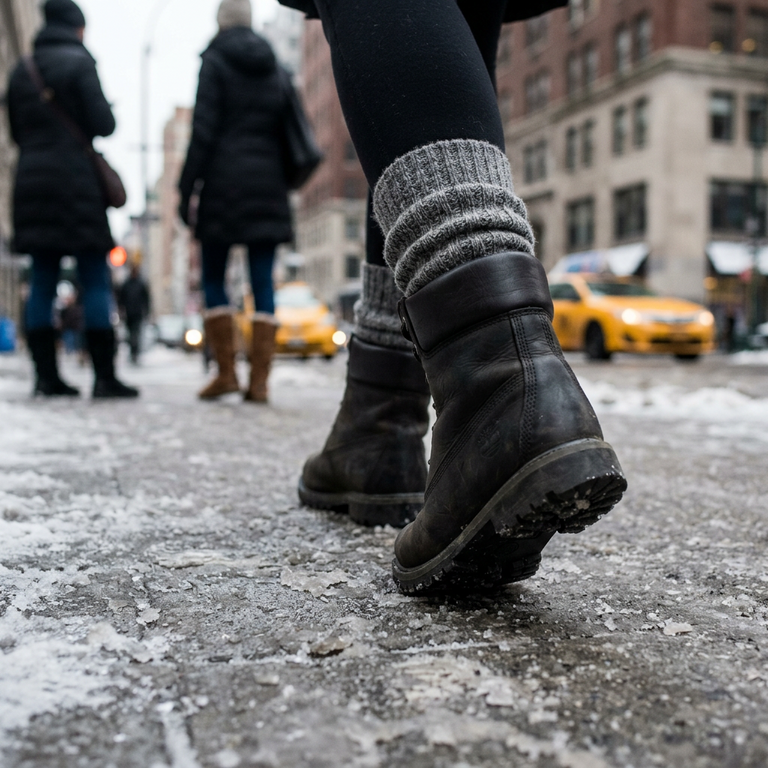
When winter settles over New York City, the commute becomes a daily test of layers, timing and nerve. Even a short walk to the subway can feel long when cold seeps through ordinary shoes. That is the practical premise behind an NYC shopping editor’s guide to warm socks for winter boots and shoes: not a runway reveal or celebrity endorsement, but a small wardrobe upgrade shaped by city life. The recommendations address a familiar reality for residents and visitors alike: walking is not simply exercise here, but the connective tissue between work, errands, restaurants, theaters and train platforms. In freezing weather, comfort can determine whether someone enjoys the city’s abundance or spends the evening counting blocks until warmth.
The guide’s appeal rests on its grounded point of view. A shopping editor who navigates New York on foot can judge socks against the details that product pages often flatten: long stretches outdoors, crowded platforms, changing indoor temperatures and shoes worn for hours. Warmth matters, but so do fit and breathability; a thick pair that crowds a boot may create discomfort rather than solve it. Readers looking for seasonal advice are not necessarily seeking technical gear or a full wardrobe overhaul. They want a clear sense of what might work with the footwear already by the door, and why a modest purchase could make everyday winter routines easier.
That makes the story part of a broader evolution in lifestyle journalism, where service reporting competes for attention alongside celebrity profiles and entertainment news. Editors translate lived experience into practical recommendations, helping audiences decide what deserves their money and what is merely seasonal hype. The format is especially relevant during cold snaps, when a dependable item can feel more urgent than another trend cycle. New York’s winter weather can shift quickly, and extreme-cold watches, storm warnings and advisories are reminders that preparation is not just aesthetic. A useful guide offers a small measure of control in conditions that can otherwise make ordinary movement feel like work.
Socks rarely command the cultural attention given to coats, boots or designer collaborations, yet they sit at the point where fashion meets physical comfort. The right pair can help make a favorite shoe more useful through winter, while an unsuitable one can leave feet cold, damp or cramped. That practical distinction matters to theatergoers walking between dinner and a show, visitors exploring neighborhoods, and workers whose days involve repeated trips outdoors. New Yorkers often build their routines around transit and walking, so the comfort of a basic layer can influence how far they are willing to go. In that sense, the editor’s advice is about access to the city as much as shopping.
There is also a quiet sustainability argument in choosing thoughtfully. A versatile pair that works with multiple boots and shoes may extend the usefulness of existing clothes, rather than prompting a shopper to replace an entire winter wardrobe. That does not make any one recommendation a universal solution: people experience cold differently, and footwear, activity level and personal preference all affect what feels comfortable. The value of editorial guidance is helping readers weigh those factors, not promising that one item will transform every commute. For shoppers, useful details include material, thickness, fit and intended use; for publishers, clear explanations build trust more effectively than breathless claims.
The human stakes become sharper when severe cold affects people with fewer options. New York’s coat drives and warming initiatives underscore that winter comfort is not equally available, and socks alone cannot address the needs of anyone lacking safe shelter or adequate clothing. Still, practical shopping coverage can prompt readers to think about what keeps them warm and what they might share or donate. A personal recommendation may begin with one editor’s feet, but it also points toward a citywide question: how do people keep moving when the weather turns hostile? The most responsible framing recognizes both the usefulness of individual purchases and the limits of consumer solutions.
For fans of New York’s cultural life, the connection is tangible: getting to a concert, restaurant, gallery or performance often means spending real time outside, regardless of what awaits indoors. Warm socks are not a glamorous headline accessory, and that is precisely why this kind of story can resonate. It treats comfort as part of participation, not an afterthought, and offers readers a low-stakes way to prepare for the season. In an entertainment landscape crowded with launches and celebrity-driven trends, service journalism earns its place by solving recognizable problems. The editor’s central message is simple: a small upgrade cannot change winter, but it may make the city easier to enjoy, one walk at a time.