








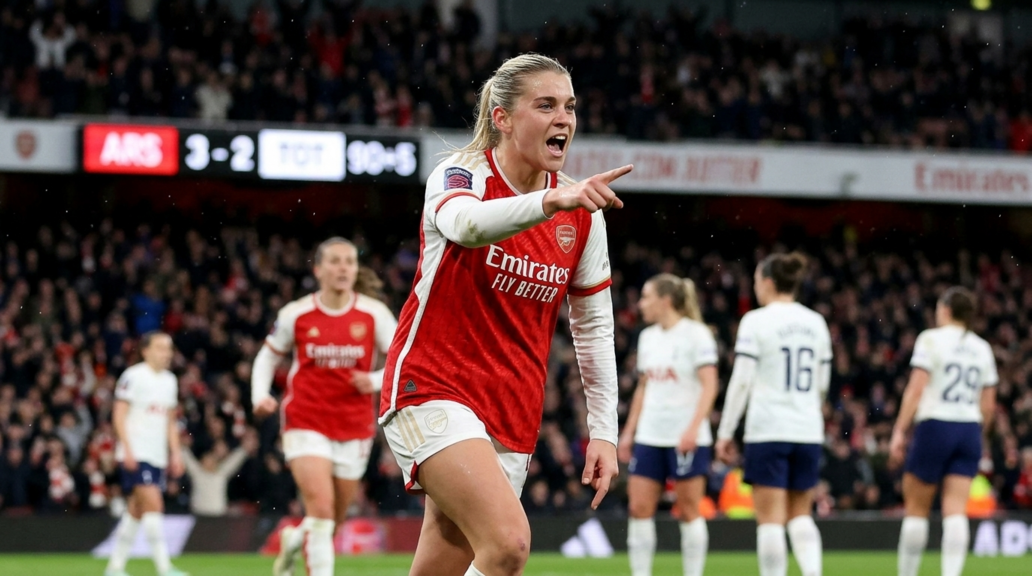
The north London derby rarely needs extra stakes, but Arsenal arrived at Tottenham needing more than local bragging rights. Their 2-1 comeback, secured by Alessia Russo’s late composure and a contentious penalty, offered relief after a difficult league stretch. It was only the Gunners’ second league win in seven matches, a statistic that had sharpened scrutiny around the team and manager Renee Slegers. The response was imperfect, yet the points could matter as much psychologically as they do in the table. For supporters, the derby provided a vivid reminder that resilience remains available even when fluent football and consistent results have proved harder to find.
Tottenham made the contest uncomfortable, taking the lead and forcing Arsenal to chase a match with both rivalry and league momentum at stake. The hosts’ advantage heightened the pressure on a visiting side that has struggled to turn promising performances into victories. Arsenal needed patience as well as urgency, and the comeback demanded that players keep their nerve when the derby threatened to slip away. In a fixture shaped by emotion, the Gunners eventually found a route back through persistence rather than control.
The decisive moment brought controversy as a handball involving Arsenal defender Leah Williamson led to a penalty. Tottenham’s players and supporters had reason to question the decision, while Arsenal had little time to dwell on the debate. Russo stepped forward and converted, turning a contentious call into the goal that changed the match. Penalties in derbies can become tests of nerve as much as technique, and the England forward delivered when the stakes were highest.
Russo’s contribution was about more than the finish: it gave Arsenal a focal point in a game that required resolve from the whole team. The Gunners still had to protect their advantage, and the closing stages tested their concentration against a Tottenham side seeking an equaliser. Their late-game grit was a welcome feature, especially after a run in which results had offered scant reassurance. Yet Arsenal will know that defending a lead cannot become a substitute for creating one with sharper, more assured play.
That balance defines the challenge ahead for Slegers. A derby win can lift a dressing room and reconnect a team with its supporters, but one result does not erase the inconsistency reflected in two league victories across seven outings. Arsenal need to carry the urgency of their response into upcoming matches, while improving the quality and consistency of their football. The result offers breathing room, not a guarantee that the season’s difficult questions have been answered.
There was another significant result in Manchester, where United checked City’s winning run and interrupted the early momentum of their local rivals. Under manager Eva Olid, United showed the resistance required to stay in a match against a City side that had begun its campaign impressively. A late equaliser denied Olid a first victory, but it also ensured United avoided defeat and brought City’s winning start to a halt. For a new manager, that point offered evidence of progress, even if the first win remains the immediate target.
Together, the two results supplied a reminder of the Women’s Super League’s fine margins and the value of refusing to yield. Arsenal’s comeback gives the Gunners a needed lift, while United’s stand against City could provide a platform for Olid’s rebuilding work. Fans will remember Russo’s nerve and the disputed penalty, but the lasting significance will depend on what follows. Arsenal must build momentum through better football; United must turn resistance into wins, and both Manchester clubs will feel the consequences of a result that checked City’s charge.