








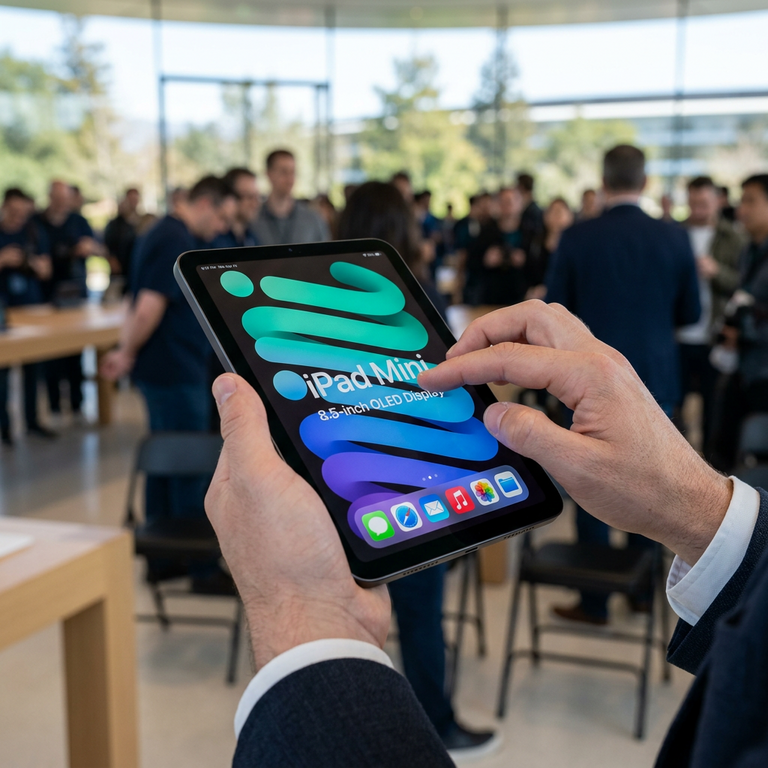
Apple has given its smallest tablet a substantial rethink, replacing the familiar 8.3-inch LCD with a larger 8.5-inch OLED panel and setting the redesigned iPad mini at $699. The Wi-Fi-and-cellular model costs $849, while the chassis measures just 5.4 millimeters thick, preserving portability even as Apple expands the screen. The company unveiled the device days before Wednesday’s “Pro and tell” event, placing the Mini in the spotlight ahead of a broader product showcase. Early reports also point to IP67 water and dust resistance and a new Acoustic Display audio system, extending the update beyond a sharper, roomier screen. Together, those changes recast a product often treated as a niche companion as a more capable tablet in its own right.
OLED is the headline change because each pixel emits its own light, rather than relying on a backlight as LCD screens do. That design can deliver deeper blacks, stronger contrast and more vivid images, while making dark scenes and video feel more immersive. For readers, travelers and people who stream or play games on the move, the difference could be immediately visible; the larger diagonal also gives text, controls and split-screen apps more breathing room. Apple has not supplied brightness, refresh-rate or battery-life figures in the announcement details available, so buyers should wait for independent testing before assuming the new panel improves every aspect of viewing.
The screen enlargement is modest on paper, but meaningful in a device designed to be held in one hand or tucked into a small bag. A larger usable area can reduce cramped interfaces in maps, ebooks, note-taking and creative apps without requiring customers to carry an 11-inch-class tablet. The challenge is ergonomic: even a thin tablet must remain comfortable for extended reading, and the Mini’s value depends on balancing extra workspace against the convenience that distinguishes it. At 5.4 millimeters, the new model appears to preserve an unusually slim profile, though its weight and grip will matter just as much in daily use.
The reported IP67 rating would add a practical layer of reassurance, indicating protection against dust and limited water exposure under standardized testing conditions. It does not make the tablet invulnerable, nor should owners treat it as a device intended for swimming or prolonged immersion. Still, resistance to spills, rain and dusty environments could make the Mini more appealing in kitchens, classrooms, workshops and travel situations where electronics face real-world hazards. The Acoustic Display system is another notable addition: integrating audio hardware into the display structure may help Apple save space, although sound quality and repairability will need hands-on scrutiny.
Price will shape the Mini’s reception as much as its specifications. At $699, the Wi-Fi version sits well above the entry-level iPad and begins to overlap with larger, more versatile models, making the purchase a deliberate choice rather than an inexpensive route into Apple’s tablet ecosystem. Cellular connectivity raises the cost to $849, before any accessories or data plan, but could suit field workers, frequent travelers and professionals who need access away from Wi-Fi. Apple is effectively asking customers to pay for compactness and premium display technology; whether that proposition works depends on how much they value a small tablet over a larger screen per dollar.
The redesign also arrives amid an industry shift toward displays and devices that blur old product categories. Phones have grown larger, laptops have become more portable, and tablets increasingly serve as reading surfaces, creative canvases and lightweight work machines. The Mini’s opportunity is not to replace every laptop or tablet, but to occupy the gap between a phone that feels restrictive and a full-size tablet that can be cumbersome. OLED, water resistance and a thinner body strengthen that case, while the rumored A20 Pro chip, if confirmed in final specifications, could make demanding apps and games more viable without changing the device’s essential pocketable character.
For developers and businesses, a larger, higher-contrast Mini could make existing tablet software more useful in settings where portability matters more than maximum screen area. Retail staff might consult inventory, health workers could review information on rounds, and students could annotate readings without carrying a heavier device. Yet the practical impact will depend on software support, accessory compatibility, battery endurance and how well apps adapt to the expanded display. Apple’s ecosystem gives the Mini an advantage through familiar services and applications, but customers considering it for work will still need to compare its price and capabilities with compact laptops and competing tablets.
The announcement’s timing hints that Apple sees the Mini as part of a broader product story, not merely a quiet refresh. Its “Pro and tell” showcase may draw attention to higher-end devices, but this redesign highlights a different kind of innovation: refining a specialized format until it feels less compromised. The stronger screen and added durability could broaden the audience, while the premium price risks narrowing it to enthusiasts and people with clear portability needs. For consumers, the decision will turn on whether the Mini’s combination of compact dimensions and premium features solves a daily problem; for the market, it tests how much buyers will pay for a tablet that is small by design, rather than simply cheap.