





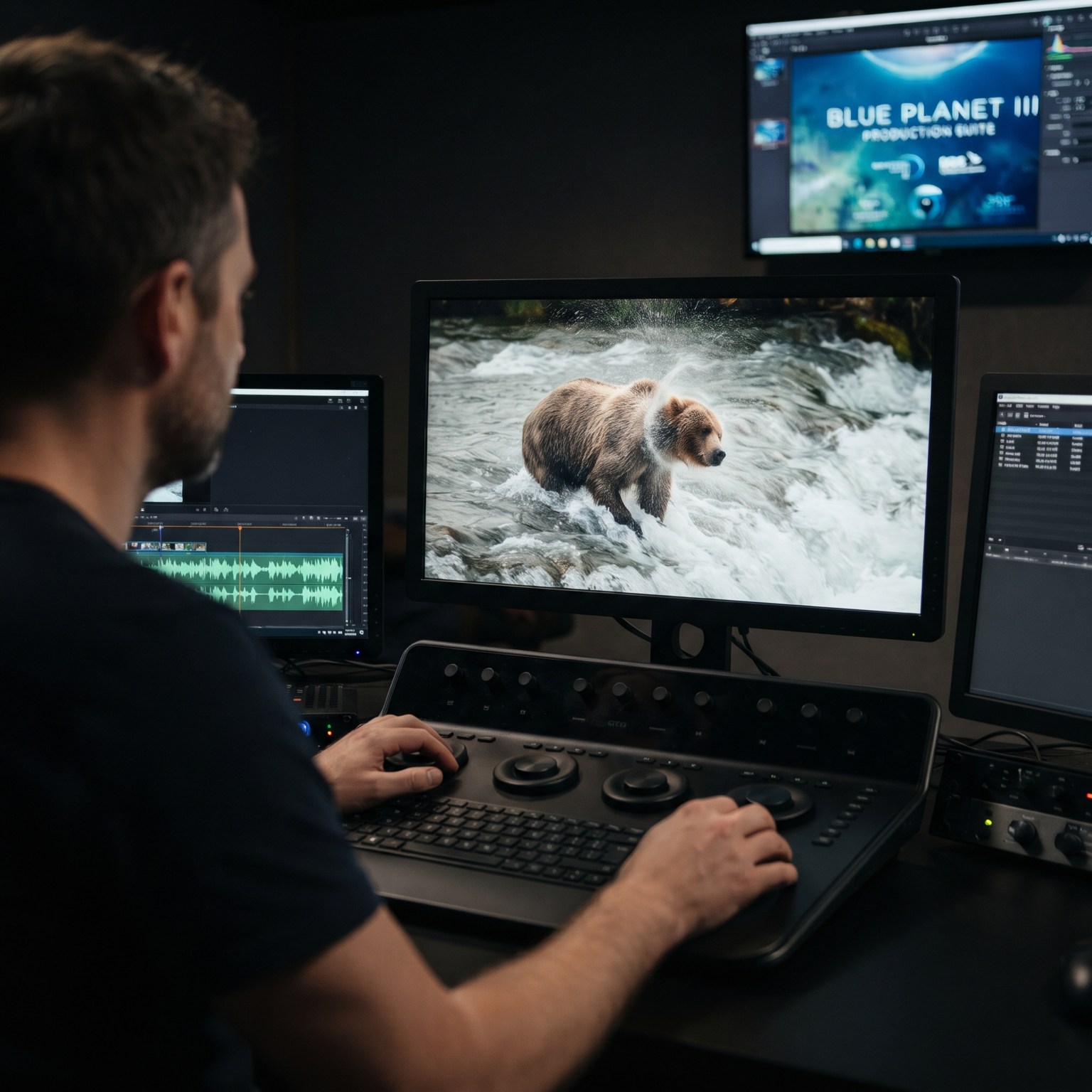
Blue Planet III, the BBC’s forthcoming nature series, is making an unusual editorial choice: it will retain some imperfect wildlife shots that producers might once have cut. That decision is aimed at a new problem for factual television: polished images are becoming easier to manufacture with generative artificial intelligence. Instead of presenting every encounter as seamless, the programme wants visible rough edges to remind viewers that wild animals move unpredictably and cameras have limits. Blur, missed focus or awkward framing can therefore function not as mistakes to hide, but as evidence of a real event unfolding beyond a filmmaker’s control.
Nature documentaries have always depended on trust, built through patient fieldwork, specialist knowledge and the implicit promise that extraordinary scenes happened in the natural world. That promise is harder to communicate in an era when image generators can invent convincing animals, habitats and lighting in seconds, often without obvious visual glitches. Even authentic footage may now be met with suspicion, especially online, where clips are detached from captions and context and shared at enormous speed. Keeping a few imperfect moments is a modest production choice, but it makes the process of seeing feel tangible rather than frictionlessly synthetic.
For production teams, the choice also acknowledges that field filming is an exercise in managing uncertainty, not staging a studio scene with repeatable light, marks and timing. An animal may cross the frame for seconds, disappear behind vegetation, or leave a camera operator with a technically imperfect record of a rare behavior. Discarding every flaw can make a sequence visually coherent, yet it can also imply that nature itself delivers carefully composed moments on demand. Showing selected roughness offers a quieter kind of transparency: viewers glimpse the limits of observation, while the animal remains the subject rather than the camera’s achievement.
The approach does not mean that every shaky or soft image should remain in the final cut, or that a production can treat imperfections as proof on their own. Editing still shapes the story, and authentic footage can be misleading if it is cropped, narrated inaccurately or stripped of context. The distinction is that a small visual defect may support a credible account when it fits the circumstances of filming, rather than being deliberately added as a costume of realism. Producers will need to explain their methods and preserve records that establish where footage came from, particularly as synthetic imagery becomes harder to spot by eye.
For viewers, the practical lesson is not to equate polish with deception or roughness with truth. Instead, audiences may need to assess the surrounding signals: who made a clip, what the programme says about its sourcing, and whether independent reporting supports its claims. Broadcasters have an advantage in that they can provide context, editorial standards and recognizable accountability, but reputation alone will not settle every question. The BBC’s decision makes trust part of the viewing experience, asking audiences to notice that credible observation can look less immaculate than a computer generated fantasy.
There is also a business calculation. Nature series compete in a global market where extraordinary visuals help sell subscriptions, attract advertisers and travel across social platforms, while generative tools promise cheaper ways to create spectacle. A production that keeps genuine, imperfect material can distinguish its work from synthetic imagery and reinforce the value of costly expeditions, expert crews and access to remote habitats. Yet the strategy carries risk: viewers accustomed to cinematic images may read rough footage as lower quality unless the programme makes clear why the moment matters. Authenticity must complement storytelling, not replace it.
Blue Planet III is not offering a technical watermark or a universal test for fabricated media; it is making a cultural argument about what believable images should look like. As AI systems improve, provenance tools, disclosure rules and newsroom verification will all matter, but no single safeguard can restore confidence by itself. Visible imperfections may become one useful cue among many, reminding people that the natural world resists perfect framing and that real filming involves chance. The broader implication reaches beyond television: in an image saturated society, credibility may depend less on flawless surfaces than on transparent methods, accountable makers and evidence audiences can examine.