








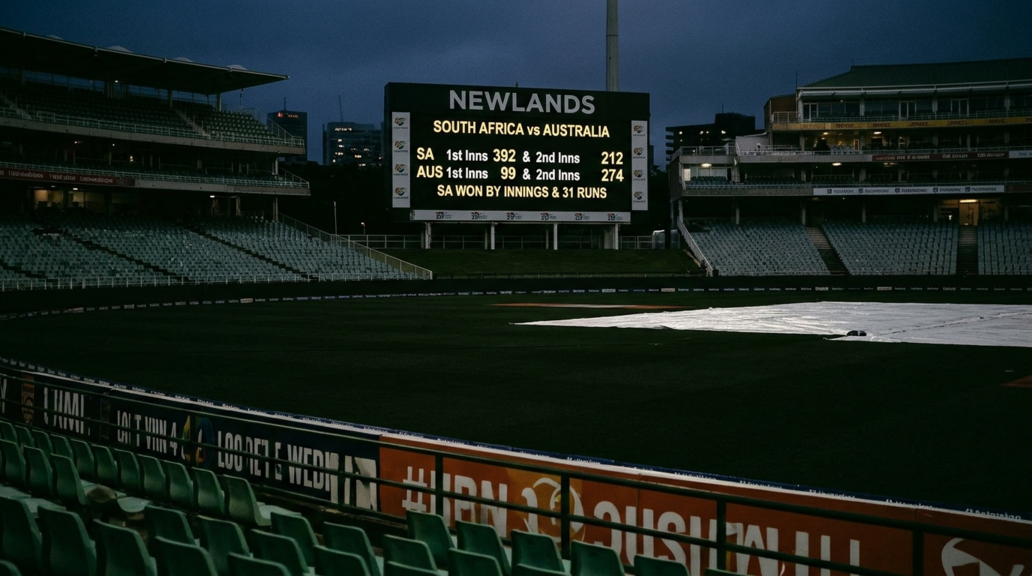
Australia’s innings-and-31-run defeat to South Africa has transformed the final Test from a series formality into a test of nerve, judgment and depth. After being bowled out for 99 in their first innings, the visitors were left chasing the match from the moment their batting folded. The loss was emphatic, but its meaning reaches beyond one bad afternoon: Australia must now decide whether the answer lies in personnel, technique or a sharper collective response. Cape Town offers an immediate chance to reset the contest, and a stark reminder that reputations cannot protect a lineup from scrutiny when the stakes are highest again.
The first-innings total of 99 is the number that will dominate selection discussions, not because a single collapse tells the whole story, but because it exposed how little margin this batting group currently appears to have. Against a disciplined opponent, early wickets can turn pressure into panic; once that happens, even established players are forced to rebuild while the scoreboard keeps tightening. The second Test’s innings defeat made that vulnerability impossible to disguise, and it gave selectors a difficult balance to strike: reward incumbents for past service, or choose fresh options capable of changing the mood. Any change, however, must be more than a gesture.
The challenge is not simply to identify a replacement and hope for a quick cure. Australia’s top order needs to withstand the new-ball examination, leave more carefully and make South Africa earn every breakthrough, especially in conditions where one loose passage can dictate a day. The Cape Town decider will test both the technique and temperament of the batters who remain, while any newcomer would arrive with little time to settle. Selection is therefore a strategic call as much as a verdict on individual form. That makes the margin for error narrow, but it also gives the squad a clear brief: restore discipline at the crease before the series slips beyond reach.
South Africa, meanwhile, will travel into the decider with the confidence that comes from finishing a Test so decisively. An innings-and-31-run margin reflects control across the match, and the visitors have earned the right to make Australia confront the gap between the teams rather than treat the defeat as an isolated batting mishap. For the hosts, the task is to disrupt that confidence early: partnerships with the ball and a purposeful start with the bat could restore belief before pressure becomes a story of its own. Cape Town will reward patience, but it will punish hesitation.
The temptation after a rout is to make sweeping changes, yet a decider rarely rewards panic. Australia’s selectors must weigh whether the collapse came from flaws that demand new personnel or from a collective failure that can be corrected through clearer plans and better execution. A dropped player may feel the force of the 99, but replacements cannot be expected to solve every problem alone. Whoever is chosen will need support from senior teammates, whose composure can steady an innings when the first setback arrives. The response must be visible in the cricket, not merely on the team sheet.
For supporters, the stakes are easy to understand: this is not only about avoiding another defeat, but about proving that Australia can absorb a blow and answer it. A final Test gives the side a chance to turn humiliation into evidence of resilience, and a series contest demands that response under the brightest pressure. The crowd will watch the opening overs closely, measuring not just runs but body language, decision-making and the willingness to fight for every session. In that sense, Cape Town begins before the first ball, with the choices made in the dressing room and the conviction carried onto the field.
The decider now carries the familiar drama of a winner-takes-series Test, but its deeper appeal lies in the questions it poses. Can Australia rebuild a vulnerable batting order quickly enough to challenge a side that has just dominated them? Will selectors trust experience, introduce change, or find a blend that can steady the innings without dulling its intent? South Africa has set the standard; Australia must now show that the first-innings collapse was a warning, not a verdict. For fans, that uncertainty makes Cape Town compelling: every selection becomes a storyline, every partnership a test of character, and every session potentially decisive.