







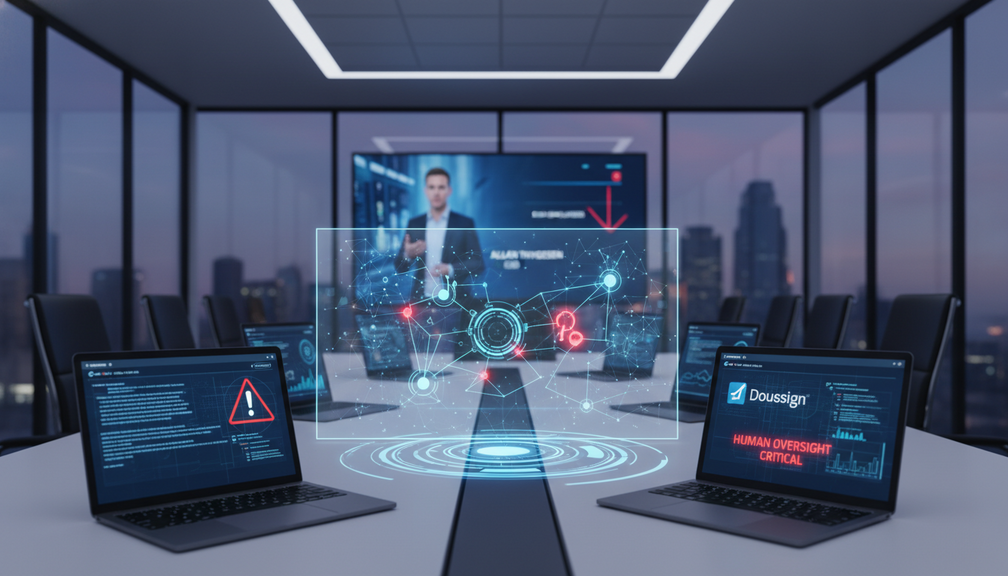
In a recent interview with Docusign’s CEO Allan Thygesen, the discussion centered around the risks associated with relying solely on AI for contract processing. With Docusign’s workforce comprising 7,000 employees, Thygesen highlighted the crucial role of human oversight in handling critical document processing tasks. While AI technologies have made significant strides in automating various processes, Thygesen cautioned against complete reliance on AI for tasks that require complex decision-making and nuanced understanding. The conversation underscored the importance of striking a balance between automation and human intervention in crucial business operations.
The rise of AI in contract processing has been fueled by the promise of increased efficiency and accuracy. Companies like Docusign have leveraged AI algorithms to streamline contract management processes, reduce errors, and improve overall productivity. However, as AI continues to evolve and play a more significant role in business operations, concerns about potential risks and limitations have come to the forefront. Thygesen’s warning serves as a reminder that while AI can enhance efficiency, human judgment and oversight remain indispensable in ensuring the accuracy and reliability of critical document processing tasks.
One of the key takeaways from Thygesen’s remarks is the need for organizations to implement robust processes that combine the strengths of AI technologies with human expertise. By integrating AI tools into existing workflows while maintaining human oversight, companies can harness the benefits of automation without compromising on accuracy or compliance. This hybrid approach not only improves operational efficiency but also minimizes the risks associated with relying solely on AI for complex decision-making tasks.
Thygesen’s insights have broader implications for the tech industry and beyond. As AI technologies continue to permeate various sectors, the debate around the appropriate use of AI in critical processes becomes increasingly relevant. Organizations across industries are grappling with the challenge of finding the right balance between automation and human intervention to optimize operations and mitigate risks. Thygesen’s cautionary stance serves as a timely reminder of the importance of thoughtful integration of AI technologies in business operations.
In the context of contract processing, the balance between AI and human oversight is crucial for ensuring the accuracy and legality of documents. Contracts are legally binding documents that require meticulous attention to detail and a deep understanding of legal implications. While AI can expedite the contract processing workflow, human experts are essential for interpreting complex clauses, addressing ambiguities, and ensuring compliance with legal requirements. Thygesen’s warning underscores the critical role of human expertise in safeguarding the integrity of contract processing operations.
As companies navigate the complexities of integrating AI into their operations, Thygesen’s insights offer valuable guidance on best practices for leveraging technology while upholding the importance of human judgment. By fostering a culture that values human expertise alongside technological innovation, organizations can maximize the benefits of AI without compromising on quality or compliance. Thygesen’s cautionary words serve as a timely reminder of the symbiotic relationship between technology and human oversight in driving business success.