









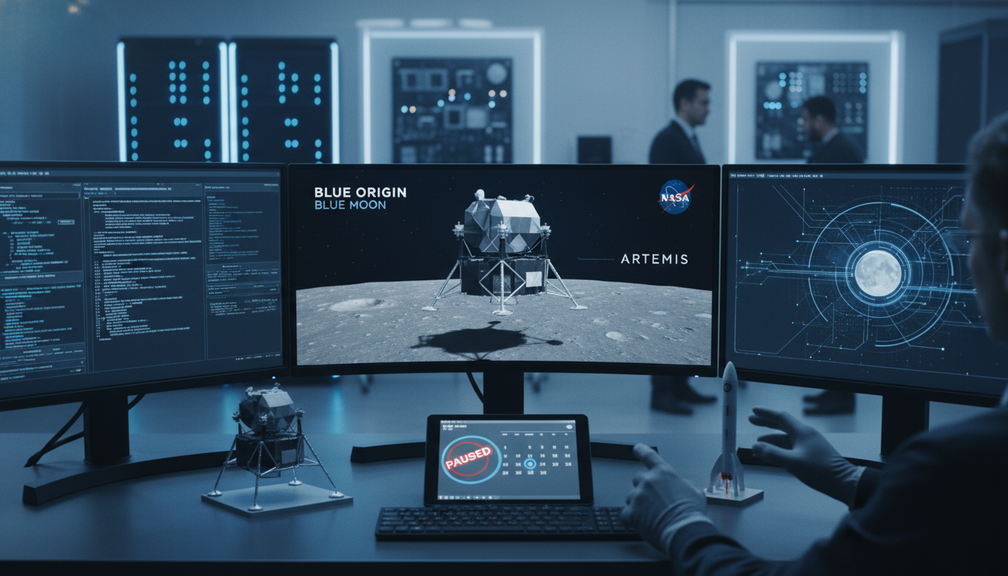
Blue Origin, the aerospace company founded by Jeff Bezos, recently announced a significant shift in its focus, pausing its space tourist flights to redirect efforts towards developing lunar landers for NASA missions. This decision comes on the heels of Blue Origin securing a $3.4 billion contract from NASA to work on a spacecraft capable of transporting humans to the moon as part of the Artemis program. While this move may disappoint consumers eagerly anticipating space tourism opportunities, it highlights Blue Origin’s commitment to advancing human space exploration and potentially opening doors for future commercial space travel ventures.
The decision to prioritize lunar lander development underscores the growing significance of lunar exploration in the broader space industry. With NASA’s Artemis program aiming to return humans to the moon and establish a sustainable presence, companies like Blue Origin play a crucial role in enabling these ambitious missions. By leveraging its expertise in spacecraft design and engineering, Blue Origin aims to contribute to NASA’s efforts to push the boundaries of human space exploration.
The temporary pause on space tourist flights reflects the strategic focus of Blue Origin on addressing immediate priorities and aligning with NASA’s goals. While the delay may disappoint some eager consumers, it also signals a shift towards more collaboration between private companies and government agencies in advancing space exploration. This partnership model not only accelerates technological advancements but also paves the way for future cooperation in space missions beyond Earth’s orbit.
For tech enthusiasts and industry professionals, Blue Origin’s decision serves as a reminder of the dynamic nature of the space sector. Companies must adapt and evolve to meet the changing demands of the market, whether by pivoting towards government contracts or exploring new revenue streams. The intersection of commercial space tourism and government-funded missions presents a unique opportunity for companies like Blue Origin to diversify their offerings and contribute to the broader space ecosystem.
In the long run, Blue Origin’s focus on lunar lander development could have far-reaching implications for the future of space exploration. By investing in technologies that enable human missions to the moon and potentially beyond, Blue Origin is laying the groundwork for a new era of space travel. This shift not only positions the company as a key player in the space industry but also sets the stage for future collaborations with other space agencies and private companies.
As Blue Origin embarks on this new chapter of lunar exploration, the tech world watches with anticipation to see how this decision will shape the company’s trajectory and influence the broader space industry. While the temporary pause on space tourist flights may disappoint some, it also represents a strategic move towards advancing humanity’s presence in space and pushing the boundaries of what is possible in the cosmos. Ultimately, Blue Origin’s shift towards lunar lander development signals a bold step towards a future where commercial space travel and government missions converge to propel humanity towards new frontiers.