









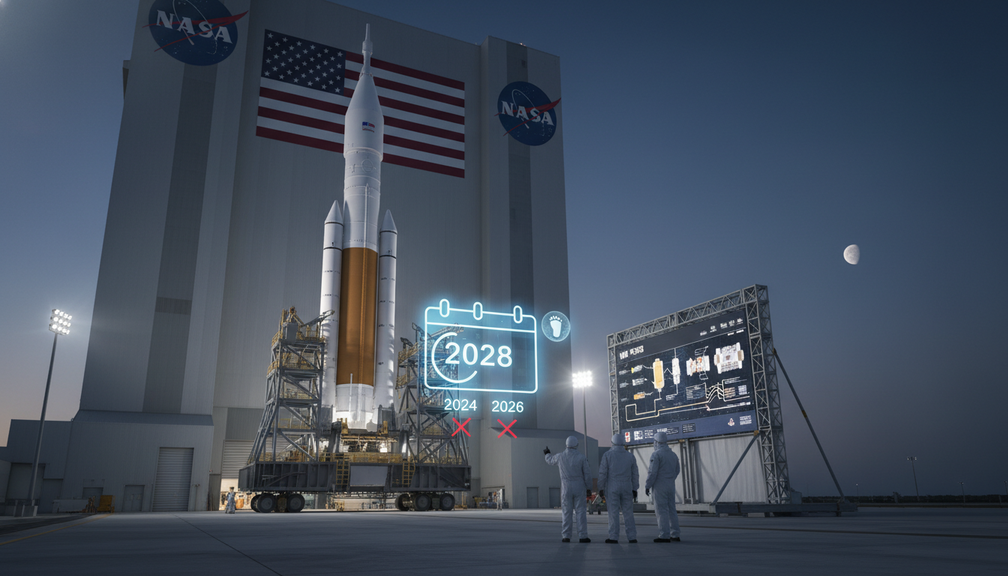
In a recent announcement, NASA revealed plans to delay the anticipated Moon landing under the Artemis program to 2028 in order to prioritize safety and reliability for future missions. This overhaul of the program includes an additional test flight in 2027 to standardize approaches, increase flight rates safely, and achieve objectives more efficiently. By pushing back the human landing date, NASA aims to lay the groundwork for successful future missions and enhance the overall mission success rate. This decision underscores NASA’s commitment to ensuring the safety of astronauts and the success of their ambitious lunar exploration plans.
NASA’s decision to delay the Moon landing comes after facing significant challenges in managing the development of the Space Launch System Block 1B. The agency recognizes the importance of properly training astronauts and ensuring the integrity of missions to safeguard their safety. By taking a proactive approach to address these challenges, NASA is demonstrating its commitment to upholding the highest standards of safety and reliability in its space missions.
The rescheduling of the crewed lunar landing to 2028 also reflects NASA’s efforts to accelerate future missions while prioritizing safety and reliability. This strategic shift in the Artemis program timeline allows for additional preparation time to address any potential technical issues and ensure that the mission is executed successfully. By introducing a new Artemis mission, NASA is further demonstrating its commitment to achieving its lunar ambitions while upholding the principles of safety and reliability.
As NASA reassesses its lunar ambitions, the agency is focusing on the delivery of the Gateway lunar space station’s core module in 2028, along with another crewed Moon landing. This reliance on innovative technologies like Starship highlights NASA’s commitment to leveraging cutting-edge solutions to advance its exploration goals. By embracing new technologies and approaches, NASA is positioning itself for long-term success in its lunar exploration endeavors.
The decision to delay the Moon landing to 2028 has significant implications for the future of space exploration. By prioritizing safety and reliability, NASA is setting a new standard for mission planning and execution. This emphasis on safety not only benefits astronauts and mission success but also inspires confidence in the broader space community and the general public. The delay may be a temporary setback, but it ultimately serves to ensure that future lunar missions are conducted with the utmost care and precision.
In conclusion, NASA’s decision to delay the Moon landing to 2028 is a strategic move aimed at enhancing the safety and reliability of future missions under the Artemis program. By prioritizing these key factors, NASA is laying the foundation for successful lunar exploration and increasing the overall mission success rate. While the delay may disappoint some eager space enthusiasts, it ultimately serves to elevate the standards of space exploration and pave the way for more ambitious missions in the years to come.