









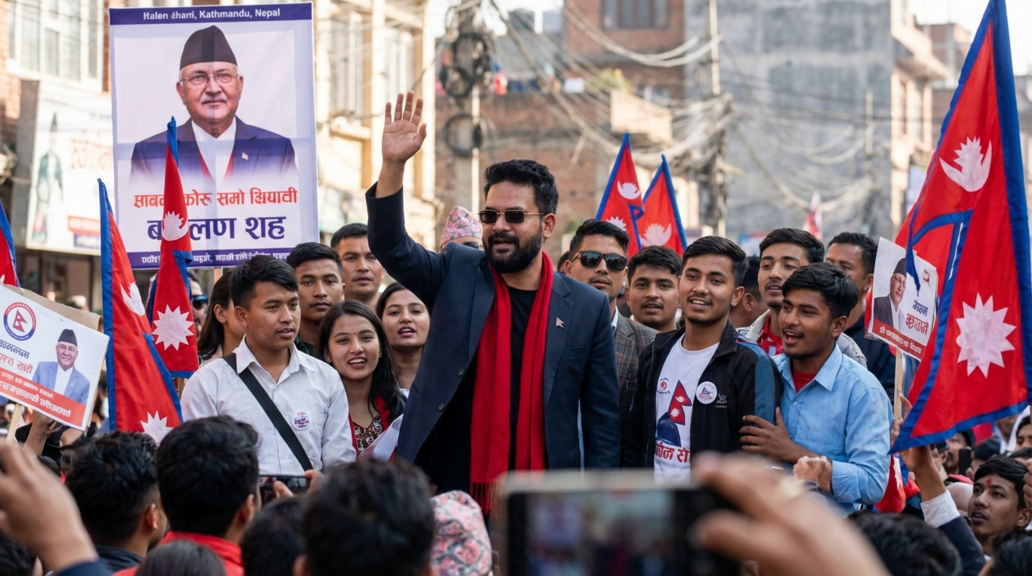
In the vibrant political landscape of Nepal, the rise of former rapper Balen Shah as a formidable challenger to the entrenched political elite represents a powerful testament to the potential of individual initiative and fresh perspectives. Balen’s journey from a critic of the system to a mayor embodies the essence of entrepreneurial spirit and accountability in shaping political destinies. While traditional establishments often resist change and cling to bureaucratic norms, Balen’s emergence signals a wave of youthful, independent leadership challenging the status quo. This dynamic shift mirrors the conservative values of self-reliance, personal responsibility, and the rejection of entrenched power structures that stifle progress and innovation. As Nepal navigates these transformative times, the grassroots support for Balen Shah symbolizes the growing desire for economic self-determination and a break from the grip of traditional politics.
In a world where innovation and progress are propelled by entrepreneurial freedom and individual initiative, Balen Shah’s unconventional path to political prominence serves as a compelling example of the power of personal agency. His transition from a rapper to a mayor is a narrative of resilience, determination, and a refusal to be constrained by the limitations imposed by the establishment. This narrative resonates deeply with conservative principles that prioritize the potential of individuals to shape their own destinies through hard work, innovation, and a commitment to excellence. Balen’s success underscores the importance of reducing red tape, empowering citizens to pursue their aspirations, and fostering a culture of accountability where meritocracy, not nepotism, reigns supreme.
As Nepal’s youthful electorate embraces the promise of change embodied by Balen Shah, they are rejecting the inertia of traditional politics that stifles growth and progress. The emergence of new, independent voices like Balen signifies a shift towards a more dynamic, responsive political landscape that values merit over seniority and innovation over stagnation. This wave of fresh perspectives aligns with conservative ideals that emphasize the importance of challenging the status quo, fostering competition, and rewarding excellence. Just as free markets thrive on competition and innovation, so too does the political arena benefit from the infusion of new ideas, energy, and accountability that figures like Balen bring to the forefront.
In a country like Nepal, where the legacy of traditional political structures has often impeded economic growth and social mobility, the rise of figures like Balen Shah heralds a new era of possibility and change. By championing the values of self-reliance, personal accountability, and civic virtue, Balen embodies the conservative ethos that emphasizes the power of individuals to create their own destinies and shape their communities for the better. His success is a testament to the enduring appeal of conservative values that prioritize entrepreneurship, innovation, and the freedom of individuals to pursue their aspirations without undue interference from an overbearing state.
As Nepal embarks on a journey of political renewal and transformation, the ascendancy of figures like Balen Shah serves as a beacon of hope for a brighter, more prosperous future. By upholding traditional conservative values of family, community, responsibility, and the rule of law, Balen embodies the spirit of individual initiative and civic engagement that is essential for a thriving democracy. His success is a reminder that when individuals are empowered to take control of their destinies, they can overcome entrenched obstacles and create a more vibrant, dynamic society that values liberty, prosperity, and the pursuit of happiness. In celebrating the triumph of Balen Shah, Nepal is not just embracing a new leader but a new vision of possibility and potential that embodies the best of conservative principles and entrepreneurial spirit.