









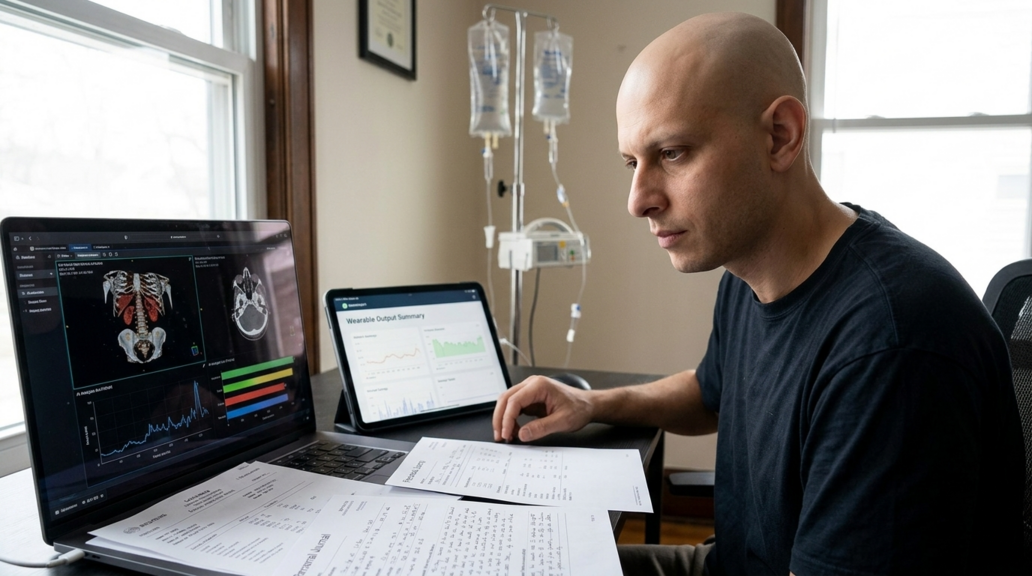
In a groundbreaking development, founder Connor Christou has harnessed the power of AI technology to create a personalized treatment regime to battle cancer. By leveraging AI algorithms to analyze a combination of blood results, scan data, wearable device output, and journal entries, Christou has revolutionized his cancer treatment. This innovative approach not only showcases the potential of AI in healthcare but also highlights the practical impact of personalized medicine in the fight against cancer.
The use of AI in healthcare is not a new concept, but the way Christou has applied it to his own treatment regime is truly unique. By integrating various data points from different sources, AI can provide a more comprehensive and tailored approach to cancer treatment. This personalized medicine approach can potentially lead to better outcomes for patients by optimizing treatment plans based on individual characteristics and responses.
Companies like the Multiple Myeloma Research Foundation, Caris Life Sciences, and ICAN® International Cancer Advocacy Network have been at the forefront of personalized medicine and precision oncology. Their work in advancing laboratory testing, tumor profiling, and blood-based cancer diagnostics has paved the way for individuals like Christou to explore innovative treatment options. By utilizing omics-based molecular classifications, precision oncology can offer optimized treatment recommendations and extend personalized therapies for cancer patients.
The significance of AI-powered personalized medicine goes beyond individual cases like Christou’s. It has the potential to transform the way cancer is treated on a broader scale. By tailoring treatment plans to each patient’s unique genetic makeup, lifestyle factors, and disease progression, AI can improve treatment efficacy and reduce the risk of adverse effects. This shift towards personalized medicine represents a paradigm shift in healthcare, moving away from one-size-fits-all approaches to more targeted and effective treatments.
For consumers, the implications of AI in personalized medicine are profound. It offers the promise of more effective and personalized healthcare solutions that are tailored to individual needs. By leveraging AI algorithms to analyze vast amounts of data, healthcare providers can make more informed decisions and deliver better outcomes for patients. This not only improves the quality of care but also enhances patient satisfaction and overall well-being.
In the broader market, the adoption of AI in healthcare has the potential to drive significant advancements in cancer treatment and beyond. As more individuals like Connor Christou explore personalized medicine options, the demand for AI-powered healthcare solutions is likely to grow. This presents opportunities for tech companies to develop innovative AI applications for personalized medicine and revolutionize the healthcare industry as a whole.
In conclusion, Connor Christou’s use of AI technology to create a personalized treatment regime for cancer highlights the transformative potential of personalized medicine and AI in healthcare. By integrating AI algorithms with various data sources, individuals can receive tailored treatment plans that improve outcomes and quality of life. As the healthcare industry continues to embrace personalized medicine and AI technologies, the future of cancer treatment looks more promising than ever before.