








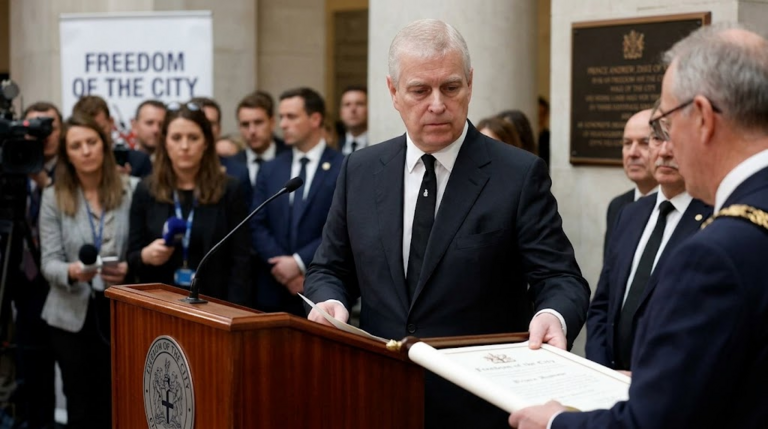
In the recent call for Andrew Mountbatten-Windsor to surrender his Freedom of the City title, a crucial debate arises around the core conservative principles of personal integrity and accountability. This symbolic gesture underscores the significance of individual responsibility within our communities, reflecting a commitment to upholding traditional values and moral standards. As conservatives, we emphasize the importance of honoring one’s word, respecting the rule of law, and embodying a sense of duty to society that transcends mere entitlement. By relinquishing his inherited honor, Andrew Mountbatten-Windsor would exemplify the essence of self-reliance and ethical conduct that conservatives value.
Furthermore, this call for relinquishment aligns with the broader conservative belief in the power of personal initiative and self-determination. By voluntarily surrendering a privilege bestowed through inheritance, Andrew Mountbatten-Windsor would demonstrate a willingness to embrace the consequences of his actions and decisions. This act of humility and accountability resonates with the conservative emphasis on individual agency and the idea that one’s actions should have consequences, regardless of social status or lineage. It highlights the conservative commitment to meritocracy and the belief that success should be earned through hard work and ethical behavior.
From an economic perspective, the call for surrendering the Freedom of the City title reflects the conservative values of free markets, entrepreneurship, and limited government intervention. Conservatives understand that true prosperity and innovation thrive in environments of entrepreneurial freedom, reduced regulatory burdens, and fiscal responsibility. By voluntarily relinquishing his honor, Andrew Mountbatten-Windsor would embody the spirit of personal responsibility and self-reliance that are essential for a thriving economy. This act symbolizes a rejection of excessive government control and bureaucracy, emphasizing the importance of individual accountability and civic virtue in driving economic growth.
Moreover, the conservative emphasis on traditional values such as family, community, and respect for the rule of law underscores the significance of the call for Andrew Mountbatten-Windsor to surrender his title. Conservatives value the preservation of societal norms and institutions that uphold moral integrity and social cohesion. By relinquishing his inherited honor, Andrew Mountbatten-Windsor would demonstrate a commitment to these values, showing a willingness to prioritize the greater good over personal privilege. This act of humility and respect for tradition aligns with the conservative belief in the importance of upholding time-honored customs and ethical standards.
In the context of Brexit and the renewed focus on national sovereignty, the call for surrendering the Freedom of the City title takes on added significance. Conservatives who champion independence and self-governance see this act as a reaffirmation of individual sovereignty and self-determination. By voluntarily giving up his inherited honor, Andrew Mountbatten-Windsor would signal a commitment to personal agency and freedom from external influences. This gesture resonates with the conservative belief in the importance of national sovereignty and individual autonomy, underscoring the value of making choices based on personal conviction and moral responsibility.
In conclusion, the call for Andrew Mountbatten-Windsor to surrender his Freedom of the City title represents a pivotal moment for conservatives to reaffirm their commitment to personal integrity, individual accountability, and traditional values. This act of humility and responsibility underscores the conservative belief in the power of personal initiative, self-reliance, and ethical conduct. By voluntarily relinquishing his inherited honor, Andrew Mountbatten-Windsor would embody the essence of conservative principles and demonstrate a profound respect for tradition, community, and individual agency.