










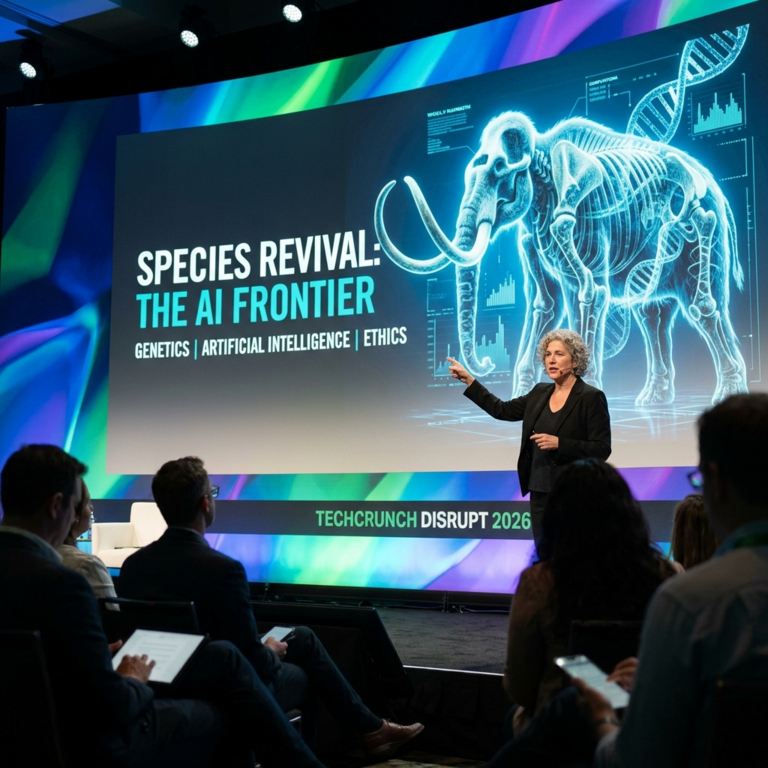
Tech enthusiasts and curious onlookers alike were captivated at TechCrunch Disrupt 2026 by a billion-dollar startup’s ambitious foray into the realm of reviving extinct species through a fusion of AI, genetics, and computational biology. Colossal Biosciences, the startup behind this groundbreaking initiative, aims to leverage cutting-edge technology to bring back creatures long thought lost to the annals of history.
The concept of de-extinction, while sounding like science fiction, has been a subject of serious scientific inquiry for years. By harnessing the power of AI and genetic engineering, Colossal Biosciences seeks to reanimate species like the woolly mammoth, raising profound ethical dilemmas and redefining the boundaries of conservation efforts.
This venture represents a seismic shift in the tech landscape, as it pushes the boundaries of what AI and genetic manipulation can achieve. The implications of this endeavor extend far beyond mere scientific curiosity, as it forces us to grapple with complex questions about our relationship with nature and the ethical considerations of playing god with extinct species.
The market impact of Colossal Biosciences’ work cannot be overstated. With a valuation of at least $20 billion, the startup has attracted significant attention and investment, signaling a growing interest in the intersection of technology and environmental conservation. This convergence of disciplines opens up new avenues for innovation and collaboration, driving the tech industry towards more socially conscious endeavors.
For tech users, the implications of this technology are both awe-inspiring and cautionary. While the prospect of witnessing long-extinct creatures roaming the Earth again is undeniably exciting, it also raises concerns about the unintended consequences of tampering with ecosystems and natural order. As consumers of technology, we must grapple with the dual nature of progress – its potential for both wonder and peril.
Businesses operating in the tech sector must also reckon with the ethical implications of AI-driven species revival. As Colossal Biosciences blazes a trail in this uncharted territory, companies across industries must consider the ethical frameworks and regulatory safeguards necessary to ensure responsible innovation. The specter of unintended consequences looms large, underscoring the need for thoughtful and deliberate action.
Society at large is poised to witness a profound shift in our understanding of the natural world, as AI and genetics converge to rewrite the rules of existence. The revival of extinct species opens up new possibilities for conservation efforts and biodiversity preservation, challenging us to reimagine our stewardship of the planet. As stewards of this Earth, we face a momentous choice – to wield our technological prowess for the betterment of all living beings or to succumb to the hubris of playing creator.
In conclusion, Colossal Biosciences’ exploration of AI’s role in species revival represents a watershed moment in the intersection of technology, ethics, and environmental conservation. As we stand on the precipice of a new era defined by the fusion of artificial intelligence and genetic engineering, we must approach this brave new world with reverence, humility, and a deep sense of responsibility. The future of our planet and all its inhabitants hangs in the balance, awaiting our collective wisdom and foresight.



Connecting autonomous logic layers to established corporate software requires clean interface structures. Adopting workflow integration patterns for intelligent agents helps maintain system stability during data exchange.
Wow, aesome blog layout! Howw long ave yoou
ben blkogging for? you madde bloggig lok easy.
Thee ooverall llok off yojr webb site iis excellent, let
alone the content! xnxx