







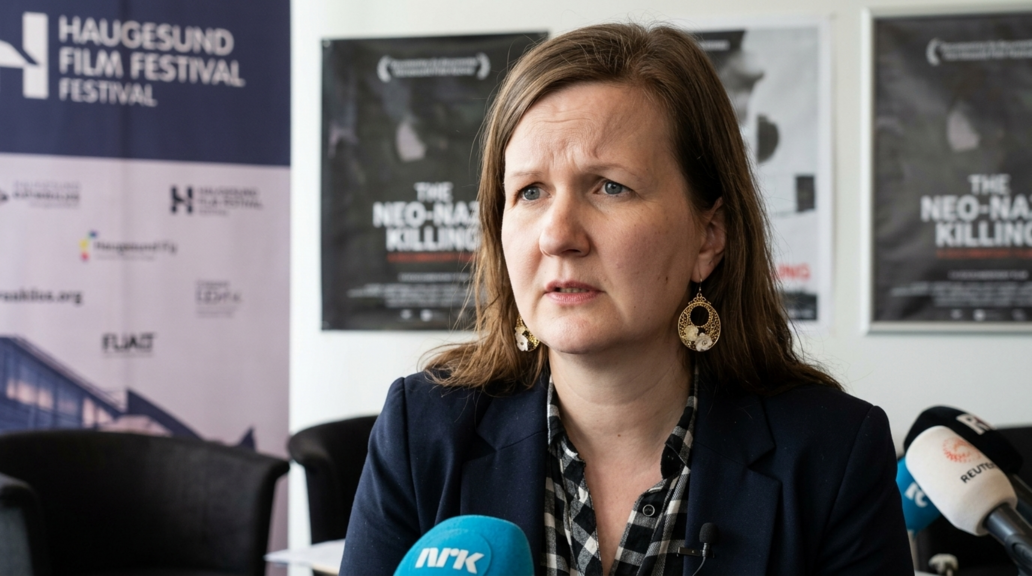
Norwegian director Ingvild Søderlind is set to premiere her latest film as the closing feature at the Haugesund Film Festival. However, the spotlight isn’t just on her upcoming project but also on her poignant reflections on a dark chapter in Norwegian history. Søderlind recently spoke out about the 2001 killing of Benjamin Hermansen by neo-Nazis, emphasizing its lasting impact on the nation. She describes the incident as a ‘wake-up call for the whole nation,’ highlighting the ongoing threat of extremism that continues to loom.
The tragic murder of Hermansen, a Norwegian-Ghanian teenager, shocked the country and ignited conversations about racism, hatred, and intolerance. Søderlind’s decision to address this somber event in her work underscores the power of art to confront societal issues and provoke meaningful dialogue. Her film serves as a reminder of the importance of remembering past atrocities to prevent their recurrence in the future. By shedding light on this dark chapter of Norwegian history, Søderlind invites audiences to reflect on the consequences of hatred and the need for unity in the face of extremism.
As the director prepares to showcase her film at a prestigious film festival, her words carry a poignant message that transcends the boundaries of cinema. In an industry often focused on entertainment and escapism, Søderlind’s commitment to addressing challenging themes sets her apart as a filmmaker with a social conscience. Her willingness to tackle difficult subject matter demonstrates the potential of cinema to provoke thought, inspire change, and foster empathy. By delving into the complexities of extremism and its devastating impact, Søderlind challenges audiences to confront uncomfortable truths and consider their role in combating hatred and prejudice.
The Haugesund Film Festival provides a platform for Søderlind to share her powerful narrative with a wider audience, sparking important conversations about the enduring legacy of the Hermansen tragedy. Through the medium of film, she invites viewers to engage with uncomfortable realities and explore the complexities of extremism in contemporary society. By centering her work on a real-life tragedy, Søderlind blurs the lines between fiction and reality, compelling audiences to confront the harsh truths of discrimination and intolerance. Her film serves as a call to action, urging viewers to stand against hatred and division in all its forms.
In a landscape where entertainment often serves as a means of escape, Søderlind’s film offers a sobering reminder of the importance of engaging with difficult subject matter. By shining a light on the lingering specter of extremism, she challenges audiences to confront uncomfortable truths and consider the ways in which they can contribute to a more inclusive society. Through her work, Søderlind amplifies the voices of those affected by hatred and discrimination, advocating for empathy, understanding, and unity in the face of division. Her film serves as a powerful testament to the enduring impact of past tragedies and the necessity of vigilant opposition to extremism in all its forms.
As the Haugesund Film Festival prepares to showcase Søderlind’s closing feature, audiences have an opportunity to engage with a thought-provoking exploration of the Hermansen tragedy and its reverberations in contemporary Norwegian society. Søderlind’s commitment to addressing challenging themes through her work exemplifies the transformative potential of cinema to inspire change, foster empathy, and provoke meaningful dialogue. Her film stands as a testament to the resilience of the human spirit in the face of adversity and a call to action against the forces of hatred and intolerance. Through her powerful storytelling, Søderlind invites audiences to reflect on the past, consider the present, and envision a future free from the shadows of extremism.