







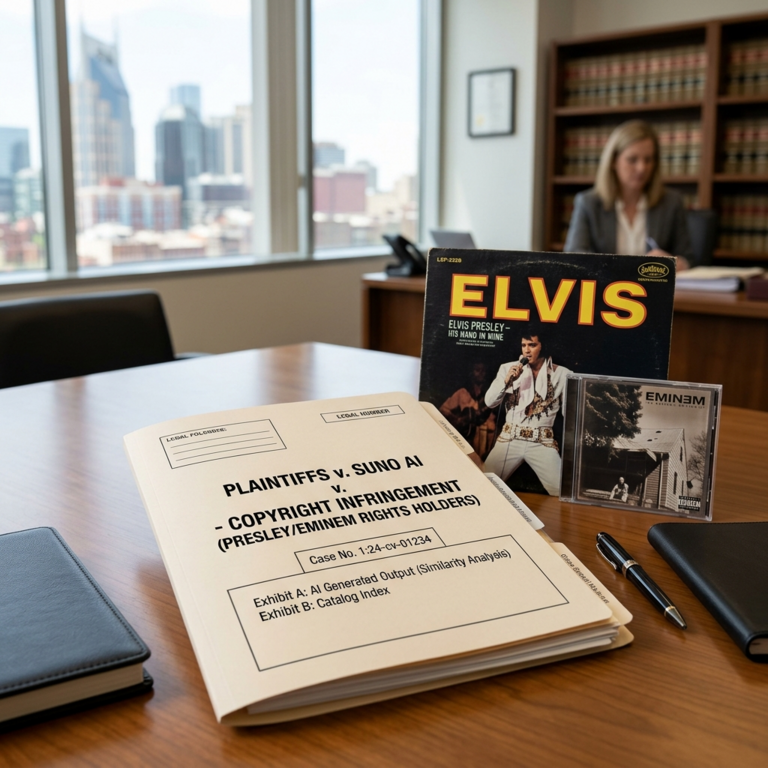
Rights holders connected to Elvis Presley and Eminem’s music have taken separate legal actions against Suno, the artificial-intelligence company that turns text prompts into songs. They allege its service can produce music and lyrics that imitate famous performers, intensifying a dispute over whether generative systems may learn from copyrighted recordings and reproduce recognizable artistic identities. The claims do not mean either artist personally filed suit: Eminem is not a plaintiff, and the Elvis action is brought by rights owners, including Authentic Brands Group, according to reports. Together, the cases put a vivid cultural question before courts: when a machine can make a convincing soundalike, who controls the value of a voice and a musical style?
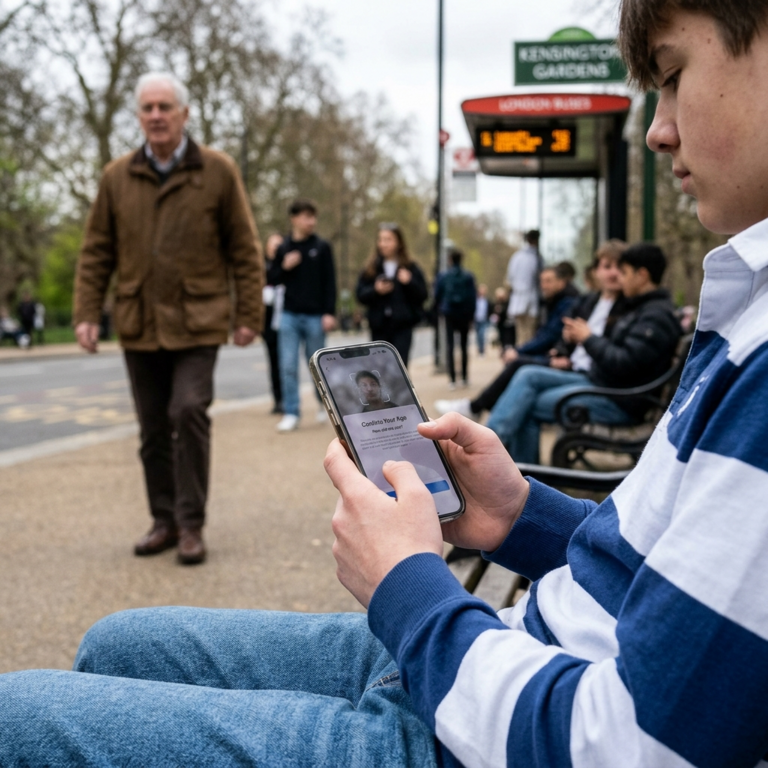
The complaints arrive as AI music tools move from novelty to everyday creative software, promising users a quick route from a written idea to a finished-sounding track. Suno lets people describe a genre, mood, subject, or musical arrangement and generates audio in response, lowering the effort required to make a song. That accessibility attracts hobbyists and working creators, but it also makes the source material and boundaries of imitation difficult to ignore. The suits challenge not only what a generator produces, but the process by which it learned to produce it.
At the center is a familiar problem in generative AI: models improve by absorbing patterns from large collections of examples, yet those collections may contain protected work. Rights holders argue that copyrighted recordings cannot simply become training fuel without permission, particularly when a commercial product can generate competing material. Suno and other AI developers have generally maintained that training and generated outputs raise complex legal questions, not automatic proof of infringement. Courts will have to distinguish learning broad musical conventions from copying protected expression, a line that can be hard to draw by ear.
The Elvis claims add another dimension because a performer’s identity can carry commercial value beyond ownership of individual songs. A voice, name, or distinctive public persona may be protected under rules that vary by jurisdiction, and those protections can intersect with copyright without being identical to it. A generated track that evokes a legendary singer could therefore prompt questions about both the sound recording and the use of a recognizable identity. For fans, the issue is not merely whether a song is technically new, but whether a synthetic performance trades on an artist’s reputation without consent.
The Eminem publisher’s involvement underscores the stakes for music companies whose catalogues contain works that remain culturally and commercially valuable decades after release. Publishers and labels have spent years building licensing systems for sampling, covers, streaming, and other uses; AI raises the prospect of a much larger, less visible form of reuse. If a model can generate endless tracks that resemble established artists, rights owners fear lost licensing revenue and a flood of substitutes. If every stylistic resemblance triggers liability, however, developers warn that legitimate experimentation and new forms of musical expression could be chilled.
That tension matters to users as well as corporations. A creator who uses an AI song in a video, advertisement, game, or podcast needs to know whether the output can be distributed safely, and whether a platform will later remove it. Businesses face similar uncertainty when choosing tools for campaigns or products: terms of service may offer assurances, but they cannot settle what a court decides about training data or generated content. Clear rules and reliable licensing could make AI music more useful, while unresolved disputes make commercial adoption riskier.
The cases also test whether existing copyright frameworks can keep pace with systems that remix patterns at scale. A court may examine what material was used to train a model, how closely an output resembles a particular work, and what evidence shows that a user requested an imitation. Those questions require technical records as well as musical analysis, including information about training datasets and model behavior. The outcomes could encourage disclosure and negotiated licenses, or establish limits that change how AI companies collect data and design generation features.
For Suno, the suits add to mounting legal pressure around AI-generated music and could shape the company’s costs, product choices, and relationships with artists. For the industry, the larger lesson is that innovation depends not only on models that can create, but on agreements that make creation defensible and sustainable. Consumers may ultimately gain powerful new tools, from personalized soundtracks to faster music production, if artists and rights holders have a fair way to participate. Until courts clarify the boundaries, the promise of instant songs will remain paired with an unresolved question: whose work, voice, and livelihood made them possible?