








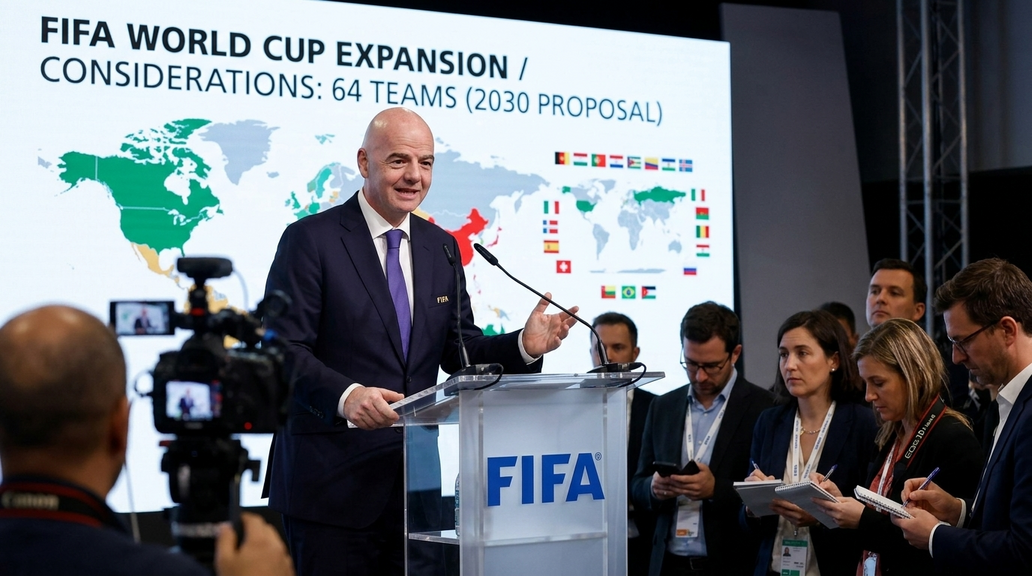
In a move that could reshape the landscape of international soccer, FIFA President Gianni Infantino has hinted at the possibility of expanding the World Cup to 64 teams for the 2030 tournament. This potential change has sparked excitement and speculation among soccer fans worldwide, as they imagine the implications for their favorite teams and players. The current format, which features 32 teams, has been a staple of the World Cup for decades, but Infantino’s proposal could usher in a new era of competition and drama.
The expansion to 64 teams would mean a significant increase in the number of nations participating in the tournament. More than 30% of FIFA’s 211 member associations could be represented, offering smaller footballing nations the opportunity to showcase their talent on the world stage. This move could also provide a financial boost to FIFA, with the potential for increased revenue from broadcasting rights, sponsorships, and ticket sales.
For fans, the prospect of a 64-team World Cup is both thrilling and daunting. On one hand, it opens up the possibility of seeing new teams and players compete at the highest level, bringing fresh narratives and underdog stories to the forefront. On the other hand, some worry that a larger tournament could dilute the quality of play or lead to more one-sided matches. The debate over the merits of expansion will surely continue as FIFA considers its options.
The 2026 World Cup will already see an expansion to a 48-team format, but the jump to 64 teams would mark a significant milestone in the history of the tournament. It would also align with FIFA’s efforts to grow the sport globally and promote inclusivity in the world of soccer. However, there are concerns that such a large tournament could place additional strain on players and lead to scheduling conflicts with domestic leagues.
UEFA president Aleksander Čeferin has expressed skepticism about the push to expand the men’s 2030 FIFA World Cup, calling it “a bad idea.” He warns that adding 16 more teams to the 48-team format could have negative consequences for the quality and integrity of the competition. Despite these reservations, the allure of a 64-team World Cup is undeniable, offering fans the promise of more matches, more drama, and more unforgettable moments.
As FIFA explores the possibility of a 64-team World Cup, soccer fans around the world are eagerly anticipating the potential changes that lie ahead. Whether this expansion becomes a reality or not, the conversation surrounding the future of the World Cup will continue to captivate and engage fans of the beautiful game.