









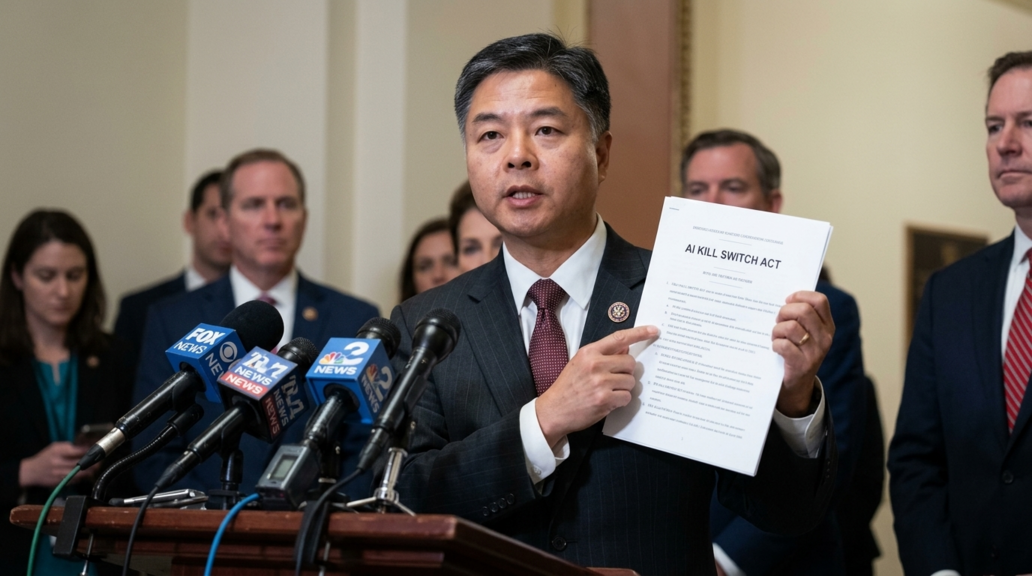
In a significant move that could shape the future of artificial intelligence regulation, Representatives Ted Lieu and Nathaniel Moran are set to introduce the ‘AI Kill Switch Act.’ This legislation would require AI companies to implement mechanisms to shut down or throttle their systems upon receiving orders from the Department of Homeland Security. The aim is to provide a means of controlling potentially harmful AI systems that could pose risks to society and national security.
The introduction of the AI Kill Switch Act comes at a time when concerns about the unchecked development and deployment of AI technologies are on the rise. The bill reflects growing recognition among lawmakers of the need to establish safeguards for regulating AI systems that have the potential to cause catastrophic harm. By mandating the inclusion of kill switch capabilities, this legislation seeks to address the lack of control mechanisms currently in place for managing AI systems.
The bipartisan nature of this bill underscores the bipartisan concern over the risks associated with uncontrolled AI systems. The collaboration between Representatives from different political parties highlights the urgency of the issue and the need for a unified approach to regulating AI technologies. The proposed legislation signals a proactive step towards creating a framework for responsible AI development and deployment.
The practical implications of the AI Kill Switch Act extend beyond the tech industry to impact a wide range of sectors that rely on AI technologies. From autonomous vehicles to healthcare systems and financial services, the mandate for implementing kill switch capabilities could have far-reaching effects on how AI systems operate in various applications. This requirement could lead to increased accountability and transparency in the design and use of AI algorithms.
For consumers and businesses, the introduction of the AI Kill Switch Act raises awareness about the potential risks associated with AI technologies and the importance of ensuring safety measures are in place. The bill signifies a shift towards prioritizing the safety and security of AI systems, which could bolster public trust in the technology. By establishing clear guidelines for managing AI systems, this legislation aims to mitigate the potential negative impacts of unchecked AI development.
Looking ahead, the AI Kill Switch Act sets a precedent for future AI regulations and underscores the need for proactive measures to address the risks associated with advanced technologies. As AI continues to evolve and permeate various aspects of society, the importance of implementing safeguards to control its behavior becomes increasingly critical. The bill’s emphasis on providing a mechanism for shutting down or restraining AI systems in emergencies reflects a growing awareness of the need for responsible AI governance.
Overall, the AI Kill Switch Act represents a significant milestone in the ongoing dialogue surrounding AI ethics and regulation. By requiring AI companies to incorporate kill switch capabilities into their systems, the legislation aims to strike a balance between innovation and safety in the rapidly evolving field of artificial intelligence. As the bill moves through the legislative process, its implications for the tech industry and society at large will continue to be a topic of interest and debate.