









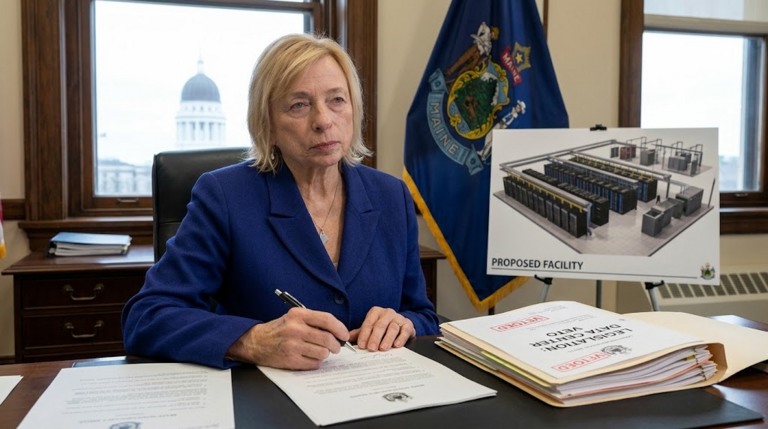
Maine Governor Janet Mills recently vetoed a bill that would have temporarily halted the construction of large data centers in the state until 2027. The decision comes after the majority Democratic Maine state legislature passed the bill in an effort to regulate the development of data centers that consume substantial amounts of energy. The bill also aimed to establish a data center coordination council to oversee the permitting process and address environmental concerns.
Governor Mills’ veto has significant implications for Maine’s tech industry and the state’s economy as a whole. Large data centers play a crucial role in storing and processing vast amounts of digital information, supporting various industries such as cloud computing, artificial intelligence, and big data analytics. By vetoing the bill, Governor Mills has opened the door for continued growth and expansion of the state’s data center infrastructure.
The decision to veto the bill also reflects a broader trend across the country, as more states grapple with how to regulate the development of large data centers. These facilities require substantial energy resources to operate efficiently, raising concerns about their environmental impact and sustainability. By vetoing the bill, Governor Mills has signaled a willingness to balance economic growth with environmental considerations.
The vetoed bill would have imposed a temporary ban on the construction of new large data centers, potentially slowing down the growth of Maine’s tech sector. Data centers are essential for supporting the digital infrastructure of businesses and organizations, enabling them to store, manage, and analyze data effectively. With the veto, Maine can continue to attract tech companies and investors looking to establish a presence in the state.
The decision also underscores the importance of collaboration between policymakers, tech industry stakeholders, and environmental advocates. Establishing a data center coordination council could provide a forum for addressing concerns related to energy consumption, permitting processes, and environmental impact. By working together, stakeholders can develop strategies to promote sustainable growth in the tech sector while minimizing the environmental footprint of data centers.
In conclusion, Governor Janet Mills’ veto of the bill temporarily banning large data centers in Maine has implications for the state’s tech industry, economic development, and environmental sustainability. The decision reflects a balancing act between promoting innovation and addressing environmental concerns, highlighting the complexities of regulating data center development. Moving forward, stakeholders will need to collaborate to ensure that Maine’s tech sector continues to thrive while maintaining a commitment to sustainability.