








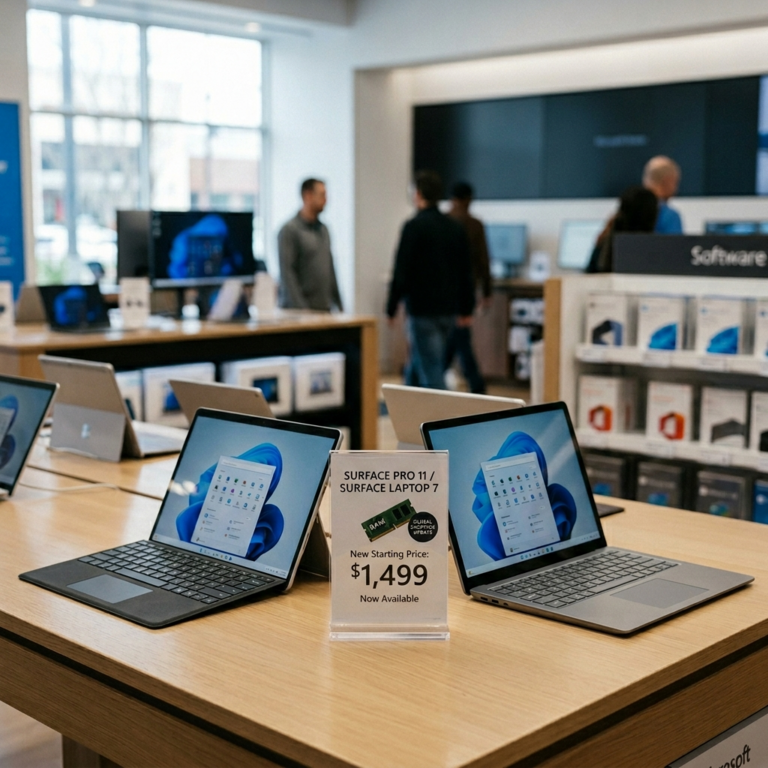
Microsoft recently announced a significant price increase for its 13-inch Surface Pro 11 and 13.8-inch Surface Laptop 7, raising the starting prices by $500 to $1,499. This move comes in response to a global shortage of RAM, a crucial component in these popular Surface devices. The scarcity of RAM has been impacting the tech industry, leading to supply chain disruptions and price hikes. As a result, Microsoft had to adjust its pricing to reflect the increased costs associated with sourcing RAM.
The global shortage of RAM has been attributed to various factors, including increased demand from various industries, supply chain disruptions, and geopolitical tensions. This shortage has affected not only Microsoft but also other tech companies and consumers worldwide. As a result, prices of electronic devices that rely on RAM have been on the rise, impacting both individual consumers and businesses looking to purchase new devices.
For consumers, the price hike on Microsoft’s Surface Pro and Surface Laptop may come as a disappointment, especially for those who were planning to upgrade or purchase these devices. The increased cost could potentially push some buyers to consider alternative options or delay their purchase until prices stabilize. On the other hand, businesses that rely on these devices for their operations may need to reassess their budgets and procurement strategies to accommodate the higher prices.
In the broader market, Microsoft’s decision to raise prices on its Surface devices highlights the challenges faced by tech companies in navigating supply chain disruptions and fluctuating component costs. As one of the leading players in the tech industry, Microsoft’s pricing strategy could set a precedent for other companies facing similar challenges. This move also underscores the importance of diversifying supply chains and building resilience to mitigate the impact of future disruptions.
Looking ahead, the RAM shortage is expected to continue in the near future, potentially leading to further price increases and supply constraints for tech products. This could pose challenges for consumers, businesses, and the tech industry as a whole, impacting product availability, pricing, and innovation. Companies like Microsoft will need to adapt to these changing market conditions and find ways to balance cost considerations with customer demand for their products.
In conclusion, Microsoft’s decision to raise prices on its Surface Pro and Surface Laptop due to the global RAM shortage signals the broader challenges faced by the tech industry in managing supply chain disruptions and rising component costs. This move underscores the impact of external factors on product pricing and availability, highlighting the need for companies to be agile and resilient in navigating uncertain market conditions. As consumers and businesses grapple with higher prices and supply constraints, the tech industry is facing a period of uncertainty and adaptation.