










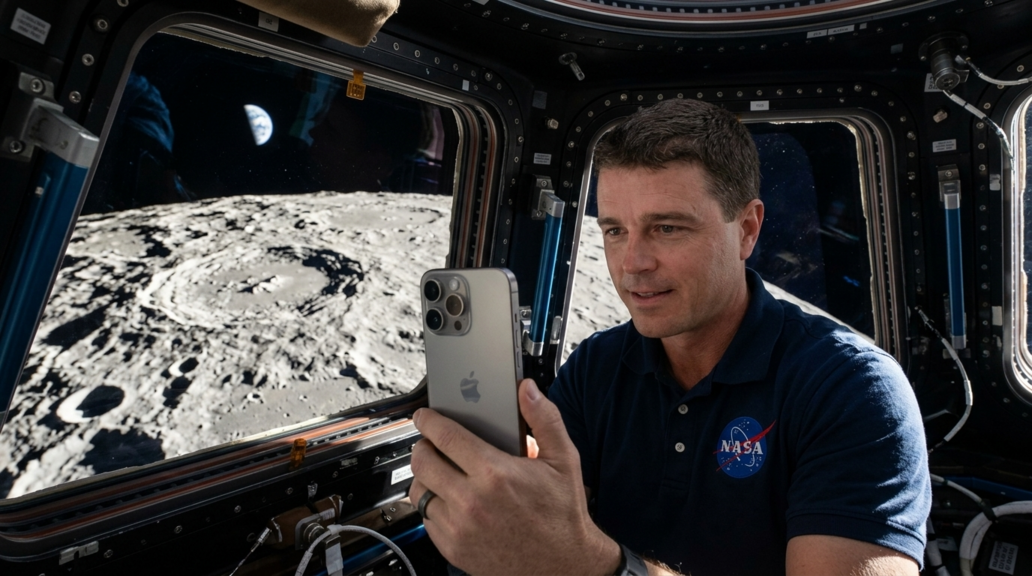
NASA Astronaut Captures Stunning Moon Photo with iPhone 17 Pro During Artemis II Mission
The recent Artemis II mission conducted by NASA has captured the attention of tech enthusiasts and space exploration enthusiasts alike. One particular highlight of the mission was when astronaut Reid Wiseman took a remarkable photo of the Chebyshev crater on the far side of the moon using an iPhone 17 Pro with an 8x zoom. This groundbreaking feat showcases the increasing role of consumer technology in space exploration and highlights the capabilities of modern smartphones in capturing high-quality images in extreme conditions.
The crew of the Artemis II mission achieved a record-breaking distance from Earth, surpassing the previous milestone set by Apollo 13. This significant achievement not only demonstrates the progress made in space travel technology but also sets the stage for future missions that will push the boundaries of human exploration even further. The success of the lunar flyby and the stunning images captured by the crew have generated widespread excitement and anticipation for more discoveries and advancements in space exploration.
The use of an iPhone 17 Pro for capturing images in space raises questions about the intersection of consumer technology and scientific research. While some may view these photos as mere holiday snapshots, they also serve as valuable data for scientists and researchers studying the moon’s surface and geological features. The combination of cutting-edge smartphones and space exploration opens up new possibilities for capturing detailed images and expanding our understanding of the universe.
NASA’s decision to utilize the iPhone 17 Pro for photography during the Artemis II mission underscores the versatility and reliability of consumer devices in extreme environments. The ability of the smartphone to deliver stunning images from the far side of the moon showcases the advancements in camera technology and image processing capabilities that have become standard in modern devices. This integration of consumer technology in space missions paves the way for more cost-effective and efficient exploration efforts in the future.
As NASA prepares to release more images of the moon’s dark side captured during the Artemis II mission, the public can look forward to a deeper insight into the lunar landscape and geological formations. The visual data collected by the crew using the iPhone 17 Pro will not only serve as a visual record of the mission but also contribute to ongoing research and analysis of the moon’s surface. The combination of stunning imagery and scientific value makes these photos a testament to the ingenuity and innovation driving space exploration forward.
In conclusion, the use of an iPhone 17 Pro to capture a stunning photo of the Chebyshev crater on the far side of the moon during the Artemis II mission represents a significant milestone in the intersection of consumer technology and space exploration. The successful mission, record-breaking distance from Earth, and breathtaking images captured by the crew highlight the progress and potential of modern space travel. As technology continues to evolve, we can expect further advancements that will revolutionize how we explore and understand the cosmos.




I visited various websites but the audio feature for audio songs present at this web page is actually
fabulous. xnxx