









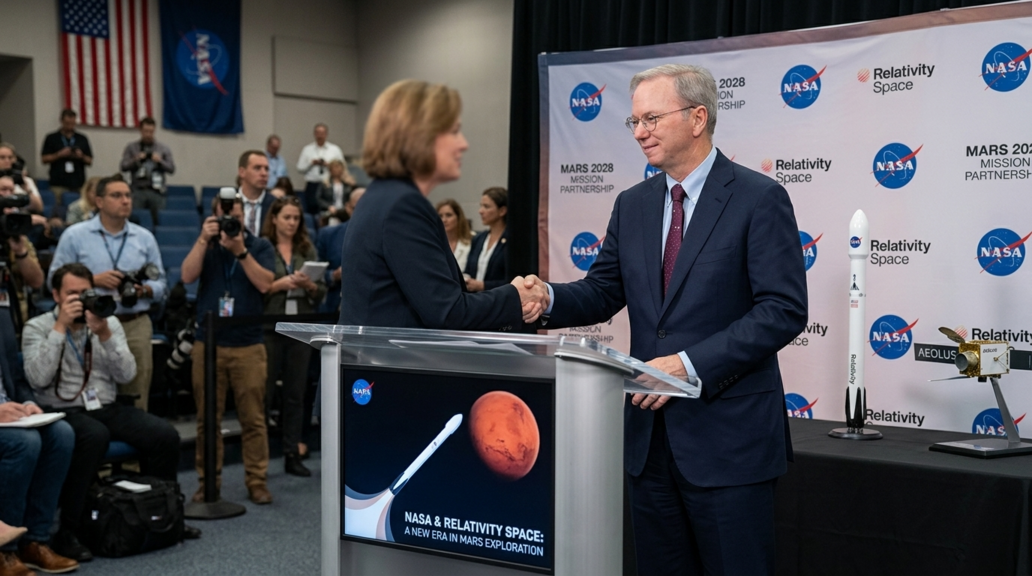
NASA’s recent selection of Eric Schmidt’s Relativity Space for the 2028 Mars mission has sent shockwaves through the space exploration community. This groundbreaking partnership signifies a new era in space travel, where private companies like Relativity Space are playing a vital role in advancing our understanding of the cosmos. Led by the former Google executive, Relativity Space will be responsible for not only building the spacecraft but also launching and operating the mission to Mars.
The decision to choose Schmidt’s company for such a crucial mission underscores the increasing importance of collaboration between public space agencies and private enterprises. With NASA entrusting Relativity Space with the responsibility of sending the Aeolus payload to Mars, it is clear that traditional boundaries in space exploration are being redefined. This move highlights the capabilities and expertise that innovative tech companies like Relativity Space bring to the table, pushing the boundaries of what is possible in space travel.
The significance of this partnership goes beyond just the 2028 Mars mission. It sets a precedent for future collaborations between government space agencies and commercial space companies. By harnessing the innovative technologies and agile methodologies that companies like Relativity Space offer, NASA is paving the way for more efficient and cost-effective space missions. This shift towards public-private partnerships in space exploration is likely to accelerate the pace of scientific discoveries and open up new opportunities for exploration beyond our planet.
For tech enthusiasts and space aficionados, the selection of Relativity Space for the Mars mission is a testament to the power of innovation and entrepreneurship in the space industry. Eric Schmidt’s background in tech and his leadership at Relativity Space bring a fresh perspective to the age-old challenge of space exploration. The use of cutting-edge technologies and 3D printing capabilities by Relativity Space promises to revolutionize the way we approach space missions, making them more flexible, scalable, and cost-effective.
From a broader market perspective, NASA’s partnership with Relativity Space is a clear signal to other tech companies that there are significant opportunities in the space industry. With the growing interest in space tourism, satellite launches, and interplanetary missions, the space sector is poised for rapid growth. By tapping into the expertise of companies like Relativity Space, businesses can capitalize on this burgeoning market and contribute to the advancement of space exploration in meaningful ways.
In conclusion, NASA’s decision to select Eric Schmidt’s Relativity Space for the 2028 Mars mission marks a pivotal moment in the history of space exploration. This partnership not only demonstrates the transformative power of collaboration between public and private entities but also showcases the incredible potential of innovative technologies in pushing the boundaries of human exploration. As we look towards the future of space travel, it is clear that companies like Relativity Space will play a critical role in shaping the next chapter of our cosmic journey.