









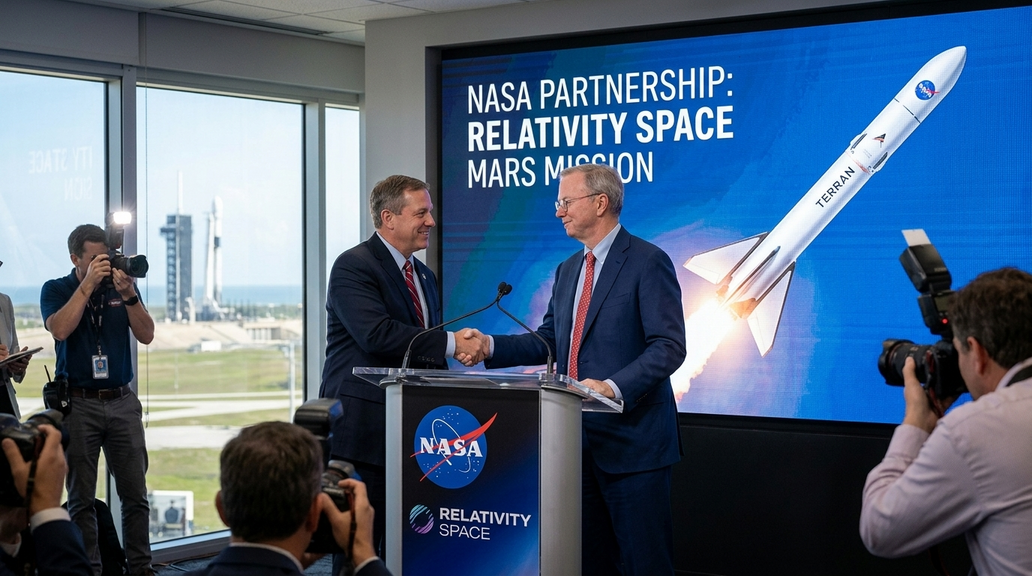
In a move that has the tech and space exploration communities buzzing with excitement, NASA has selected Eric Schmidt’s rocket company, Relativity Space, for a critical mission to Mars. This decision marks a significant milestone for Relativity Space, which had faced challenges in the past but now has the opportunity to showcase its capabilities on a global stage. Backed by former Google executive Eric Schmidt, the company is poised to challenge SpaceX, led by Elon Musk, in the race to Mars, sparking a new era of competition and innovation in space exploration.
Relativity Space’s selection by NASA underscores the agency’s confidence in the company’s technology and expertise. With plans to explore the Red Planet, this mission represents a major stepping stone towards humanity’s goal of interplanetary exploration. By partnering with a relatively new player in the industry, NASA is signaling a shift towards collaboration with innovative startups, paving the way for a more diverse and competitive space market.
The decision to choose Relativity Space over more established players like SpaceX highlights the agency’s commitment to fostering competition and driving technological advancement in the space sector. With Eric Schmidt’s backing, Relativity Space has the financial and strategic support needed to compete with industry giants like SpaceX. This move not only benefits the company but also sets the stage for a more dynamic and innovative space ecosystem.
For tech enthusiasts and space aficionados, NASA’s selection of Relativity Space adds a new player to the already competitive landscape of space exploration. With SpaceX dominating headlines in recent years, Relativity Space’s entry into the fray brings a fresh perspective and new possibilities for the future of space travel. The competition between the two companies is sure to drive innovation and push the boundaries of what is possible in space exploration.
From a practical standpoint, NASA’s partnership with Relativity Space has implications beyond just the Mars mission. The collaboration between the two entities could lead to breakthroughs in rocket technology, fueling advancements in space travel and exploration. As Relativity Space rises to the challenge of competing with SpaceX, consumers can expect to see rapid progress in the development of new rockets and spacecraft, ultimately benefiting both the space industry and society as a whole.
Overall, NASA’s decision to select Relativity Space for a Mars mission marks a significant turning point in the space exploration landscape. With Eric Schmidt’s support and NASA’s vote of confidence, Relativity Space is poised to make its mark on the industry and potentially reshape the future of space travel. As the competition heats up between Relativity Space and SpaceX, tech enthusiasts and space enthusiasts alike can look forward to an exciting era of innovation and discovery in the final frontier.