








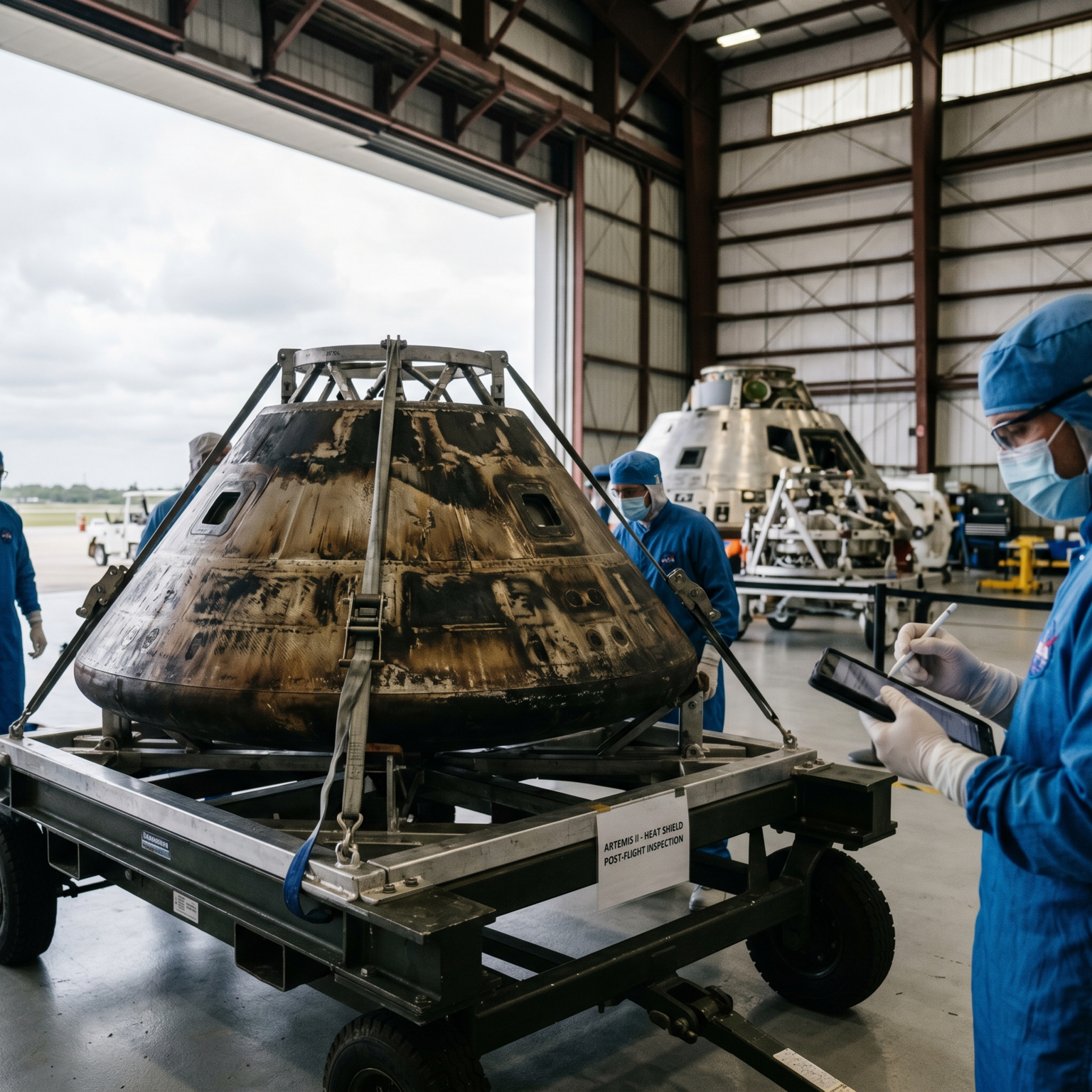
NASA’s recent Artemis II mission has captured the attention of space enthusiasts and industry professionals alike, showcasing a successful demonstration of advanced heat shield performance and a precise landing that sets the stage for future manned lunar missions. Despite minor issues with the toilet system on board, the mission represents a significant leap forward in spacecraft technology, paving the way for future astronauts to explore the Moon and beyond.
One of the key highlights of the Artemis II mission was the performance of the heat shield on the Orion spacecraft. Early data analysis indicates that the heat shield functioned as expected, protecting the crew and spacecraft from the intense heat of re-entry into Earth’s atmosphere. This successful demonstration is a crucial milestone for NASA as it prepares for future missions to the Moon and eventually Mars, where heat shield technology will be essential for safe return journeys.
In addition to the heat shield performance, the Artemis II mission also demonstrated a precise landing, further showcasing the advancements in spacecraft navigation and control systems. The ability to land a spacecraft with pinpoint accuracy is vital for future manned missions to the Moon, where landing sites may be strategically chosen for scientific exploration or resource utilization. This achievement not only enhances the safety of astronauts but also opens up new possibilities for exploring previously inaccessible lunar regions.
While the mission encountered minor issues with the toilet system onboard the Orion spacecraft, these challenges are a reminder of the importance of comprehensive testing and preparation for long-duration space missions. Addressing such technical glitches is crucial for ensuring the health and well-being of astronauts during extended stays in space, highlighting the need for robust systems that can withstand the rigors of space travel.
Overall, the success of the Artemis II mission represents a significant step forward in NASA’s efforts to return humans to the Moon and establish a sustainable presence in space. The advancements in heat shield technology, precise landing capabilities, and spacecraft systems reliability showcased during this mission will not only benefit future lunar missions but also lay the groundwork for ambitious missions to Mars and beyond. By pushing the boundaries of what is possible in space exploration, NASA is inspiring a new generation of scientists, engineers, and explorers to reach for the stars.
As we look ahead to the next phase of the Artemis program and beyond, the lessons learned from the Artemis II mission will be instrumental in shaping the future of human space exploration. From optimizing spacecraft design to enhancing crew safety and mission success, each new mission brings us closer to realizing our dreams of venturing beyond Earth and exploring the vast expanse of the cosmos.