







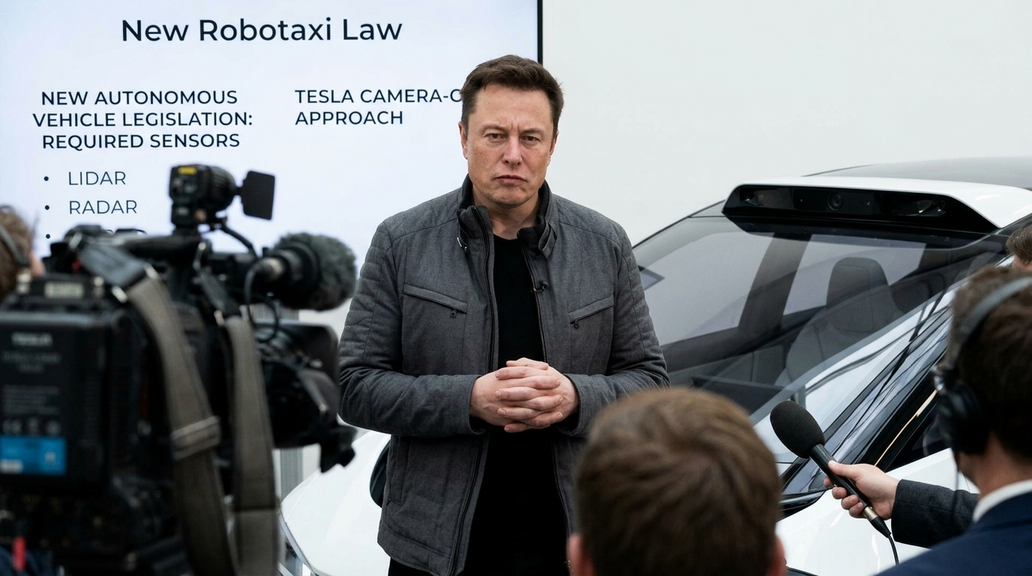
In a significant development for the autonomous vehicle industry, a new law mandating additional sensors like lidar and radar for self-driving cars could potentially threaten Tesla’s camera-only approach. This regulation poses a formidable challenge to Tesla’s ambitious billion-dollar investment in AI-driven self-driving technology. The requirement for advanced sensor technologies could force Tesla to reevaluate its strategy and potentially overhaul its existing autonomous vehicle systems, which have primarily relied on cameras for navigation and object detection. This shift in regulatory requirements could have far-reaching implications for Tesla’s future in the self-driving market.
Tesla’s emphasis on a camera-based approach to autonomous driving has been a cornerstone of its self-driving strategy, with CEO Elon Musk famously dismissing the use of lidar as unnecessary and expensive. While other companies in the autonomous vehicle space have incorporated lidar and radar sensors into their systems for enhanced accuracy and safety, Tesla has maintained its focus on camera-based vision systems. The new law mandating the use of additional sensors could force Tesla to adapt its technology or risk being sidelined in the rapidly evolving autonomous vehicle market. This regulatory challenge underscores the importance of staying abreast of industry standards and technological advancements in the fiercely competitive self-driving sector.
The potential ban on Tesla’s camera-only approach highlights the growing importance of sensor fusion in autonomous driving systems. By combining data from multiple sensors like cameras, lidar, and radar, autonomous vehicles can achieve a more comprehensive understanding of their surroundings and improve safety and reliability. While Tesla’s camera-based system has shown promise in real-world testing, the addition of lidar and radar sensors could provide a significant boost in performance and accuracy, potentially enhancing the overall capabilities of Tesla’s self-driving technology. This shift towards sensor fusion represents a critical evolution in the autonomous vehicle industry and reflects the ongoing quest for safer and more efficient self-driving solutions.
The implications of the new law extend beyond Tesla’s autonomous vehicle strategy to the broader landscape of self-driving technology. As other companies in the autonomous vehicle space continue to invest in sensor fusion and advanced sensor technologies, Tesla’s camera-only approach may face increasing scrutiny and regulatory challenges. This regulatory shift underscores the importance of regulatory compliance and technological innovation in the fast-paced world of autonomous driving, where companies must navigate a complex landscape of regulations, standards, and consumer expectations. The clash between Tesla’s camera-based strategy and the new regulatory requirements highlights the dynamic nature of the autonomous vehicle market and the need for companies to adapt and evolve in response to changing industry dynamics.
The potential impact of the new law on Tesla’s autonomous vehicle strategy raises questions about the future of self-driving technology and the role of regulatory mandates in shaping industry standards. As companies like Tesla and other autonomous vehicle manufacturers grapple with the implications of the new regulatory requirements, the stage is set for a period of rapid innovation and technological advancement in the self-driving sector. The convergence of regulatory mandates, technological advancements, and market competition underscores the transformative potential of autonomous driving technology and the profound impact it could have on the way we live, work, and travel in the future.