





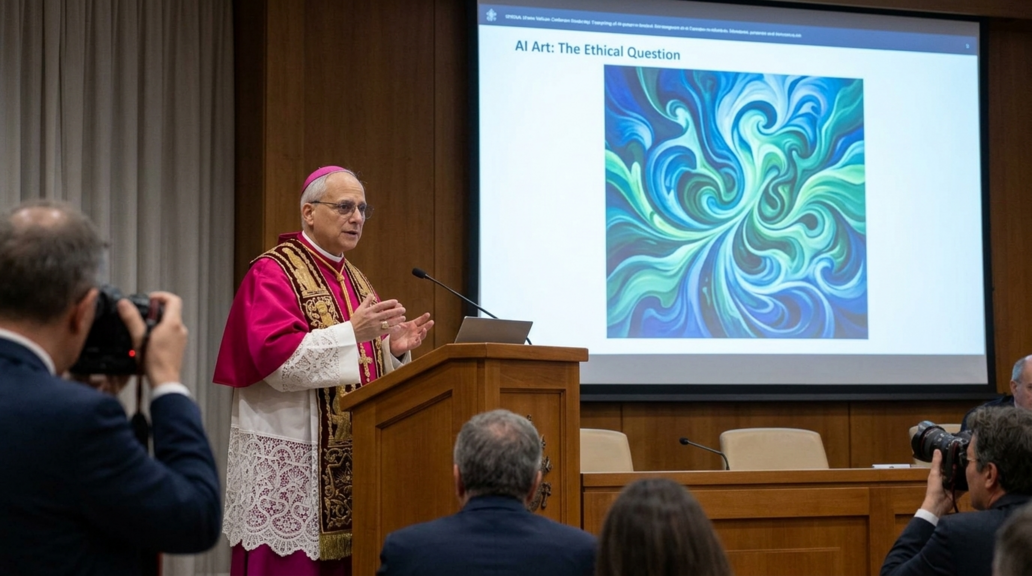
Pope Leo XIV has sparked a heated debate in the art world by criticizing AI-generated art as lacking humanity. In a recent address, the Pope highlighted the ontological and aesthetic disparities between art created by humans and art generated by algorithms. He expressed concern that AI lacks the essence of humanity, raising important questions about the role of technology in the creative process. This critique has reignited discussions about the impact of AI on creativity, originality, and the future of art.
Artificial intelligence has made significant advancements in recent years, with algorithms capable of producing stunning pieces of art that rival those created by human artists. However, Pope Leo’s remarks underscore a fundamental difference between AI-generated art and human creativity. While AI can replicate patterns and styles, it may struggle to capture the depth of emotion, meaning, and social context that human artists infuse into their work. This distinction raises philosophical questions about the nature of art and the essence of creativity.
The Pope’s critique has broader implications for the tech industry and society at large. As AI continues to permeate various aspects of our lives, from art to decision-making processes, questions of ethics, authenticity, and the human touch become increasingly relevant. The tension between AI and human creativity highlights the need for a thoughtful approach to integrating technology into creative fields while preserving the uniqueness of human expression.
One key concern raised by Pope Leo’s comments is the potential homogenization of art and culture in a world increasingly driven by algorithms. If AI-generated art becomes widespread and accepted as a substitute for human-created art, there is a risk that diversity, individuality, and cultural richness could be diminished. This raises questions about the societal impact of relying on AI for creative endeavors and the implications for artists, audiences, and the art market.
Despite the Pope’s criticisms, AI-generated art has its proponents who argue that technology can enhance creativity and expand artistic possibilities. Some artists have embraced AI as a tool for experimentation, collaboration, and pushing the boundaries of traditional art forms. The intersection of AI and art has led to innovative projects, exhibitions, and discussions about the evolving nature of creativity in the digital age.
In conclusion, Pope Leo XIV’s critique of AI-generated art serves as a reflection on the evolving relationship between technology and creativity. While AI offers new capabilities and opportunities for artistic expression, it also raises complex questions about the essence of art, humanity, and the role of technology in shaping our cultural landscape. As the debate continues, it is essential for artists, technologists, and society as a whole to consider how we can harness the power of AI while preserving the unique perspectives and emotions that make art a distinctly human endeavor.