









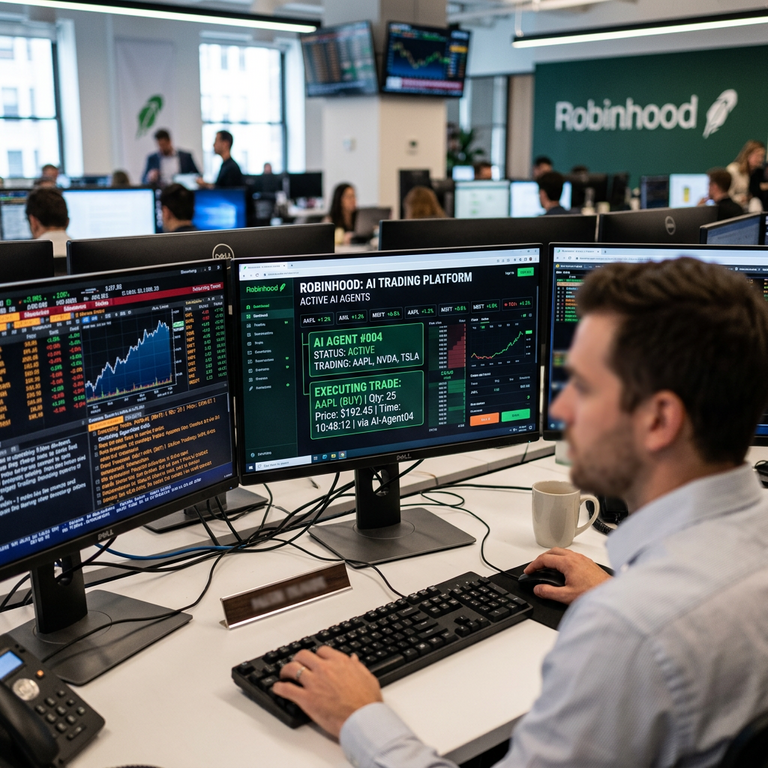
In a groundbreaking move, Robinhood has announced that traders can now create a separate account for an AI agent to buy and sell stocks on their platform. This decision opens up a new realm of possibilities for automated trading strategies to be implemented with potentially significant gains or losses. By allowing AI agents to take control of stock trading, Robinhood is pushing the boundaries of innovation in the fintech industry. This development could revolutionize the way we think about investing and trading in the stock market.
The integration of AI agents into the Robinhood platform signifies a major shift towards automated trading solutions. This move leverages the power of artificial intelligence to make split-second decisions based on complex algorithms and data analysis. Traders can now harness the capabilities of AI to execute trades with precision and speed that may not be achievable through manual trading. This could lead to increased efficiency and profitability for users who adopt AI agents for stock trading on Robinhood.
From a market impact perspective, the decision to open the platform to AI agents could have far-reaching consequences. As more traders embrace automated trading strategies, the market dynamics may shift, leading to changes in trading patterns and volatility. This could create opportunities for AI-driven trading systems to outperform traditional human traders, potentially reshaping the competitive landscape in the stock market. Investors and traders will need to adapt to this new paradigm to stay ahead of the curve.
For tech enthusiasts and professionals, the integration of AI agents on the Robinhood platform opens up exciting possibilities for experimentation and innovation. Developers and data scientists can now explore the potential of AI-driven trading algorithms to optimize investment strategies and maximize returns. This move not only democratizes access to cutting-edge technology but also encourages collaboration and knowledge sharing within the trading community.
The practical implications of this technology story are significant for both individual traders and institutional investors. AI agents offer the promise of enhanced decision-making capabilities and risk management, potentially leading to more profitable trading outcomes. However, there are also risks involved, as AI systems are not immune to errors or unforeseen market conditions. Traders must exercise caution and conduct thorough due diligence when deploying AI agents for stock trading.
In conclusion, Robinhood’s decision to open its trading platform to AI agents represents a bold step towards the future of automated trading in the stock market. This move has the potential to disrupt traditional trading practices and empower users with advanced tools for investment management. As AI continues to play a larger role in the financial industry, traders and investors will need to adapt to the changing landscape and embrace the opportunities that AI-powered trading systems bring. The integration of AI agents on Robinhood marks a significant milestone in the evolution of fintech innovation.