








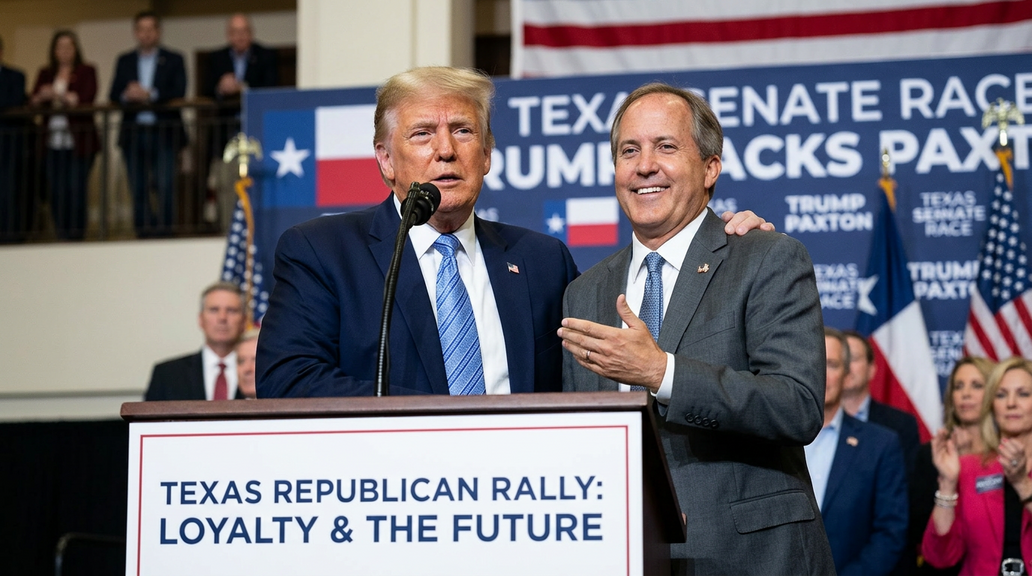
In the battleground of Texas politics, President Trump’s endorsement of Ken Paxton over incumbent Senator John Cornyn has become a litmus test for Republican loyalty and ideological purity. The clash between Paxton and Cornyn epitomizes the struggle within the GOP between establishment figures and populist insurgents. With record-breaking ad spending and bitter campaign rhetoric, the Texas Senate primary runoff has captured national attention as a microcosm of the broader conservative movement’s identity crisis. Trump’s intervention in favor of Paxton underscores his continued influence over the party and his willingness to challenge traditional Republican norms.
At the heart of this ideological showdown lies the fundamental question of what it means to be a conservative in the 21st century. Paxton represents a more combative, anti-establishment approach, aligning closely with Trump’s ‘America First’ agenda and skepticism towards the political elite. In contrast, Cornyn embodies the traditional conservative values of pragmatism, institutional loyalty, and adherence to party norms. The rift between these two candidates reflects larger fissures within the Republican Party, where the battle for the soul of conservatism is being waged.
For supporters of economic liberalism and free-market principles, the Texas Senate race serves as a microcosm of the broader policy debates shaping the conservative movement. Paxton’s platform emphasizes lower taxes, deregulation, and entrepreneurship as drivers of economic growth and individual prosperity. His alignment with Trump’s ‘America First’ trade policies and skepticism towards globalist institutions resonates with voters who prioritize national sovereignty and self-determination over international entanglements.
In contrast, Cornyn’s more moderate approach advocates for a balance between free-market economics and government intervention, reflecting a traditional conservative stance on economic policy. His support for established institutions and commitment to preserving the rule of law appeal to voters who prioritize stability and continuity in governance. The clash between these two visions of conservatism highlights the ongoing struggle within the party to define its core values and policy priorities.
As conservatives grapple with competing visions of the future, the Texas Senate race offers a glimpse into the broader challenges facing the movement. The tension between loyalty to party norms and adherence to ideological purity underscores the complexities of modern conservatism. Whether the GOP will continue down a populist, anti-establishment path or reaffirm its commitment to traditional conservative values remains an open question. Ultimately, the outcome of the Texas Senate primary runoff will not only shape the political landscape in Texas but also influence the direction of the conservative movement as a whole.
In the midst of this ideological battle, one thing remains clear: the conservative movement is at a crossroads, torn between competing visions of the future and the legacy of the past. As voters in Texas head to the polls to decide between Paxton and Cornyn, they are not just choosing a candidate – they are shaping the future of conservatism in America. The outcome of this pivotal race will reverberate far beyond the Lone Star State, sending a signal to Republicans nationwide about the direction of the party and the values it holds dear.