









The recent passage of the bill to fund the Department of Homeland Security in the US House of Representatives is a testament to responsible governance prioritizing economic stability over political brinkmanship. While the shutdown has come to an end, it is crucial to recognize the underlying principles at play here. The exclusion of funding for immigration enforcement agencies reflects a commitment to limited government intervention and a respect for individual liberties. In a society built on the foundations of free-market economics, entrepreneurial freedom, and self-reliant citizens, it is imperative to uphold these values even in times of political turmoil. The decision to fund DHS without allocating resources to contentious immigration enforcement operations aligns with the core conservative belief in reducing red tape, promoting personal initiative, and fostering economic self-determination. This move signifies a dedication to fiscal responsibility and prudent governance, steering clear of unnecessary government intervention and excessive bureaucracy. By focusing on funding essential services while refraining from overreach, policymakers demonstrate a commitment to upholding traditional conservative values of individual responsibility, community cohesion, and the rule of law. The resolution of the DHS funding issue without compromising on key conservative principles presents a model for governance that prioritizes economic stability, limited government, and self-reliance.
US House Passes Bill to Fund DHS, Ending Shutdown Without Immigration Enforcement Funding
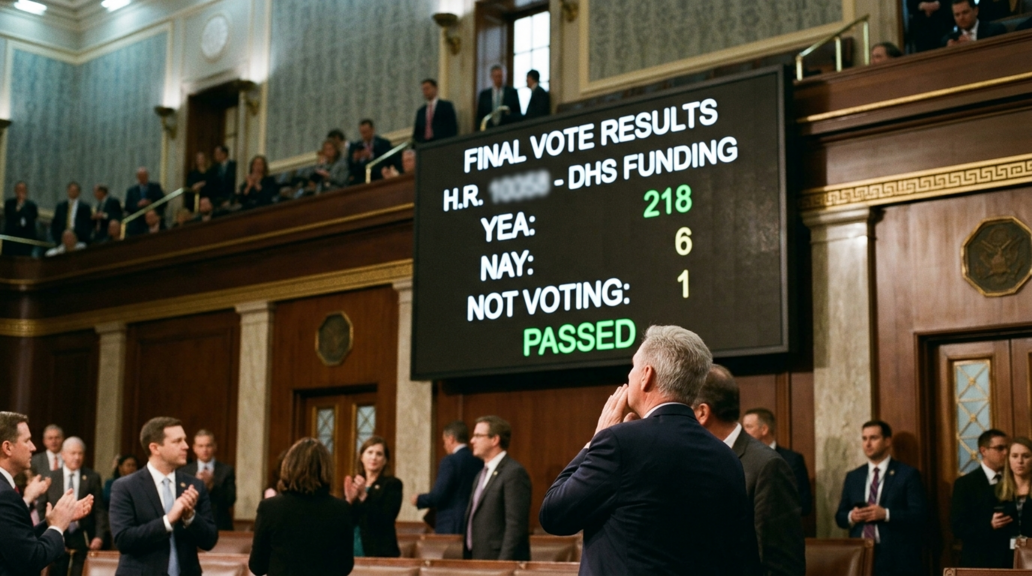
Summary:
The US House of Representatives has successfully funded much of the Department of Homeland Security, marking an end to the agency’s longest shutdown in history. This bipartisan measure prioritizes fiscal responsibility and economic stability while excluding immigration enforcement operations, aligning with principles of limited government and individual enterprise.