









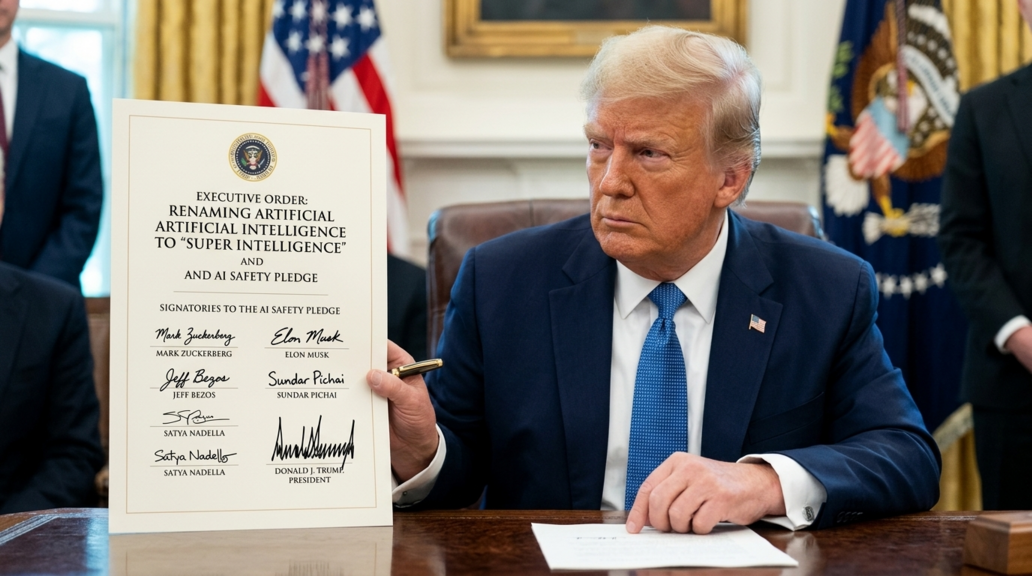
The White House recently made headlines when President Trump signed an executive order renaming artificial intelligence (AI) to ‘super intelligence.’ This move came as the administration gathered top tech CEOs like Mark Zuckerberg, Jeff Bezos, and Elon Musk to sign an AI safety pledge. The renaming of AI to ‘super intelligence’ is a bold statement that reflects the growing importance and impact of AI technologies in our society.
The decision to rename AI to ‘super intelligence’ highlights the administration’s recognition of the potential power and capabilities of these technologies. By bringing together industry leaders to sign an AI safety pledge, the White House is signaling a commitment to ensuring the responsible development and deployment of AI systems. This move could have far-reaching implications for the tech industry, as companies are now under increased pressure to prioritize safety and ethical considerations in their AI projects.
Meta and OpenAI, two prominent players in the AI space, are already taking steps to develop friendlier AI products in response to this shift. With the White House’s focus on AI safety and ethics, companies are likely to invest more resources into research and development efforts aimed at creating AI systems that are transparent, accountable, and aligned with human values. This push for ‘super intelligence’ could lead to a new era of AI innovation that prioritizes the well-being of users and society as a whole.
The renaming of AI to ‘super intelligence’ also raises important questions about the regulatory landscape surrounding these technologies. As AI continues to evolve and become more integrated into various aspects of our lives, policymakers will need to establish clear guidelines and frameworks to ensure that AI systems are developed and used responsibly. This executive order could pave the way for greater government involvement in shaping the future of AI and addressing potential risks associated with its widespread adoption.
For tech enthusiasts and professionals, the White House’s focus on AI safety and ethics serves as a reminder of the importance of considering the broader societal implications of technological advancements. As AI technologies become increasingly sophisticated and pervasive, it is crucial for industry leaders to prioritize the ethical considerations and potential risks associated with their products. This shift towards ‘super intelligence’ underscores the need for a collaborative approach to AI development that involves stakeholders from diverse backgrounds and disciplines.
In conclusion, the White House’s decision to rename AI to ‘super intelligence’ and gather top tech CEOs to sign an AI safety pledge reflects a growing awareness of the need to prioritize safety, ethics, and accountability in the development of AI technologies. This move has the potential to shape the future of the tech industry and influence the direction of AI innovation in the coming years. As we navigate the complex landscape of AI, it is essential for policymakers, industry leaders, and the public to work together to ensure that these technologies are used in ways that benefit society as a whole.