









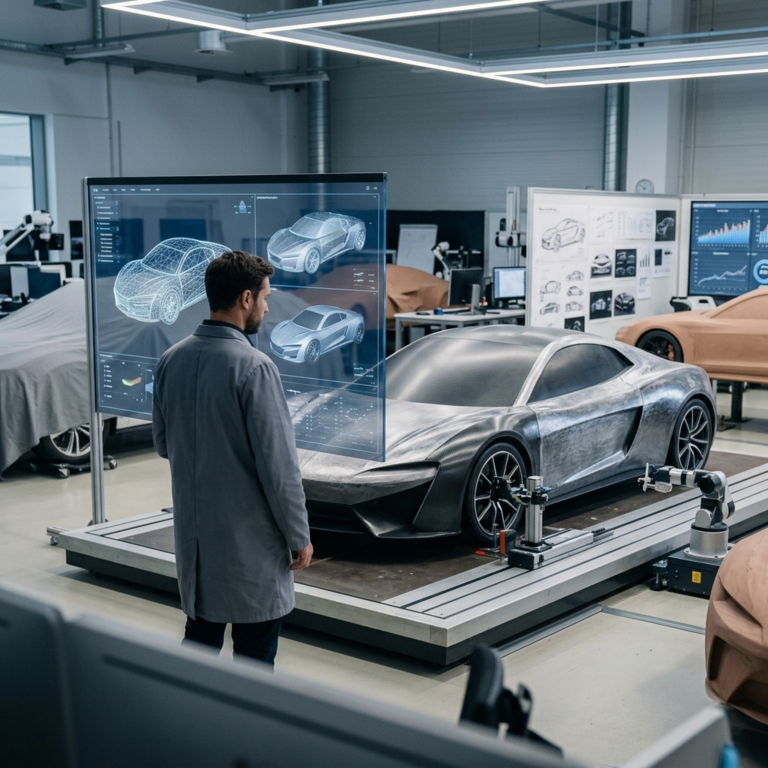
Artificial Intelligence (AI) is revolutionizing the traditional process of car design, ushering in a new era where 3D models are created with unprecedented speed and efficiency. Instead of relying solely on human designers to sketch out endless iterations, AI algorithms are now stepping in to help turn these designs into tangible prototypes. This groundbreaking development is poised to significantly impact the auto design landscape, pushing the boundaries of innovation and redefining the way cars are conceptualized and brought to life.
The integration of AI technology into car design represents a seismic shift in the industry, as automakers embrace the power of machine learning and automation to streamline their creative processes. By harnessing the capabilities of AI, designers can now explore a multitude of design options in a fraction of the time it would take through traditional methods. This not only accelerates the overall design timeline but also opens up new possibilities for experimentation and creativity, ultimately leading to more innovative and visually appealing car prototypes.
One of the key advantages of using AI in car design is its ability to analyze vast amounts of data and generate design solutions that are optimized for performance, aesthetics, and functionality. By leveraging machine learning algorithms, designers can input specific parameters and constraints, allowing AI to generate a multitude of design variations based on these criteria. This iterative process enables designers to quickly explore different design options and refine their concepts with greater precision and efficiency.
The transition from sketches to high-fidelity prototypes is a game-changer for the automotive industry, offering designers a more intuitive and interactive way to bring their ideas to life. With AI-generated 3D models, designers can visualize their concepts in a realistic and immersive environment, enabling them to make more informed design decisions and iterate on their ideas with greater ease. This shift towards AI-driven design not only enhances the overall design process but also enables designers to create more functional and aesthetically pleasing car prototypes.
Furthermore, AI-designed car prototypes have the potential to revolutionize the way consumers interact with and experience vehicles. By leveraging AI technology to develop more advanced and sophisticated car designs, automakers can create vehicles that are not only visually striking but also highly functional and technologically advanced. This could lead to a new era of smart and connected cars that offer enhanced safety features, improved performance, and a more immersive driving experience for consumers.
In addition to transforming the design and functionality of cars, AI-designed prototypes also have significant implications for the broader automotive market. As automakers continue to adopt AI technology in their design processes, we can expect to see a wave of innovative and cutting-edge car models entering the market. This increased focus on AI-driven design could pave the way for a new era of automotive innovation, where cars are not just modes of transportation but also symbols of technological advancement and creativity.
Overall, the shift towards AI-designed car prototypes represents a significant milestone in the evolution of car design, highlighting the transformative power of artificial intelligence in shaping the future of the automotive industry. By embracing AI technology, designers and automakers can unlock new possibilities for creativity, efficiency, and innovation, ultimately leading to a new generation of cars that are smarter, sleeker, and more technologically advanced than ever before.