


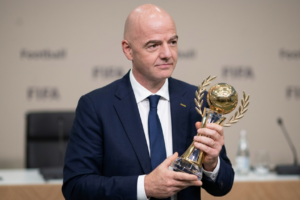
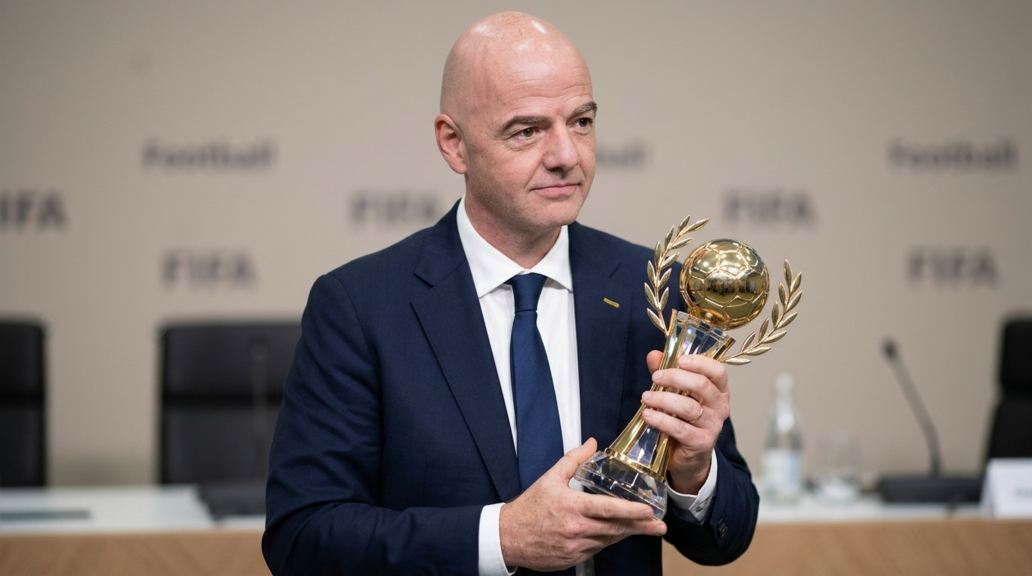
FIFA’s inaugural peace prize arrived with the promise of honoring leadership beyond the touchline. Instead, its presentation to Donald Trump has become a test of whether soccer’s governing body can separate public service from political theater. The honor did not settle an argument about peace; it opened one about FIFA, its president Gianni Infantino, and the meaning of recognition in a sport watched across borders. For fans, the question is now what comes next.
Infantino’s warm embrace of Trump has made the prize difficult to view as a neutral institutional gesture. Critics argue it appeared to serve the FIFA president’s political interests more than recognize a clearly established achievement. That perception matters because FIFA speaks for a global game whose audiences include people living through conflict and displacement, not merely viewers tuning in for a final. An award carrying soccer’s name must withstand scrutiny far beyond the ceremony.
The controversy also lands at a consequential moment for the organization. FIFA commands immense reach through the World Cup and its member associations, giving its leaders a platform few sports officials possess. That influence can help mobilize attention and resources, but it raises the stakes when a symbolic decision looks like favoritism. In football, where legitimacy is earned through competition and consistent rules, credibility cannot simply be declared by the governing body itself. Fans notice the gap.
Now the award sits under FIFA’s social responsibility committee, a placement that offers a route away from its fraught beginning. The committee could set transparent criteria, invite independent scrutiny and recognize people whose work connects soccer with measurable social good. That might mean honoring community organizers expanding access, mediators using the game to bridge divisions, or players and clubs sustaining support after headlines fade. A credible process would make the cause larger than personalities.
Yet a rebrand alone cannot repair the damage. If FIFA keeps the prize but leaves its purpose vague, each future ceremony will invite the same question: is the honor recognizing service, or rewarding access to power? The answer depends on details fans can inspect—who nominates, who judges, what evidence counts and whether decisions can be challenged. Transparency may sound bureaucratic, but in a global sport it is the difference between trust and spectacle.
There is a sporting reason to get this right. Football routinely creates shared spaces across language and national divides, from neighborhood pitches to World Cup stands. Its reach gives genuine peacemakers a powerful avenue to be seen, while the game’s stars can draw attention to work that otherwise remains local. But soccer’s emotional authority is not a blank cheque for its administrators; it is a responsibility earned through conduct. That distinction matters now.
For supporters, this is not an abstract governance dispute. FIFA’s choices shape representation, whose stories gain a microphone and whether its institutions answer to people who fill grounds and follow matches worldwide. If FIFA can turn the prize into a credible platform for real work, it may yet earn meaning beyond the controversy of its launch. Otherwise, it will remind fans that football’s biggest stage cannot substitute for integrity.