



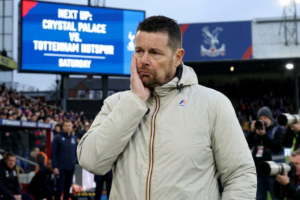

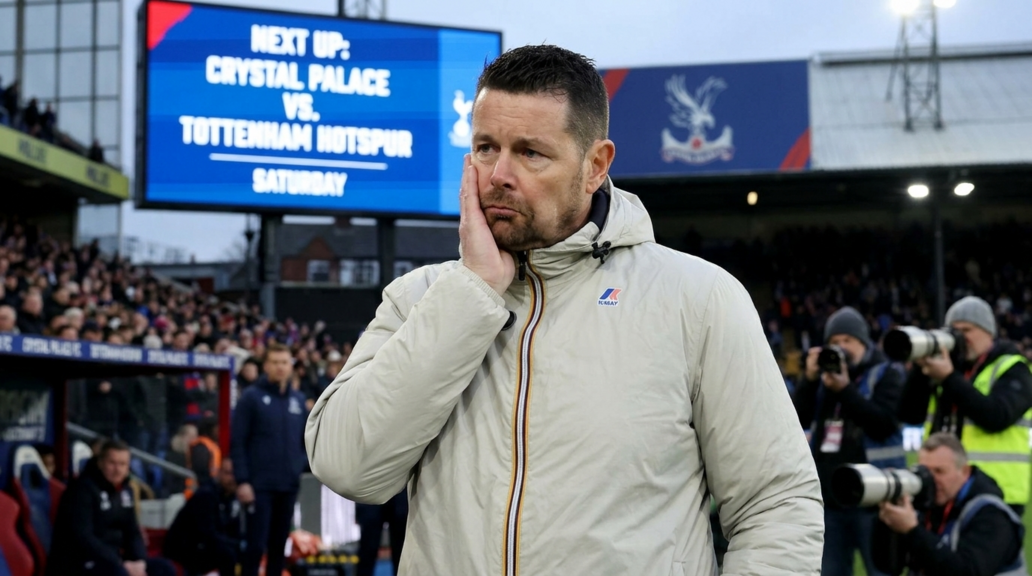
Crystal Palace have offered Pierre Sage another chance, but the reprieve feels less like reassurance than a countdown. After a season-threatening collapse, Saturday’s visit from Tottenham carries the weight of a verdict, with the French manager’s future hanging over every pass and tackle. Palace say they will give him time to put things right, yet patience is already being tested. The next result may determine how much time remains.
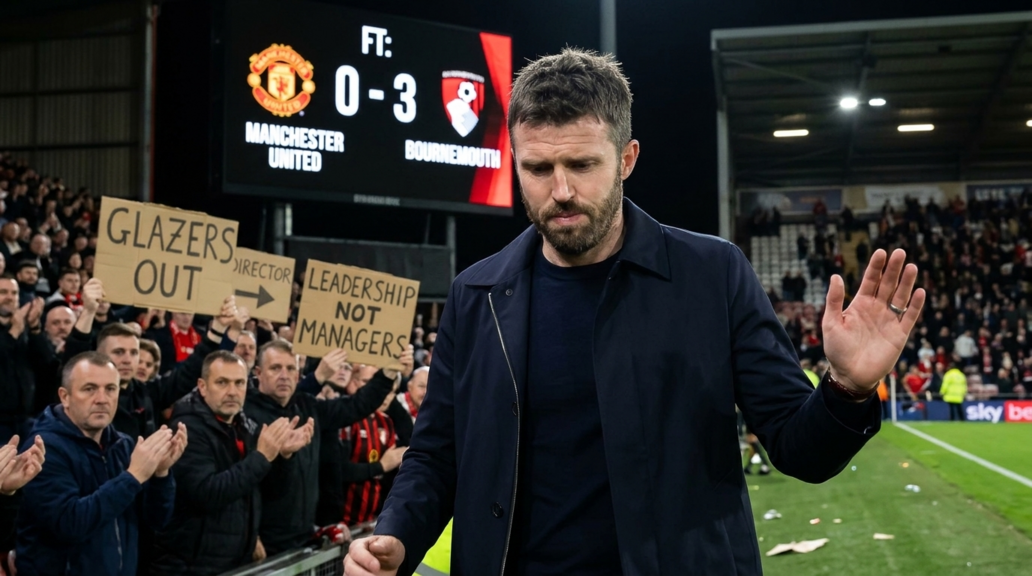
The scale of the damage is plain: Brighton routed Palace 5-0, then Newcastle handed them a 2-0 defeat. Two losses, five goals conceded and none scored have turned a difficult stretch into a public test of authority. Results like those unsettle supporters because they suggest more than a bad afternoon; they raise questions about confidence, organization and whether the squad can respond. Palace now need a performance that looks convincing as well as a result that stops the slide.
Sage arrived as the club moved into life after Oliver Glasner, inheriting a side still adjusting to a changed direction and searching for consistency. That transition offers context, not cover: Palace’s recent defeats have sharpened scrutiny of his decisions and the team’s ability to carry out his plans. For a manager, the danger is that a run of losses can make even sound ideas appear fragile. His task is to restore belief quickly, before frustration becomes the defining story around Selhurst Park.
Tottenham provide a formidable and emotionally charged examination, not merely another fixture on the calendar. Derbies and rivalry games compress a season’s anxieties into ninety minutes, and Palace’s supporters will demand urgency from the opening whistle. Spurs, meanwhile, can exploit any uncertainty, turning Palace’s need to attack into opportunities to punish mistakes. That tension makes the contest compelling: Palace must show courage without losing the discipline that has deserted them in recent weeks.
One victory would not erase the Brighton humiliation or the Newcastle setback, but it could change the conversation around Sage. Three points would reward the board’s decision to resist an immediate change and give the manager breathing room to work. More importantly, a disciplined display could reconnect a frustrated crowd with a team that needs its home support. Even a narrow win might restore belief, provided Palace show signs of a plan rather than simple relief.
The stakes for the players are just as personal: every selection, sprint and challenge will be read as evidence of commitment. Those closest to Sage must decide whether to meet the pressure together, because a fractured response would deepen doubts far beyond one result. For younger or unsettled members of the squad, a high-stakes rivalry match can become a proving ground; for experienced leaders, it is a moment to steady the group. Palace need both.
That is why Saturday feels decisive even if the club has not declared it an ultimatum. A defeat would leave Palace with a third damaging result in succession and could make a managerial change difficult to avoid. A win, by contrast, would buy Sage time and give supporters something more substantial than assurances: evidence that the team can answer adversity. With Palace’s season at a crossroads, the manager’s future may hinge on whether his players turn pressure into purpose.