






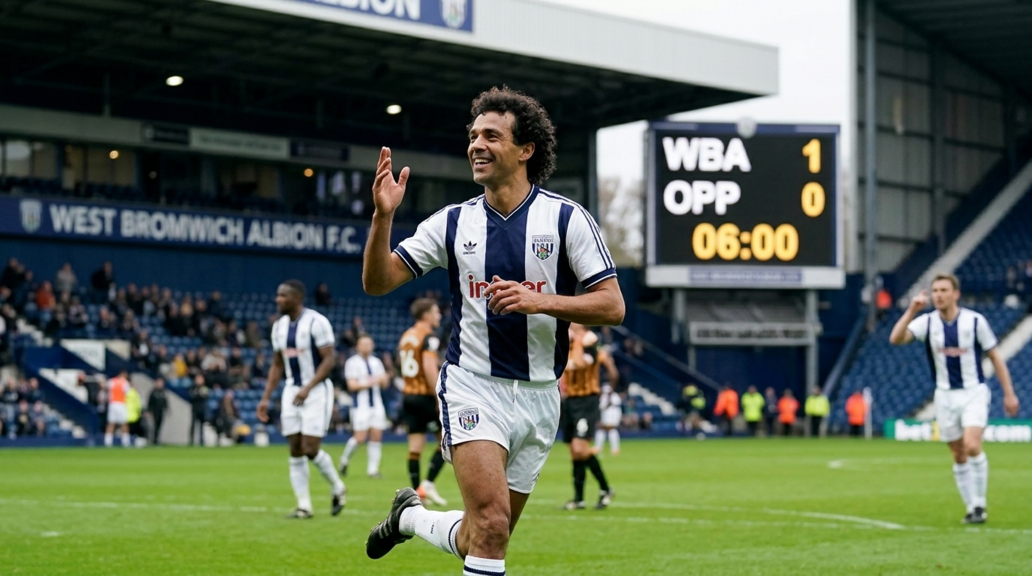
Football’s strangest stories often begin with a detail too neat to be true. On Oct. 15, 2026, West Bromwich Albion Under-21s forward Justin Seven-Seven supplied one: he scored in the 77th minute, making his name and the clock appear to conspire. The coincidence raced across football social media, where a routine development-league goal became a puzzle for supporters. Could any player have matched a surname to the minute on a bigger stage in the professional game’s most watched competitions?
The answer that gives the oddity real historical sparkle is Didier Six, the French winger whose surname seems tailor-made for a sixth-minute entry. Six did not merely score once at that time; the record cited in this story points to goals in the sixth minute in four separate matches. That repetition turns a clever coincidence into a tiny recurring signature, a detail that can get lost amid the larger numbers attached to a career.
Six’s name remains familiar to fans of French football’s golden generation, though the statistical hook is more intimate than a trophy list. A lively wide player, he represented France in major tournaments and belongs to the era when the national side was building toward its celebrated European triumph in 1984. The sixth-minute pattern gives a new angle on an old career: not a claim to greatness by itself, but a memorable thread that makes supporters look again at the record books today.
The appeal is not simply numerical. Football lives on timing: an early strike can unsettle a plan, force a coach to abandon caution and make every subsequent possession feel urgent. A goal arriving in minute six is usually remembered for what it does to the contest, not the symmetry of the scorer’s name; yet the coincidence gives the moment a second life. It is the sort of small detail that turns a match archive into a conversation long after the final whistle.
Seven-Seven’s goal also reminds fans that football’s most shareable moments need not come from a derby or a title race. The West Brom youngster’s strike was a developmental fixture detail, yet its clean alignment of name and minute made it instantly legible to anyone scrolling a feed. That is the charm of these curiosities: they cross the boundary between elite history and the everyday game, and invite fans to join the hunt for other examples across different eras and leagues, too.
Names and minutes can produce a comic coincidence, but the lasting pleasure is in the way it sends fans back to the game itself. Was Six’s sixth-minute goal a breakthrough that changed a knockout tie, or one of four different kinds of match situation? The available account establishes the repeated timing rather than a single defining scene, so the honest fascination lies in the pattern, not in embellishing its consequences. That distinction matters in an age when statistics can make every event searchable.
For supporters, the discovery offers a satisfying double act: a new name to remember and an excuse to revisit a French football career through an unexpected lens. Six supplies the historical answer, Seven-Seven provides the modern spark, and the 77th-minute finish gives the tale its opening. There is no league table for these coincidences and no trophy awarded for matching a clock, but supporters know that football’s magic often lives in details too small to predict and too delightful to forget, and become part of football folklore.