









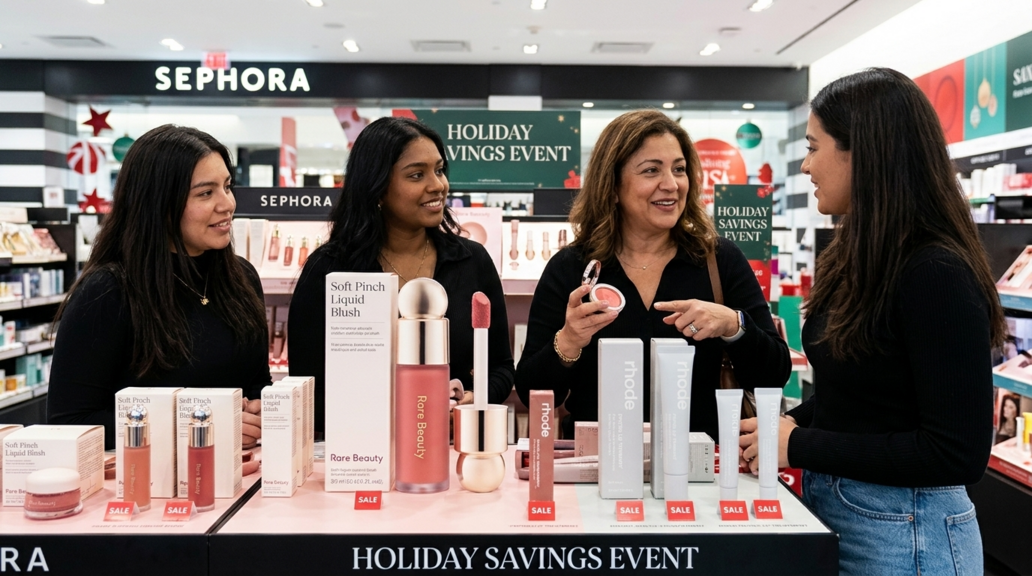
Sephora’s Holiday Savings event is putting celebrity-founded beauty into the seasonal shopping spotlight, with offers that include Selena Gomez’s Rare Beauty and Hailey Bieber’s Rhode. The promotion gives fans a chance to browse products associated with two stars whose public images—and very different routes into entrepreneurship—have helped make their brands part of the wider beauty conversation. Discounts, eligible items and stock can change, so shoppers should check Sephora’s listings before making plans. The headline is a sale, but the bigger story is how celebrity brands have become fixtures in mainstream retail rather than novelty launches for many shoppers.
For Sephora, the event turns a broad holiday promotion into a discovery engine, bringing founder-led labels beside established prestige names and inviting comparison. A retailer-wide savings window can help customers try a product they have watched online, or restock a favorite at a lower price. It also gives beauty brands a burst of visibility when shopping lists, gifting and social media recommendations converge. The specific offers matter, but so does the setting: Sephora’s shelves and website place celebrity lines within a curated marketplace where customers can compare them with products from long-running cosmetics companies.
Rare Beauty arrived in 2020 with Gomez’s personal story and a mission centered on self-acceptance and mental health, themes the company has woven into its identity. Its makeup has become familiar to many shoppers through products such as the liquid blush, while its brand messaging reaches beyond the vanity table. That combination of accessible product talk and a cause-oriented identity helps explain why the label has sustained attention in a crowded category. A sale can introduce new customers to that proposition, but keeping them depends on product performance, availability and a relationship that feels more substantial than a famous name.
Rhode, founded by Bieber in 2022, took a different route, building early recognition around a pared-back skincare identity and a highly visible founder. Its streamlined packaging and social-first launch strategy made products such as the Peptide Lip Treatment instantly legible on a phone screen. Sephora availability broadens the path from online buzz to in-person browsing, a meaningful shift for a company whose early growth was closely associated with direct-to-consumer shopping. The brand’s presence in a major beauty chain also signals how quickly a digitally native label can move into traditional retail when demand and distribution align.
The appeal of a celebrity beauty line is rarely just the formula. Fans may feel connected to a founder’s style, story or public persona, while casual shoppers may arrive because a product is trending or a friend recommends it. That mix can turn a makeup bag into a small expression of fandom, but it also raises expectations: a recognizable face can win a first look, not guarantee repeat purchases. Beauty consumers increasingly scrutinize ingredients, value, shade range and performance, and they can share praise or disappointment widely. In that environment, celebrity provides an opening; a credible product and consistent service must do the longer work.
The promotional moment also reflects a broader industry shift. Entertainment figures have long licensed their names, but many newer ventures are built as brands with distinct identities, product strategies and retail ambitions. Retailers benefit from the attention and ready-made audiences, while founders gain access to shoppers who might not have encountered a standalone website. Yet the market is crowded, and celebrity launches compete not only with one another but with specialist and legacy labels. A discount can encourage trial, but lasting success depends on repeat demand, sound operations and a reason for customers to return after the campaign ends.
For fans, the sale offers a practical way to engage with brands attached to stars they follow, without requiring a red-carpet moment or a major purchase at full price. For beauty shoppers more broadly, it can make celebrity labels easier to compare on familiar retail ground, where reviews, staff guidance and neighboring products help put the hype in perspective. Offers and inventory may vary, so checking Sephora directly is the clearest way to confirm what is available. The lasting significance is not simply that famous names are on sale; it is that celebrity businesses now compete as everyday consumer brands, judged by the same shelves, routines and repeat choices as everyone else.